First, choose an oven that will fit the clafoutis dish you use, then decide whether you want to bake one or several dishes at a time. A freestanding fan oven may suit a workshop without a suitable built-in space; a built-in oven is an option for a permanent kitchen with a suitable housing and a need for more oven space. As well as checking the internal dimensions, check the cooking settings, safe placement, and the relevant marking and documentation for the model you plan to buy.
Who is this relevant for?
Workshop baker with several dishes
If you want to bake several dishes in the same workshop session, measure them first and compare their dimensions with the oven’s internal measurements and usable shelf positions. Consumentenbond advises checking the internal dimensions rather than relying solely on the stated capacity.
Organiser without a built-in space
If you’re looking for an oven to use on a suitable worktop, check the available space, ventilation and electrical connection. The fire service provides advice on using electrical appliances safely; the oven manual sets out the placement and connection requirements for the specific model.
Baker who follows a recipe closely
If you want to use a recipe as your starting point, pay attention to the specified oven setting, dish and temperature. Laura’s Bakery and 24Kitchen use different settings for their blueberry clafoutis recipes.
What should you consider when choosing?
Freestanding fan oven
A good fit if: you want to place the oven in a suitable spot and don’t have a suitable built-in space.
Bear in mind: the worktop space required, ventilation and electrical connection.
Built-in fan oven
A good fit if: the workshop kitchen has a suitable housing and you need the oven space or shelf positions offered by a built-in model.
Bear in mind: the housing and internal dimensions; the capacity in litres doesn’t tell you how much space your dish will actually take up.
| What to consider |
What should you look for? |
Who is this important for? |
| Dish fit |
Measure the dish and compare its dimensions with the oven’s internal measurements and the space available on the shelf. |
I want to be sure my clafoutis dish will fit in the oven before choosing a model. Around 33% of consumers give dish fit their top priority. |
| Baking several dishes at once |
Check the usable space and the height between shelf positions; the capacity in litres alone doesn’t confirm that all the dishes will fit. |
If I want to bake several dishes in one workshop session, I need to know whether they’ll fit in the oven at the same time. Around 27% of consumers prioritise this baking capacity. |
| Placement and connection |
Check the space available, ventilation and the connection instructions for the model you choose. |
At my workshop venue, the oven needs to stand safely and connect to the available power supply. Placement or connection is the biggest consideration for around 20% of consumers. |
| Oven setting and recipe |
Check that the oven has the setting you need, and take the dish and settings in your recipe into account. |
I want to be able to use the oven setting specified in my recipe and adjust the cooking if the dish or oven setting is different. Around 20% of consumers prioritise recipe controls and oven settings. |
Common pitfalls
-
Relying on the capacity in litres alone
Shelves and other parts reduce the usable space. A capacity in litres doesn’t prove that your clafoutis dish will fit.
Measure the dish and check the internal dimensions and the space on the shelf position you want to use.
-
Treating fan and conventional heat as the same recipe setting
Laura’s Bakery specifies conventional heat for two 12 cm dishes; published recipes don’t all use the same ingredients and settings.
Use the oven setting and cooking time in your own recipe as a starting point. Don’t automatically apply them to a different dish or oven setting.
-
Buying a freestanding oven without checking the space and connection
An oven needs room to release heat, and the connection must meet the instructions for the model you choose.
Check the manual, clearance and connection at the workshop venue before ordering. The fire service advises connecting high-power appliances directly to a wall socket wherever possible, rather than using a cable reel or extension lead.
-
Assuming a model name is enough to confirm an oven function
Manufacturer information about the Severin TO 2056 is inconsistent about whether it has a fan function.
If product specifications conflict, ask for the function to be confirmed for the exact model before choosing it as a fan oven.
Brands to consider
Inventum
Inventum describes the freestanding OV457B as a 45-litre fan oven with conventional heat.
- Inventum lists six programmes and includes a baking tray, rack and crumb tray.
- The capacity and included accessories don’t confirm that your specific clafoutis dish will fit; check the internal dimensions.
Princess
Princess describes the freestanding 112754 as a 45-litre fan oven with conventional heat.
- According to Princess, the model has an adjustable temperature range of 90–230 °C and a timer of up to 60 minutes.
- Check the space for your dish separately; the stated capacity doesn’t show how much room the dish takes up.
Tristar
Tristar describes the freestanding OV-3640 as a fan oven with a capacity of 60 litres.
- Tristar lists five settings, a temperature range of 90–230 °C and four shelf positions.
- The number of shelf positions doesn’t confirm how many of your own dishes will fit at once, or how clafoutis will bake on several levels.
Bosch
The HBA534EB3 built-in oven is worth considering if the workshop kitchen has a suitable housing.
- Bosch lists a 71-litre capacity, conventional heat and 3D Hotair on up to three shelf levels.
- The information about shelf levels is a claim made by Bosch; it doesn’t confirm that your dishes will fit or cook the same way at every level.
Ovens at Joybuy
This Joybuy selection includes freestanding and built-in ovens for workshop use. Measure your dish and check the placement requirements and the relevant marking and documentation for the model you plan to buy.
 No image available
Comfee built-in oven, 60 cm, 70 l, 3 kW
A built-in option for a permanent workshop kitchen with a suitable housing.
The product name lists 60 cm, 70 l and 3 kW. Check the housing and internal dimensions, and the documentation for the model you plan to buy.
Joybuy
 No image available
Wiggo WMO-E657(B), freestanding oven, 65 l
A freestanding model to consider if the workshop has a suitable spot for a worktop oven.
The product name lists 65 l and 2000 W. Check the available space, ventilation, connection and documentation for the model you choose.
Joybuy
 No image available
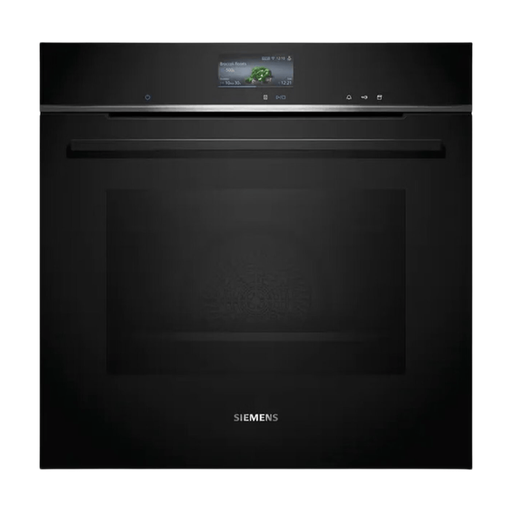
Siemens HS736G3B1 built-in oven, 60 l, 4D hot air
A built-in oven for a permanent kitchen with a suitable housing.
The product name lists 60 l and 4D hot air. Check the housing and internal dimensions, and the documentation for the model you plan to buy.
Joybuy
 No image available
Bosch HMG7361B1 built-in oven, 71 l, 3D hot air
A built-in option for a permanent workshop kitchen with a suitable housing.
The product name lists 71 l and 3D hot air. Check the housing and internal dimensions, and the documentation for the model you plan to buy.
Joybuy
 No image available
Bosch HBG536EB4 built-in oven, 71 l, 3D hot air
A built-in oven to consider if the workshop kitchen has a suitable housing.
The product name lists 71 l and 3D hot air. Check the housing and internal dimensions, and the documentation for the model you plan to buy.
Joybuy
Frequently asked questions
Do you always need to bake clafoutis using the same fan setting?
No, follow the oven setting and dish specified in the recipe you’re using. For two 12 cm dishes, Laura’s Bakery specifies 200 °C with conventional heat for 25–30 minutes; a recipe from 24Kitchen uses 170 °C for about 25 minutes. Don’t automatically apply the timings to a different dish or oven setting.
How can you tell whether an oven is large enough?
Measure your largest oven dish and compare it with the internal dimensions and the space available on the shelf level you want to use. Consumentenbond points out that the usable space may be smaller than the stated capacity in litres.
What should you consider when placing and using an oven?
Make sure the appliance has room to release heat, and follow the placement and connection instructions for the model you choose. The fire service advises connecting high-power appliances directly to a wall socket wherever possible, rather than using a cable reel or extension lead.
Is CE marking required for a new electric oven in the Netherlands?
CE marking is mandatory for electrical equipment covered by the Dutch Electrical Equipment Decree; the Netherlands Food and Consumer Product Safety Authority specifies a nominal AC voltage between 50 and 1,000 V. The marking is the manufacturer’s declaration, not an independent safety test. Check the marking and documentation for the specific model you plan to buy.


