
Canteen buyer planning quantities
Wants to buy enough toast for regular lunches without opened packs being left for too long.


Choose toast for your workplace canteen in a pack size that matches the number of lunches you’re buying for. Then compare the ingredients and nutrition information for specific varieties. If you’re serving it unpackaged, make sure visitors can find out which allergens are present before they buy.
Wants to buy enough toast for regular lunches without opened packs being left for too long.
Is looking for a suitable base for topped toast and comparing the fibre per 100 g and grain content of individual varieties.
Needs up-to-date information for each variety when toast is served unpackaged, as the allergens present can vary.
First, work out how much toast will be used during lunch. Then compare the nutrition information for each variety and arrange allergen information before serving toast unpackaged.
| What to consider | What to check before buying | Most relevant to |
|---|---|---|
| Pack size | Compare the contents of similar types of toast and match the number of packs to lunch demand. | When I’m buying for several lunches, I want the quantity to match what the canteen uses. This is the top priority for around 31% of the consumers surveyed. |
| Storage after opening | Check the storage instructions and make sure opened toast can be sealed securely. | When lunch numbers vary, I want to stop opened toast from losing its crispness. This is the main concern for around 25% of consumers. |
| Grain content and fibre | Read the ingredients and compare the fibre per 100 g of the specific varieties. | If I’m looking for a different grain content for topped toast, I want to know what’s actually in the variety I’ve chosen. Around 19% of consumers give this the highest priority. |
| Allergen information | Check the allergens for each variety and make the information available when serving it unpackaged. | When visitors are served toast on its own or with toppings, I want to be able to tell them which allergens are present before they buy. This matters most to around 25% of consumers. |
Any pack that isn’t used up at lunchtime needs to be stored properly afterwards to keep the toast crisp. The Netherlands Nutrition Centre recommends keeping opened toast snacks in a kitchen cupboard for around one month and says freezing is less suitable.
Match the number of packs you open to lunch demand and seal opened packs securely. Also follow the instructions on the label.
If toast is served loose or with toppings, a label in the storeroom alone isn’t enough for a visitor asking about allergens before buying. The Netherlands Food and Consumer Product Safety Authority requires information about allergens present in unpackaged food.
Keep the information for each toast variety available and make sure staff know how to advise visitors before they buy. Specify the gluten-containing cereals and nuts present, where applicable.
A description such as wholemeal or multigrain doesn’t tell you how much fibre a particular toast contains. Nor does the name ‘toast’ mean that iodised baker’s salt has been used: according to the Netherlands Nutrition Centre, this isn’t mandatory.
Compare the nutrition information and ingredients for the variety you’re actually buying.
Van Vlegelaar makes rectangular, oven-baked wheat toast, which ALDI Netherlands describes as a base for topped toast snacks.
AH Melba Toast Natural comes in a 240 g pack and is a good choice if you’re looking for plain Melba toast as a base for toppings.
The Melba range includes plain, wholemeal and multigrain varieties. Compare them individually if grain content matters for your canteen lunches.
Lidl Netherlands lists a 240 g pack of Melba toast, available in store only.
Bolletje’s range includes rusks and crackers. These products aren’t necessarily interchangeable with Melba toast.
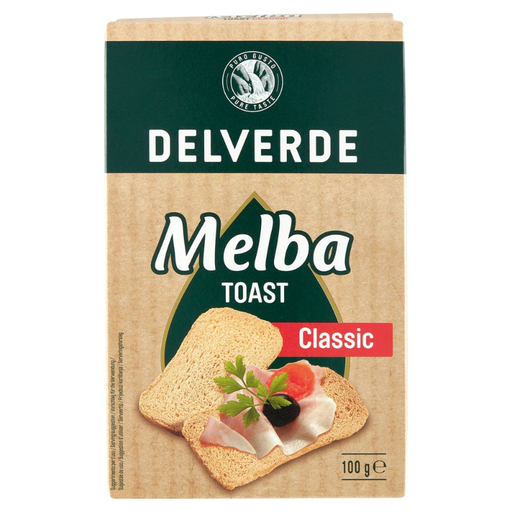
This Melba toast could be a good base for topped lunch snacks. Match the 100 g pack to how it will be used in the canteen, and check the latest product information before serving it unpackaged.
 No image available
Melba toast as a base for topped lunch snacks; the pack contains 100 g. Before serving it unpackaged, check the current ingredients and allergens on the pack.
Seal an opened pack securely and store the toast somewhere cool, dry and dark. The Netherlands Nutrition Centre recommends keeping toast snacks in a kitchen cupboard for around one month and says freezing is less suitable. Also follow the instructions on the packaging.
Visitors must be able to get information about allergens present in unpackaged toast before they buy it. The Netherlands Food and Consumer Product Safety Authority says this applies to unpackaged food. If gluten-containing cereals or nuts are present, state which types and keep the information available for each variety.
No. The name ‘toast’ doesn’t tell you whether iodised baker’s salt has been used. According to the Netherlands Nutrition Centre, using baker’s salt isn’t compulsory. Check the ingredients of the specific product if this matters for your purchase.