Start with the camera or smartphone you already own, a steady set-up and even lighting. A new camera only makes sense if your current one can’t achieve the framing or control you want. For capturing small details in wood, the magnification offered by the right lens matters most. A compact camera saves you from changing lenses, but doesn’t give you the option to choose a different lens later.
Who is this choice relevant to?
Toy maker working with small details
You want to show joints, engravings and the grain of the wood clearly. Compare the magnification and lens mount of the complete camera-and-lens combination. Sony Netherlands explains that magnification depends, among other things, on the focal length and minimum focusing distance.
Maker creating a consistent portfolio
You photograph several pieces in the same style, so a repeatable composition and consistent lighting are useful. Canon Netherlands describes a tripod as a way to keep your composition fixed. When the light changes, you’ll also need to consider the white balance.
Beginner maker with limited equipment
You want to see whether your current phone or camera will do the job before investing in a separate camera system. Consider not just the camera body, but also the lens supplied and the framing you want.
What should you look for when buying?
| What to consider |
What should you check? |
Who is this important for? |
| Magnifying small details |
Compare the magnification, focusing distance and mount of the exact lens. Test whether your smallest detail appears large enough in the frame. |
If I want to show engravings, joints or the grain of the wood clearly, I look at the lens, not just the camera. Around 33% of consumers prioritise sufficient detail magnification. |
| Assessing wood colours |
Check the white balance settings and view test shots under the same lighting. |
If I want the wood tones in my portfolio to look natural, I need to be able to assess the lighting and colour reproduction. Around 27% of consumers prioritise colour reproduction. |
| Repeatable photo series |
Check whether the camera can be positioned steadily and whether you can repeat your framing and lighting for future shots. |
If I photograph several toys in the same style, I want to be able to repeat the position and composition. Around 20% of consumers prioritise repeatable framing above all else. |
| Keeping equipment to a minimum |
Check exactly what the kit includes and whether you’ll need an extra lens, tripod or lighting for the details you want to capture. |
If I want to keep my set-up simple, I weigh up a fixed lens or my existing equipment against the detail capabilities I need. Around 20% of consumers prioritise keeping their equipment to a minimum. |
Common buying mistakes
-
Comparing only the camera body or megapixel count
Magnification depends on the lens. A kit zoom and a separate macro lens can therefore produce different crops of the same small detail.
First decide how large the smallest part needs to appear in the frame. Then compare cameras with the lens actually included in the kit.
-
Assuming a short focusing distance means a macro-style close-up
For the Canon PowerShot G7 X Mark III, the stated minimum focusing distance varies depending on the zoom setting: 5 cm at the wide-angle end and 40 cm at the telephoto end, measured from the front of the lens. On its own, this distance doesn’t tell you whether a small detail will fill the frame.
Check the framing you want at the zoom setting you plan to use, and make sure the camera or lens won’t block the light from reaching the toy.
-
Buying a different camera to fix inconsistent colours or framing
A steady camera set-up and attention to white balance still matter when the light changes. A new camera won’t solve these issues by itself.
First test your current device with a fixed background, camera position and light source.
-
Assuming a business purchase comes with the same consumer rights
The Netherlands Chamber of Commerce explains that consumer protection for a business agreement may depend on the circumstances.
Before paying, check whether you’re buying as a private individual or a business, and which terms and conditions apply to the agreement.
Brands to consider
Canon
Canon offers both mirrorless cameras with interchangeable lenses and a compact camera with a fixed lens. The EOS R50 kit with RF-S 18-45mm is designed for a range of framing options. The separate RF 35mm F1.8 MACRO IS STM is worth comparing if small details are important.
- Canon states that the RF 35mm F1.8 MACRO IS STM offers a maximum magnification of 0.5×.
- At 45 mm, the Canon RF-S 18-45mm kit zoom offers different magnification from the separate macro lens. The stated focusing distance of the PowerShot G7 X Mark III also varies depending on the zoom setting.
Nikon
The Nikon Z50II uses the Z mount. If you’re photographing very small details, the separate NIKKOR Z MC 50mm f/2.8 is worth comparing with the zoom lens included in a kit.
- Nikon states that the NIKKOR Z MC 50mm f/2.8 offers 1:1 magnification.
- That magnification applies to the separate macro lens, not every Z50II kit. Check the exact lens combination and the space in front of the lens for your lighting set-up.
Fujifilm
The Fujifilm X-S20 is a mirrorless camera. If detail magnification is a priority, the separate XF30mmF2.8 R LM WR Macro is a lens worth considering.
- Fujifilm lists RAW shooting for the X-S20 and 1× magnification for the XF30mmF2.8 R LM WR Macro.
- The magnification specification applies to that lens, not the camera body on its own.
Sony
The Sony Alpha 6400 is an APS-C camera with an E mount and RAW support, according to Sony. The lens and kit variant determine the detail shots you can take with the combination.
- The E mount gives you a starting point for comparing compatible lenses for an interchangeable-lens system.
- The ILCE-6400AK specifications don’t confirm macro magnification for any lens that might be included. Check the exact lens and kit contents.
Cameras at Joybuy
These camera options at Joybuy are a useful starting point for comparing features for photographing wooden toys. Check which features and accessories are included with each model, and whether the camera suits the framing you want.
 No image available
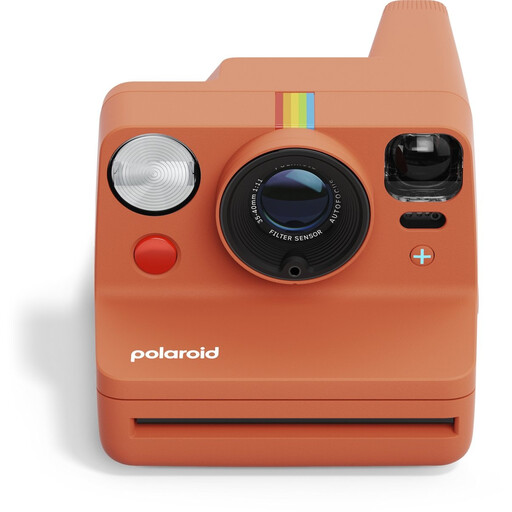
Polaroid Now+ Generation 3, Coral
The product information lists a tripod socket for a steady set-up and double exposure for creative photos.
Uses Polaroid i-Type or 600 film; photos need time to develop after they’re taken.
Joybuy
 No image available
Komery W6, 12× optical zoom
The zoom may be useful if you want to compare different framing options. Check whether this model can capture the detail crop you’re after.
The product title lists 12× optical zoom and 4K video.
Joybuy
 No image available
DJI Osmo Pocket 3
The product information lists still photography and a rotating screen. Check whether the controls suit the framing you want.
The title lists a 1-inch CMOS sensor, 4K/120fps video and a 2-inch rotating touchscreen.
Joybuy
 No image available
Sony ZV-E10 + 16-50mm zoom lens
The included zoom lens offers different framing options. The product information also lists a product showcase mode that shifts focus from a face to an object.
The kit lists a Sony E mount. According to the product description, a memory card and adapter/charger are not included.
Joybuy
 No image available
Sony Alpha A6100 + 16-50mm f/3.5-5.6 OSS II
The included zoom lens offers different framing options. Manual focus may be useful if you want to choose the focus point yourself.
The product information lists automatic and manual focus, a touchscreen and an electronic viewfinder.
Joybuy
Frequently asked questions
Do you need to buy a macro lens for every wooden toy?
No. Start with the lens you already have and assess the framing you want. If a small detail doesn’t appear large enough in the frame, compare the maximum magnification of a compatible lens. This varies from lens to lens and may also depend on the focusing position.
How can you keep a series of portfolio photos consistent?
Keep the camera, background and lighting set-up as consistent as possible, and check the white balance when the light changes. Canon Netherlands recommends using a tripod to keep the framing fixed when taking product photos.
What extra equipment should you factor in when buying?
Check everything included in the kit and whether you’ll need a separate lens for the details you want to capture. Also compare your existing set-up with any need for a tripod or extra lighting.
When buying a camera online in the Netherlands, do you always have 14 days to change your mind?
No, this period doesn’t apply to every transaction. According to the Dutch government, in many cases you have 14 days to change your mind when buying at a distance. Check whether your purchase falls under these terms and who the seller is. If you’re buying for business, don’t assume that consumer rights apply.


