For a few general shots, your existing smartphone may be enough if test photos under your own lights capture the colour, detail and framing well enough. For regular photo series or small close-ups, a mirrorless camera gives you more choice of lenses and settings. First, test the white balance with your own lighting and a neutral reference. When buying a camera, check the exact lens, magnification and working distance: a camera body is not automatically a complete macro kit.
Who is this for?
Maker showcasing toys online
You want general shots that show the shape and colour of the wood clearly. Start by setting up your lighting and taking a test shot. Adobe suggests a smartphone as an option when you’re on a tight budget, while Nikon explains how to use a neutral card to assess white balance.
Photographer capturing small details
You want to capture the wood grain, joints or finish close up. Canon specifies a maximum magnification of 1:2 for the separate RF 35mm F1.8 MACRO lens, so choosing the right lens and working distance matters more than the camera body alone.
Beginner on a tight budget
You want to find out first whether your existing smartphone will do the job and, if you need a camera, assess the body and lens together. Adobe highlights the option of using a smartphone; if you’re buying a camera kit, check exactly which lens is included.
What should you look for when buying?
Start by taking test shots with the equipment you already have. Only then choose a camera and lens based on the shots you still need: general views, repeatable series or small close-ups.
| What to consider |
What to check before buying |
Who pays particular attention? |
| Wood colour under artificial light |
Check whether you can adjust the white balance, then take a test shot with a neutral reference under your own lights. |
If I showcase toys online, I want the wood colour in my photos to look true to life. Around 36% of consumers prioritise accurate colour under artificial light. |
| Small details |
Check the lens’s magnification and working distance, the lens mount and exactly what the kit includes. |
If I want to show joints or wood grain in detail, I need a lens suited to my subject and working distance. Around 29% of consumers prioritise detailed shots. |
| Repeatable series |
Consider whether you can position the camera securely and repeat the settings for successive photos. |
If I’m photographing several items, I want to be able to reuse my framing and settings easily. Around 21% of consumers prioritise a consistent workflow. |
| Complete kit |
Test your current equipment first, then compare the lens and accessories included with the exact body or kit version. |
If I’m considering a new purchase, I want to know whether my current equipment is enough and what comes with a camera kit. Around 14% of consumers prioritise avoiding unnecessary purchases. |
Common buying mistakes
-
Assuming a camera body is a complete macro kit
A macro lens’s magnification isn’t automatically included with every body or kit. The lens mount and working distance also help determine whether the lens you choose is suitable for your close-ups.
Before buying, check exactly what the kit includes, along with the lens mount, magnification and usable working distance.
You may need a separate lens for close-ups, so check what else you’ll need to add to your chosen kit.
-
Expecting a camera to correct wood colours automatically
Automatic white balance can produce colours that look different from what you want under certain lights. A different camera body won’t automatically fix this.
First, take a test shot under your own lights with a neutral reference. Then compare the colour and adjust the white balance if needed.
-
Thinking of focus stacking as a single, ordinary shot
Focus stacking combines images taken at different focus distances and is designed for still subjects. You’ll also need a suitable lens and a stable setup.
Choose this technique only if a single shot doesn’t give you enough depth of field, and check that the exact camera model supports it.
Taking a stable series of shots takes extra time.
Brands to consider
Canon
The EOS R50 is a mirrorless camera body for anyone who wants to build their own kit with RF or RF-S lenses.
- Canon specifies 24.2 effective megapixels for the EOS R50. For the separate RF 35mm F1.8 MACRO lens, Canon lists a maximum magnification of 1:2.
- That magnification applies to this lens, not to the body or every kit. Canon does not specify in-body image stabilisation for the EOS R50.
Fujifilm
The X-S20 is an APS-C mirrorless camera with an X mount, for anyone who wants to shoot RAW and choose separate lenses.
- Fujifilm specifies 26.1 effective megapixels, RAW shooting and five-axis in-body image stabilisation for this model.
- These body specifications don’t tell you whether the kit lens you choose is suitable for capturing small details from your working distance.
Nikon
The Z50II is a mirrorless camera worth considering if you want to build a camera kit with Z lenses.
- Nikon describes its adjustable Picture Controls and uses an example with a white card to show why you should check the white balance under your own lighting.
- Creative colour profiles aren’t the same as a controlled white balance for product photography.
OM SYSTEM
The OM-5 Mark II is worth considering if you want to use focus stacking for close-ups of still subjects.
- OM SYSTEM lists focus stacking for the OM-5 Mark II. The technique combines images taken at different focus distances.
- The feature doesn’t replace a suitable lens or a stable setup, and it isn’t necessarily needed for every product photo.
Panasonic
The LUMIX G97 is a Micro Four Thirds body for anyone who wants to choose their own lens.
- Panasonic specifies a 20.3-megapixel sensor for the G97.
- The body described here doesn’t include a lens. Check exactly what’s supplied with the version or kit you’re considering.
Cameras on Joybuy
This selection features cameras described in their product information as suitable for photography. Take test shots under your own lights to see whether the colour, framing and close-up distance work for wooden toys.
 No image available
Komery W6 digital camera with 12× optical zoom
The listed optical zoom may be useful if you want to try different framing at various distances. Take test shots to check whether the camera also meets your needs for colour and close-ups.
The product title lists 12× optical zoom, Wi-Fi, 4K and 64 MP.
Joybuy
 No image available
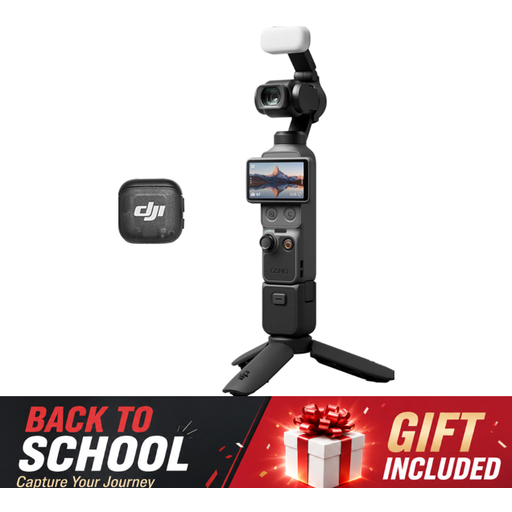
DJI Osmo Pocket 3 Creator Combo
The product description mentions focusing for still images and a rotating screen. Take a test shot to see whether the framing and colour work with your setup.
The product title lists a 1-inch CMOS sensor, 4K/120fps video and an included microphone.
Joybuy
 No image available
DJI Osmo Pocket 3
The product description mentions focusing for still images and a rotating screen. Test whether the controls and framing suit the way you photograph toys.
The product title lists a 1-inch CMOS sensor and 4K/120fps video.
Joybuy
 No image available
Sony ZV-E10 + 16-50mm Zoom, Black
This version is listed with a 16-50mm lens and may suit anyone looking for an interchangeable lens for general shots. Check the close-up distance and colour under your own setup.
The description lists 24.2 MP and an APS-C sensor. A memory card and adapter/charger are not included.
Joybuy
 No image available
Sony Alpha A6100 + 16-50mm f/3.5-5.6 OSS II
The listed zoom lens combination may be useful if you want to adjust the framing for general shots. Check for yourself whether the lens focuses closely enough to capture the details you want to show.
The description lists an APS-C sensor and 24.2 MP; the product title specifies the 16-50mm lens.
Joybuy
Frequently asked questions
How can you check the colour of wooden toys under artificial light?
Take a test shot under the lights you actually use, with a neutral reference in the frame. Nikon describes using a white card to assess white balance. Adjust it if the colours aren’t coming out as you’d like.
Do you need to buy a close-up lens separately?
It depends on the exact body or kit version. Check what’s included, the lens mount and the magnification of the supplied lens. Canon specifies a maximum magnification of 1:2 for the RF 35mm F1.8 MACRO; that’s a feature of this lens, not something that automatically comes with an EOS R50 kit.
What can you do if your images show banding or flicker under lights?
First, test your own lights and camera settings. For video flicker under fluorescent lighting, Sony recommends using the flicker reduction feature on models that support it. Check the manual for your specific camera. This advice doesn’t guarantee a fix for every LED light or photo mode.
What return and warranty rights apply when buying a camera online in the Netherlands?
For eligible online purchases made by consumers, the statutory cooling-off period generally ends 14 days after delivery. Check the terms and any exceptions. ACM ConsuWijzer also explains that a product must meet what a consumer can reasonably expect. If a product is faulty, the seller is responsible for providing an appropriate solution. If you’re buying for business, don’t assume these consumer rights apply.


