Which approach is right for you?

Maker focused on fine wood details

You want to show grain, joints or carving larger than in an overall shot. Look at magnification first, then consider working space and depth of field. Canon and Nikon specify the magnification of the macro lenses mentioned here; these lenses aren’t included as standard in the camera kits listed.

Maker who wants to preserve the colour of the wood

You want the wood’s colour and finish to look true to life. Pay attention to the lighting, background and white balance; Canon recommends setting the white balance to match the lighting conditions.

Volunteer with a small photo setup

You want to photograph several miniatures quickly, using a similar composition each time. A tripod can help you keep the composition consistent; Canon recommends one in its product photography tips.

What should you look for when choosing?

Compact camera with close-up mode

A good fit if: you want to photograph both the overall scene and small details without changing lenses. OM SYSTEM says the TG-7’s microscope mode can focus from 1 cm.

Worth noting: the fixed lens limits your choice of focal length; a short minimum focusing distance doesn’t guarantee the lighting and framing will work well.

Mirrorless camera with kit zoom

A good fit if: overall shots are your priority for now, but you’d like the option to choose a different lens later. Canon specifies a maximum magnification of 0.26× at 45 mm with manual focus for the RF-S 18-45mm.

Worth noting: the EOS R50 kit mentioned doesn’t include the RF 35mm macro lens; check what’s in the kit and the magnification of the lens supplied.

Mirrorless camera with a separate macro lens

A good fit if: capturing fine wood textures is your main reason for buying, and you’re happy to use a separate lens and set up your shots more precisely. Nikon specifies 1:1 magnification for the NIKKOR Z MC 50mm f/2.8 on compatible Z cameras.

Worth noting: the Z50II kit mentioned includes standard zoom lenses, not the macro lens. A shallow depth of field may mean taking extra shots and editing them afterwards.

What to consider What should you check? Who is this important for?
Magnifying small details Compare the maximum magnification of the exact lens; also check the space in front of the lens and where you can position your lighting. If I want grain or carving to fill the frame, I look at both magnification and space for lighting. Around 33% of consumers make magnifying details their top priority.
Wood colour and finish Take a test shot under the lighting you plan to use, then check the white balance and background. If the wood’s colour and finish need to look true to life, I want to assess my lighting setup in advance. Around 27% of consumers prioritise accurate colour reproduction.
Repeatable overall shots Check that the whole miniature fits in the frame from the available table distance, and that you can position the camera securely. If I’m photographing several miniatures for one display, I want to create a similar composition quickly. Around 20% of consumers prioritise repeatable overall shots.
The complete camera kit Check what’s included in the kit, lens compatibility and whether you’ll need to buy a macro lens, tripod or lighting separately. If I’m putting together a complete setup for my photos, I want to know in advance which components are included. Around 20% of consumers make the complete kit their top buying priority.

Common buying mistakes

  • Assuming a kit zoom is a full-fledged macro lens

    Maximum magnification varies from lens to lens. For the RF-S 18-45mm mentioned here, Canon specifies a maximum of 0.26× at 45 mm with manual focus; the separate RF 35mm F1.8 MACRO IS STM is a different lens.

    Check exactly what’s included in the kit and the magnification at the focal length and focus mode you plan to use.

  • Assuming the minimum focusing distance guarantees a good close-up

    A very short shooting distance doesn’t, by itself, tell you what magnification you’ll get. The camera may also take up space between the miniature and the light source.

    Try the framing you want with the exact camera and lighting you plan to use.

  • Confusing an advertised warranty period with your statutory rights

    If a product is faulty, the retailer is responsible for your statutory guarantee. According to the Dutch government, the Netherlands doesn’t have a fixed statutory warranty period of two years.

    Keep your proof of purchase and check what additional rights an extended warranty actually gives you.

Brands and models to consider

OM SYSTEM

The TG-7 is a compact camera with a microscope mode for close-ups, without the need for interchangeable lenses.

  • OM SYSTEM says the microscope mode can focus from 1 cm and also describes focus bracketing.
  • The lens isn’t interchangeable. Check that there’s enough room for lighting when shooting at close range.

Canon

The EOS R50 with an RF-S kit zoom is an option for overall shots; an RF macro lens is available separately.

  • Canon specifies a maximum magnification of 0.26× at 45 mm with manual focus for the RF-S 18-45mm.
  • According to Canon, the separate RF 35mm F1.8 MACRO IS STM offers a maximum magnification of 0.5× and isn’t included in the EOS R50 kit mentioned.

Nikon

A Z50II mirrorless camera can be paired with a separate NIKKOR Z MC 50mm f/2.8 macro lens.

  • Nikon specifies 1:1 magnification for this lens and says it can be used with DX-format Z cameras.
  • The Z50II zoom kit mentioned doesn’t include the macro lens. Allow for space in front of the lens when shooting close-ups.

PENTAX

The WG-90 is a compact alternative with a digital microscope function and built-in macro lighting.

  • Ricoh Imaging says the WG-90 can take photos from 1 cm away and has six macro LEDs.
  • Before buying, check whether this model is available to consumers in the Netherlands and whether the lighting renders your wood accurately.

Sony

The RX100 VII has a fixed lens with a range of framing options, but it isn’t designed specifically for capturing the tiniest details.

  • Sony specifies a minimum focusing distance of approximately 8 cm at the wide-angle end.
  • At the telephoto end, the specified minimum focusing distance is approximately 100 cm, so the wide-angle figure doesn’t apply throughout the zoom range.

Joybuy products

Joybuy cameras and camera bundles to suit the photography and lighting needs covered in this article.
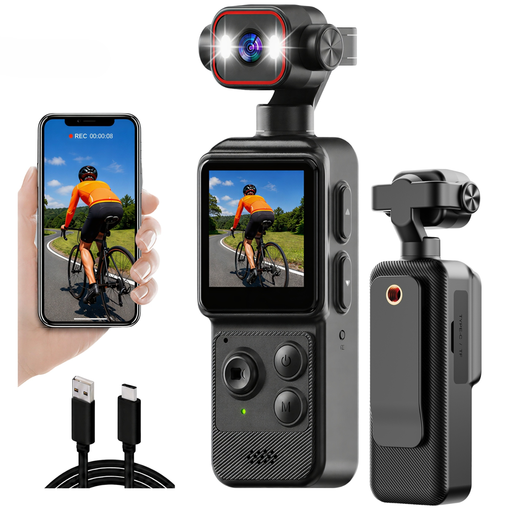
Mini Action Camera 4K with Clip

Mini Action Camera 4K with Clip

This could be a good option if you’re looking for a compact camera with built-in lighting; the product description mentions two LEDs and app control for taking photos.

The title lists a 1.54-inch screen, a 140° wide-angle lens and a 1200 mAh battery.

View at Joybuy
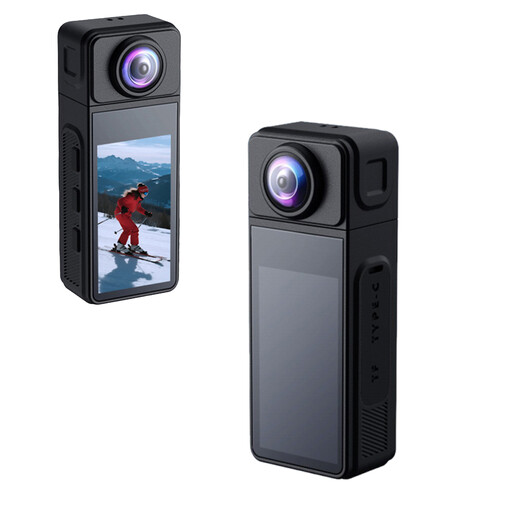
NAXSIR 2K Mini Action Camera

NAXSIR 2K Mini Action Camera

This could suit a fixed photo setup: the product description mentions a photo mode and a tripod mount.

The title lists a rotating wide-angle lens; the description mentions electronic image stabilisation and a 1/4-inch tripod mount.

View at Joybuy
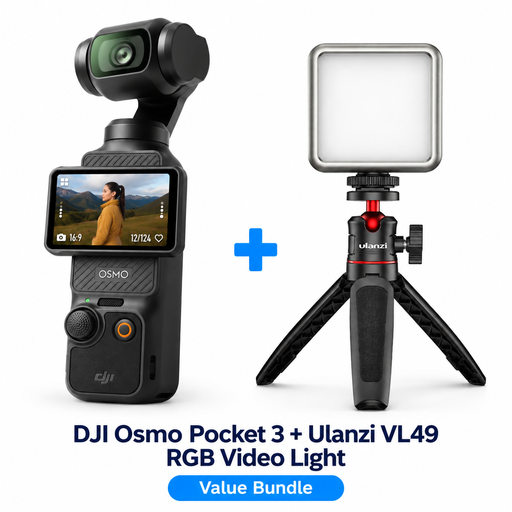
DJI Osmo Pocket 3 with Ulanzi VL49 RGB LED video light

DJI Osmo Pocket 3 + Ulanzi VL49 RGB LED Video Light

This could be useful if you want extra light for product photos; the bundle description lists the Ulanzi VL49 as an additional light.

The description lists a 1-inch CMOS sensor and mechanical 3-axis stabilisation.

View at Joybuy

DJI Osmo Pocket 3

DJI Osmo Pocket 3

This could be worth considering if you’re looking for a camera that, according to the product description, can also focus on stationary subjects.

The description lists a 1-inch CMOS sensor, a rotating touchscreen and 3-axis stabilisation.

View at Joybuy
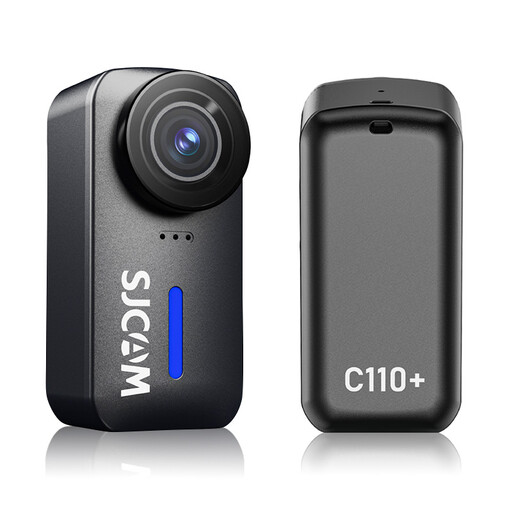
SJCAM C110+ 4K Action Camera

SJCAM C110+ 4K Action Camera

This could be a good choice if you want to match the white balance to your lighting; the product description mentions adjustable white balance.

The description lists photos up to 20 MP, white balance settings and timed shots. The title lists a 170° wide-angle lens.

View at Joybuy

Frequently asked questions

Is a short minimum focusing distance enough to photograph small wood carvings so they fill the frame?

No. Check the maximum magnification of the exact lens too. Take a test shot using the framing you want, from the distance available to you; the Canon RF-S kit zoom and the separate RF macro lens have different specified magnifications.

How can you stop a three-dimensional miniature from being only partly in focus?

Set up the camera securely and assess a single shot first. If the depth of field isn’t enough, you may be able to combine several shots taken at different focus points in suitable conditions. This requires a stationary subject, a fixed setup and additional processing.

How can you check the colour of the wood under indoor lighting?

Take a test shot under the lighting you’ll use for the exhibition and check the white balance. Different lighting conditions can add a colour cast.

When should you choose a compact camera rather than a mirrorless camera?

A compact camera with a close-up mode is a good fit if you want to shoot without changing lenses; a mirrorless camera suits you if you want a choice of lenses. For either type, check the magnification, the working space needed for lighting and exactly what’s included in the kit.

If your camera develops a fault in the Netherlands, should you contact the manufacturer?

For a consumer purchase, the retailer is responsible for providing a solution under the statutory guarantee. According to the Dutch government, the Netherlands has no fixed statutory warranty period of two years; what you can expect from a product depends, among other things, on the product and normal use.
