
Vandaag of morgen in huis

Kwaliteit gegarandeerd

Welkomstaanbiedingen ontgrendelen: GRATIS bezorging | Tot 80% korting | Gratis 30 dagen JoyPlus-proefperiode
Download de app
Your child's wobbly first steps are a milestone. A wooden baby walker can offer stable and fun support during this time. But the market is flooded with options, and not every walker is worth the money. As a Product Recommendation Officer at Joybuy, I see a lot of products come and go. I'm here to help you cut through the marketing talk and focus on what really matters, so you can make a choice that both you and your child will enjoy.
Before you make a decision, it's wise to be aware of a few common pitfalls.
walker with activities sounds great, but often the extras are low-quality. Think of rattling parts that come loose quickly or a baby activity center that distracts more than it stimulates. The focus should be on learning to walk stably.To avoid a bad buy, there are a few objective specifications you should always check. These determine the safety, functionality, and durability of the wooden baby walker.
This is the most important factor. A good walker is a safe walker.
learning-to-walk toy.A walker is more than just an aid; it's also a toy.
walker with blocks is a classic. It provides space to transport favorite toys and stimulates the imagination. The blocks themselves add extra play value.Not every child and parent needs the same thing. Below are a few popular choices, linked to specific situations.
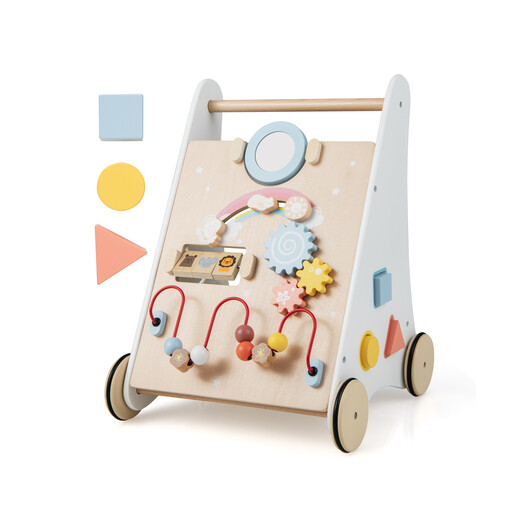
Why This Fits Their Persona: This model is specifically designed as a stable `walker for 1-year-olds`. It provides the right support for a child learning to stand and walk, with a focus on correct posture.
The sturdy wooden frame and wide base counter the 'Tipping' trap. The rubber wheels prevent the 'Scratch' trap, and the integrated activities are robust, thus avoiding the 'Rattling Extras' trap.
Made from basswood and MDF. Features rubber, non-slip wheels and a handy storage basket for toys.
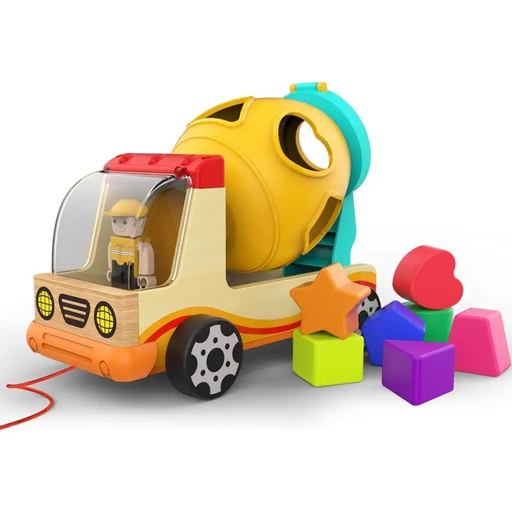
Why This Fits Their Persona: For a child who is already a bit more stable, this push car combines movement with a cognitive challenge. It's less of a walking aid and more of a toy that promotes hand-eye coordination and shape recognition.
This is not a primary walking aid, so the risk of tipping is lower for its intended use. It focuses on one high-quality activity (shape sorting) instead of many loose, rattling extras.
Combines pushing with multi-sensory learning (shapes and sounds). Made from a combination of plastic and wood with smooth edges.
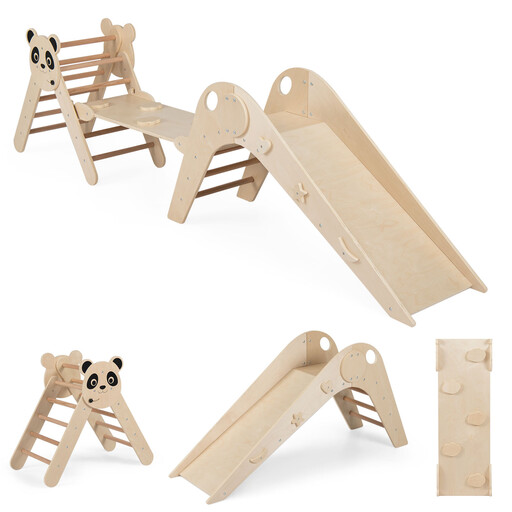
Why This Fits Their Persona: For parents who view gross motor skills from a broader perspective. This Montessori-style climbing triangle helps build the strength, balance, and coordination that are fundamental to learning to walk and climb.
This is not a baby walker and thus avoids its specific pitfalls. It is a focused toy for physical development, without distracting or superfluous extras.
Encourages balance and coordination. It's foldable and therefore easy to store. The panda theme makes it visually appealing to children.
A baby walker is a wonderful step in your child's development. There is a wide range of wooden toys that contribute to various stages of motor and cognitive growth.
Generally, a walker is suitable from the moment a child can pull themselves up to a standing position and attempts to walk. This is usually around 9 to 12 months. However, always check the manufacturer's recommended age, often indicated as walker for 1-year-olds.
Yes, this is one of the most important features. Rubber trim offers two crucial benefits. First, it provides grip, preventing the walker from slipping on smooth floors like parquet, laminate, or tile. Second, it protects those same floors from scratches, a common problem with hard plastic or wooden wheels.
The terms are often used interchangeably. Technically, a baby walker is specifically designed as an aid for learning to walk, with a focus on stability and support. A wooden push cart is a broader term for any cart a child can push, such as a doll's pram or a block cart. These are often also used by children who can already walk.
