
Vandaag of morgen in huis

Kwaliteit gegarandeerd

Welkomstaanbiedingen ontgrendelen: GRATIS bezorging | Tot 80% korting | Gratis 30 dagen JoyPlus-proefperiode
Download de app
A women’s shapewear bodysuit can help clothes sit more smoothly and provide gentle support for your tummy, waist, bust, bottom or thighs. However, not every shaping bodysuit for women is suitable for everyday wear. Marketing terms such as “slimming underwear”, “full-body shapewear” and “instant lift” don’t tell you much about fit or comfort on their own.
That’s why the Joybuy Product Recommendation Officer has filtered the most important product information. This helps you see which features you can verify and which pitfalls to avoid when buying a women’s body shaper.
A smaller size won’t automatically give you a smoother result. The fabric may roll down at the waist, dig into your skin or pull uncomfortably at the shoulders. With a tummy-control bodysuit in particular, your waist and hip measurements are more important than your usual clothing size alone.
Measure yourself using the seller’s size chart, and check whether measurements are given in centimetres or inches. If you’re between sizes, product information for several Feelingirl styles recommends going up a size.
Seamless shapewear often has less visible stitching, but the leg openings, fastening and fabric thickness can still show under a fitted skirt or thin trousers. A thong bodysuit can help reduce visible lines around your bottom, while a style with shorts provides more coverage around your thighs.
So check:
A brand’s claim of a “flat tummy”, “slimming effect” or “lift” doesn’t guarantee a particular result. According to a brand’s own research, such claims may be based on its own studies; they are not automatically independent findings. Instead, look for details you can verify, such as the compression level, fabric, adjustable straps and coverage area.
Shapewear won’t change your body weight. It can temporarily create a smoother shape under clothing. Stop wearing it if you experience pain, numbness or obvious skin irritation. If a style is marketed for post-operative recovery, only wear it as directed by your doctor or surgeon.
Many styles in this selection use a blend of nylon and spandex. Nylon generally feels smooth, while spandex provides stretch. The percentages vary by product and colour option, so always check the composition on the specific product page.
High stretch is useful if you move around a lot, but it doesn’t tell you everything about comfort. The knitting technique and the placement of firmer zones matter too. A tighter knit around the tummy and waist can provide light shaping, while softer fabric may be more suitable for extended wear.
Distinguish between:
A thong-style tummy-control bodysuit focuses mainly on the tummy and waist, without leg coverage. A style with mid-thigh shorts also covers the thighs and can create a more even line there. A bottom-lift bodysuit often uses ruching or a special panel around the bottom; this is a design feature, not a guarantee of a particular silhouette.
For everyday wear, adjustable shoulder straps, an open gusset and multiple fastening positions can make all the difference. A hook-and-eye fastening lets you adjust the fit, while poppers are quick to undo when you need the loo.
Also check the actual size range. If you’re looking for plus-size shapewear, don’t just rely on “plus size” in the title; check the body measurements available. In the selection provided, some options go up to 5XL, while other styles are available from XS to 3XL.
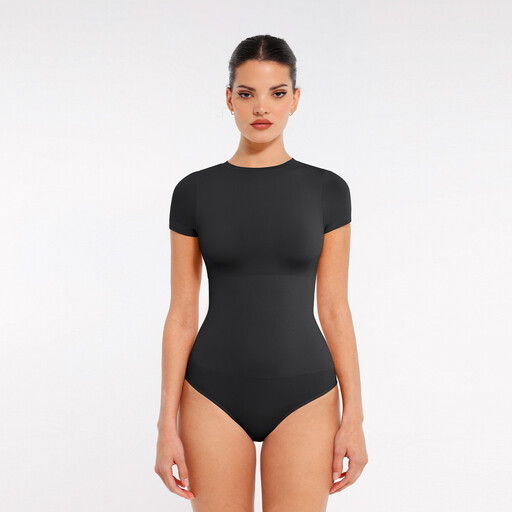
Why it suits this profile: This style is designed for light shaping and can be worn as a smooth base layer under jeans, a skirt or casual clothes.
The product description specifies light shaping, rather than making an unspecified claim of firm control. It clearly mentions the seamless construction and two gusset fastenings.
88% nylon and 27% spandex according to the product information, a round neckline, hip-hugging shorts and an XS/S size option.
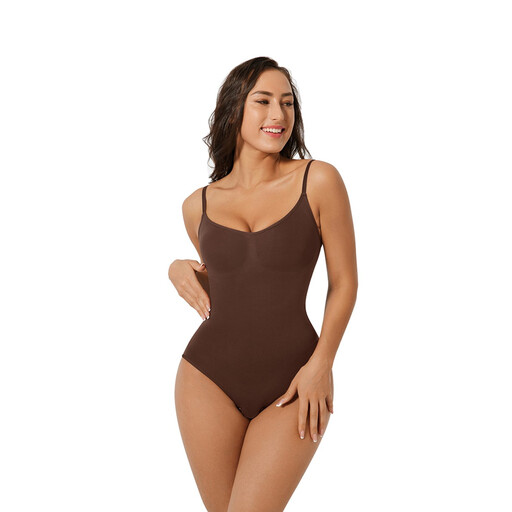
Why it suits this profile: A good choice if you value several fit details for everyday wear and under close-fitting clothes.
The description specifies targeted compression zones, adjustable shoulder straps and an adjustable gusset fastening, rather than relying on a general lift claim.
Seamless fabric, mesh at the bust, adjustable straps and a design that smooths the tummy, waist and back according to the product description.
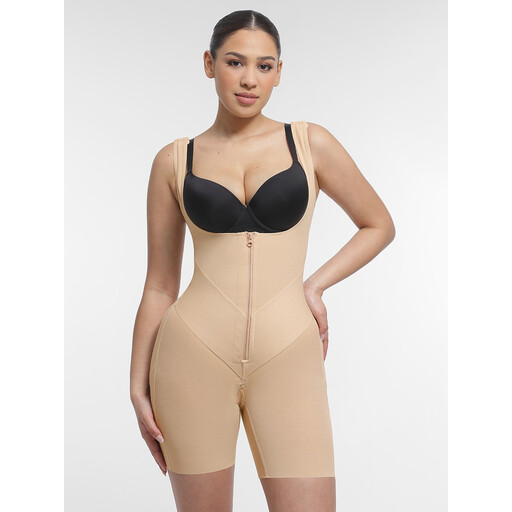
Why it suits this profile: This full-body shapewear style is designed for anyone who wants support for the tummy, waist, back, bust, bottom and thighs in one garment.
The style specifies medium compression, a wide waistband, three rows of fastenings and adjustable straps. This describes the shaping more specifically than a general slimming claim.
U-shaped bust support, a front zip with hook fastening, a gusset zip, laser-cut leg openings and a ruched design around the bottom.
Always follow the care label. For the styles mentioned, hand-washing in cold or lukewarm water and drying flat are recommended. Avoid bleach, fabric softener, ironing and tumble-drying if the product page advises against them.
How long shapewear lasts depends on how often you wear it, friction, washing and how well the fabric recovers its stretch. If a bodysuit no longer springs back after washing, starts to fray or keeps rolling up, it probably won’t fit as well as it used to. Alternating between two bodysuits can help reduce wear.
We’ve put together a complete, up-to-date list of products that meet these strict selection criteria and the applicable European safety regulations.
It depends on the style, size and your personal comfort. A light, comfortable shaping bodysuit is usually more practical for everyday wear than one with medium or firm compression. Don’t wear shapewear if it causes pain, tingling or skin irritation.
Choose a smooth, seamless style in a colour that won’t contrast too much with your dress. A thong bodysuit helps minimise visible lines around your bottom. If you want more coverage over your thighs, a mid-thigh bodysuit may be a better choice. Also check that the gusset fastening won’t show through the fabric.
Take care with this. A product marketed for post-operative wear isn’t automatically suitable for your recovery. Ask your doctor or surgeon for advice first on the compression level, size, fastening and how long to wear it. Always follow medical advice in preference to the product description.
