
Vandaag of morgen in huis

Kwaliteit gegarandeerd

Welkomstaanbiedingen ontgrendelen: GRATIS bezorging | Tot 80% korting | Gratis 30 dagen JoyPlus-proefperiode
Download de app
If you regularly run on woodland paths, dunes or muddy trails, you need different shoes from those designed for tarmac. When choosing women’s Salomon trail running shoes, grip, fit and protection against changing conditions are the main considerations. However, a prominent tread pattern or the word “waterproof” alone is not enough to help you find the right pair.
Joybuy Product Recommendation Officer helps you compare the most important product specifications without treating marketing claims as guaranteed results.
A deep, aggressive tread can be useful on soft mud, but may feel less flexible on paved cycle paths or hard-packed woodland. So consider the terrain you run on most often. According to the product description, Contagrip TA with deep grooves is designed for soft and loose surfaces. A more moderate tread, such as that found on the Salomon Pulsar Trail W, may be more practical for mixed routes with sand, gravel and light mud.
For women’s trail running shoes with GORE-TEX, the product information states that the membrane supports water resistance and breathability. This does not mean your feet will stay dry in all conditions. Water can enter through the collar, for example, or seep in during prolonged immersion. GORE-TEX is particularly useful in rain, wet grass and muddy conditions.
Salomon uses half sizes including 36 2/3, 39 1/3 and 42 2/3. A shoe that appears technically suitable can still be uncomfortable if your toes have no room when running downhill. Measure both feet at the end of the day and compare the measurements with the size chart for the product you have chosen. Wear the socks you use for trail running or walking when taking your measurements.
For trail running shoes with good grip, two things are important:
According to the stated specifications, the Salomon Speedcross models are primarily designed for muddy, loose and technical trails. The Salomon Genesis uses All Terrain Contagrip, intended for a combination of rocky, muddy and mixed paths. No outsole can prevent slipping on every surface; wet tree roots and smooth stones remain hazardous.
A GORE-TEX model, such as the Salomon Speedcross 6 GTX W or Salomon Supercross 4 GTX W, is suitable for rainy walks and wet trails. The product information states that these models have a membrane for water resistance and breathability. A non-waterproof mesh model will generally dry more quickly if it does get wet and may feel more comfortable in warm weather.
Maintenance is also important. It is best to remove mud with a soft brush and lukewarm water. Allow shoes to air-dry away from direct heat. Always follow the washing and care instructions on the label.
A supportive fit does not automatically mean that a shoe will suit every foot. SensiFit is described in the product information as a construction that wraps around the foot. Quicklace makes the shoes easier to put on and adjust. On rocky trails, a reinforced toe area, such as that found on the Salomon Genesis, can provide extra protection against stones and branches.
Cushioning is important over longer distances. According to the product specifications, the Speedcross 5 GTX W uses an EnergyCell+ midsole. The Genesis has EnergyFOAM. These are technical constructions that, according to the manufacturer or product description, are intended to provide cushioning and resilience; your personal experience will still depend on the surface, running style and fit.

Why it suits this profile: According to the product description, this model combines GORE-TEX, a Contagrip TA outsole and Quicklace. That makes it a practical choice for anyone starting out with trail running on muddy or mixed paths.
The product information mentions both the tread pattern and the intended terrain. However, check that your routes really are soft and muddy before ordering.
GORE-TEX membrane, Contagrip TA with deep grooves, SensiFit and Quicklace according to the product specifications.
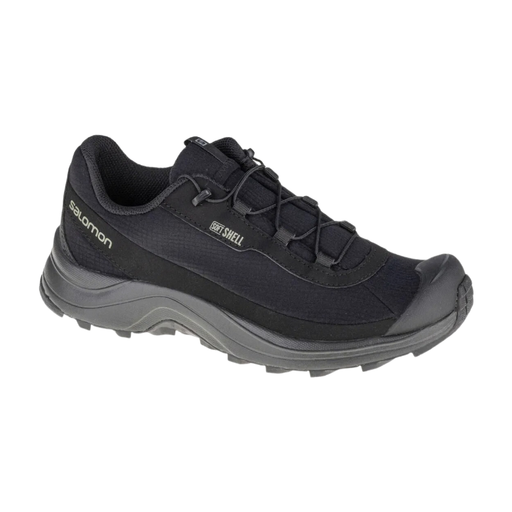
Why it suits this profile: For experienced trail runners who alternate between rocky, muddy and technical paths, this model offers a reinforced toe area, EnergyFOAM and All Terrain Contagrip according to the product description.
The choice is not based solely on a deep tread: the specifications also mention toe protection, a mesh upper and a supportive fit.
EnergyFOAM midsole, All Terrain Contagrip and reinforced toe area according to the stated product specifications.
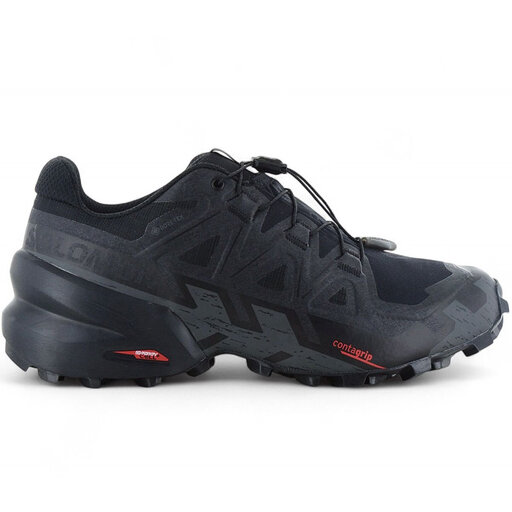
Why it suits this profile: According to the product information, this model is designed for intensive trail use in wet, loose and technical conditions, with GORE-TEX, Contagrip, SensiFit and Quicklace.
The features are suited to wet trails, but check your size and fit first. GORE-TEX is no substitute for suitable socks or well-fitting gaiters.
GORE-TEX, aggressive Contagrip tread, women’s fit and Quicklace according to the product description.
Not every outdoor trip calls for a low-cut trail running shoe. For winter walks, snow or longer hikes, a model with a higher collar and insulation may be a better choice. The Salomon X Ultra 4 Mid Winter TS W lists Thinsulate insulation, a waterproof construction, ADV-C Chassis and Winter Contagrip. For everyday use in the rain, the Salomon Shelter CS WP W is a low-cut model with a waterproof bootie construction.
These models are designed for walking and hiking, rather than specifically for fast trail running. Choose based on the activity, temperature and terrain.
We have put together a complete, up-to-date list of products that fully meet these strict selection criteria and the applicable European safety regulations.
Yes, they can be on muddy or unpaved paths. The deep tread can be an advantage in these conditions. On lots of tarmac or for use in town, the tread may feel less comfortable and less efficient. For everyday walks, women’s Salomon hiking shoes with a more moderate outsole may be more practical.
The fit varies by model and foot shape. Use the EU size and any foot-length information in the product listing as a starting point. Ideally, try them on with trail socks and allow extra room at the toes for downhill sections. If in doubt, follow the product’s specific size chart.
Their lifespan depends on how often you run, your body weight, the terrain, maintenance and outsole wear. Look out for smooth lugs, cracks in the upper, separating seams or compressed cushioning. There is no fixed mileage limit that applies to every pair. Check your shoes regularly, especially if you often run on mud, stones or roots.
