
Vandaag of morgen in huis

Kwaliteit gegarandeerd

Welkomstaanbiedingen ontgrendelen: GRATIS bezorging | Tot 80% korting | Gratis 30 dagen JoyPlus-proefperiode
Download de app
A women’s outdoor jacket needs to cope with more in the Netherlands than a short walk in dry weather. Rain, wind, changing temperatures and cycling to work call for different features than a jacket for camping or hiking. Yet many jackets are mainly marketed using general terms such as “water-repellent”, “breathable” or “warm”, without making it clear what you actually get.
So watch out for these common pitfalls:
For changeable Dutch weather, the construction of the jacket is important. According to the product information, a women’s rain jacket or waterproof women’s jacket should clearly state which parts provide protection against moisture. Pay particular attention to:
According to its own product information, The North Face Quest Jacket is described as a shell with fully sealed seams, DryVent fabric, windproof and waterproof properties, and a mesh lining. The manufacturer also mentions a DWR finish and quick-drying fabric. These are product specifications from the product description; they do not guarantee performance in every weather condition.
A women’s fleece jacket is particularly suitable as a warm women’s mid-layer. Fleece made from 100% polyester is lightweight and can be comfortable for walking, camping or everyday use. As fleece is generally not designed to provide full rain protection, combine this type of jacket with a waterproof outer layer in wet weather.
A women’s fleece gilet can be useful when you need plenty of freedom of movement around the arms. In colder conditions, a full fleece jacket provides more coverage. A women’s sherpa jacket generally feels bulkier and softer, but check that there is enough room left for an additional layer.
A women’s walking jacket should not only be warm or water-resistant, but should also allow you to move comfortably. Choose a standard fit if you want to wear the jacket directly over a shirt or thin jumper. Choose a little more room if you want to wear fleece underneath.
Also check:
For polyester fleece, the supplied product information from The North Face recommends washing at a maximum of 40 °C, inside out and with the zips closed. Air drying is recommended; bleaching, ironing, dry cleaning and tumble drying are advised against. Always follow the label in the garment.
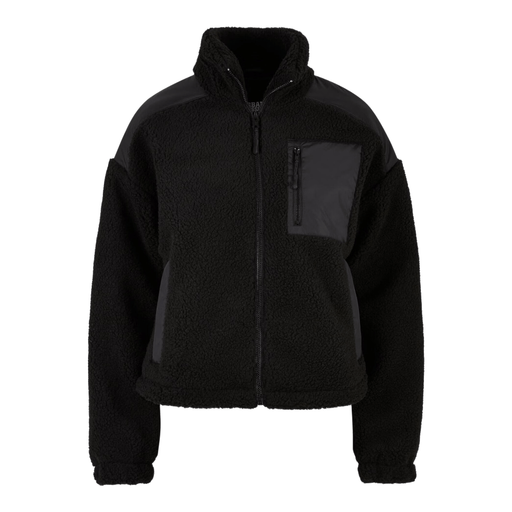
Why it suits this profile: This black sherpa jacket is designed for everyday use and combines a soft sherpa texture with nylon panels. Its relaxed fit is suitable for anyone who values comfort.
The product description mentions a full-length zip, elasticated cuffs, adjustable hem and mesh lining. This makes the jacket’s intended use clearer: everyday wear, not prolonged rain.
Sherpa and nylon combined; side pockets and a vertical zipped chest pocket; black colour that is easy to coordinate.
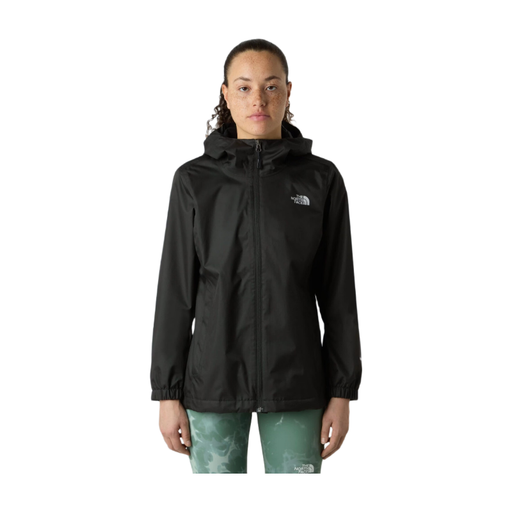
Why it suits this profile: This The North Face women’s jacket is designed as a protective outer layer for walking and changeable conditions. Its technical construction suits users who want to be able to check the specifications.
According to The North Face’s own product information, the jacket has a 2-layer DryVent shell, sealed seams, and an adjustable hood, cuffs and hem. This makes the stated protection more specific than simply calling it “all-weather”.
100% polyester shell with mesh lining; two zipped pockets; size range from XS to 3XL according to the supplied size chart.
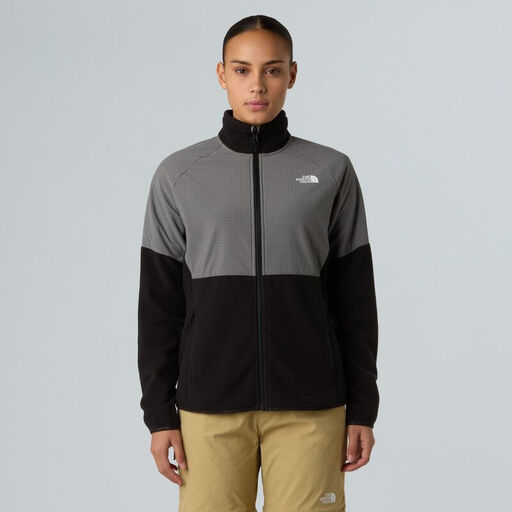
Why it suits this profile: According to the product details, this women’s fleece jacket is designed as a mid-layer for hiking, alpine activities and camping. The model can be worn beneath a breathable, waterproof shell.
The product description positions the fleece jacket as a mid-layer rather than a rain jacket. This makes its purpose clear and means you can combine it with a suitable outer layer.
100% polyester fleece; full-length zip; two zipped pockets; cuffs and hem with binding for a close-fitting finish.
For a short walk around town, a sherpa or fleece jacket may be enough in dry weather. In the rain, a three-layer system is more practical:
Make sure the outer layer is roomy enough to wear over fleece. A jacket that is too tight restricts your freedom of movement and can put extra strain on the zip or seams. For cycling, an adjustable hem, secure pockets and a hood that stays in place are particularly useful.
We have put together a complete, up-to-date list of products that fully meet these strict selection criteria and the applicable European safety regulations.
Usually not. Fleece is mainly intended as an insulating mid-layer. For prolonged rain, choose a jacket whose product information mentions a waterproof outer layer and finished seams. A women’s fleece jacket can be worn underneath for extra warmth.
Always follow the care label. Do not use bleach and avoid fabric softener if the manufacturer advises against it. Close the zips before washing and allow the jacket to dry according to the instructions. Some models may need their water-repellent treatment reapplied; check the product information for details.
Measure your chest and compare it with the size chart for the specific model. Take into account the clothing you intend to wear underneath. For wearing directly over a shirt, a standard size is often the better fit; for fleece and multiple layers, extra freedom of movement is important. Also check the sleeve and jacket length, especially if you will use the jacket for cycling or hiking.
