
Vandaag of morgen in huis

Kwaliteit gegarandeerd

Welkomstaanbiedingen ontgrendelen: GRATIS bezorging | Tot 80% korting | Gratis 30 dagen JoyPlus-proefperiode
Download de app
A women’s outdoor jacket needs to cope with more than the occasional shower in the UK. The weather can change during a walk, wind is a bigger factor when cycling, and warmth also matters when you’re camping. Even so, it is not always clear which features really matter. For example, a high waterproof rating says little if the fit is restrictive or ventilation is lacking.
This buying guide will help you compare a waterproof women’s jacket, women’s fleece jacket, women’s 3-in-1 jacket or women’s walking jacket using verifiable specifications.
“Waterproof” is not a standardised quality category. Check whether the product description gives a hydrostatic head rating, membrane or test method. Seams, zips, hood and cuffs also determine how well a jacket protects against rain in practice.
For example, a women’s rain jacket without an adjustable hood may allow water to run down your face. A jacket with open zips or insufficiently covered pockets offers less protection in heavy rain than the product title might suggest.
A thick women’s outdoor winter jacket can be comfortable when you are sitting still, but may quickly become too warm during a strenuous walk. A lightweight shell protects against rain and wind, but provides little insulation of its own. If you are looking for one jacket for commuting, walking and camping, consider a 3-in-1 system with a separate outer layer and insulating inner layer.
Do check how the layers can be worn separately. Not every system is equally suitable as a standalone women’s fleece jacket or as a summer rain layer.
An outdoor jacket should provide enough room for a shirt and, if necessary, a fleece or jumper. Too much room can let in draughts; too little restricts your freedom of movement and makes the jacket less practical for trekking. Compare the chest, shoulder and sleeve measurements with your own measurements, and allow for layering.
The hydrostatic head rating, expressed in millimetres, indicates how much water pressure a material can withstand in a test. A higher value may indicate greater protection during prolonged or heavy rain, but it does not tell you everything about the jacket as a whole. The construction of the seams, zips and flaps remains important.
The product description for the PELLIOT fleece-lined jacket gives a hydrostatic head rating of 35,900 mm H₂O according to JIS. This is a technical specification provided by the brand; the actual level of protection also depends on use, wear and maintenance.
A breathable outdoor jacket helps move moist air from inside to outside. This is often represented by MVTR: the amount of water vapour that passes through one square metre of material in 24 hours according to a test. The figure is usually given in g/m²/24 hours.
The same PELLIOT jacket gives an MVTR of 16,000 g/m²/24 hours according to JIS. According to the product description, this is intended to move moisture away during active exercise. Treat it as a comparison point, not a guarantee that you will stay dry in all conditions. Ventilation zips, clothing layers and your level of exertion also have an impact.
For cycling, beach walks and exposed moorland, a women’s windproof jacket is often more important than extra-thick padding. Check whether the jacket has adjustable cuffs, a drawcord in the hem and a collar that closes securely.
For trekking and camping, durability and pocket layout are also relevant. According to the product description, the PELLIOT fleece jacket has more than 40,000 abrasion cycles. This is a brand or product claim based on a stated test, not a prediction of the exact lifespan. Wash the jacket according to the care label and avoid unnecessary contact with sharp surfaces to help preserve its properties for longer.
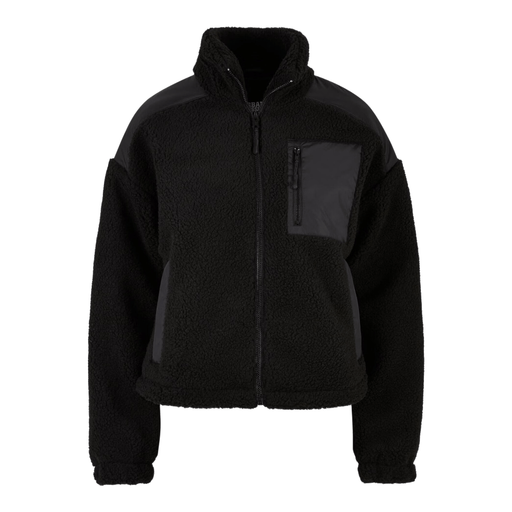
Why it suits this profile: This lightweight jacket is designed for everyday use in the city, travelling and walks in dry weather. The combination of sherpa and nylon creates a casual look without promising the features of a technical rain jacket.
The product description does not give a technical waterproof rating. This makes it clear that you should not choose this jacket as a waterproof women’s jacket for prolonged rain.
Sherpa lining, mesh lining, high collar, elasticated cuffs and several pockets according to the product description.
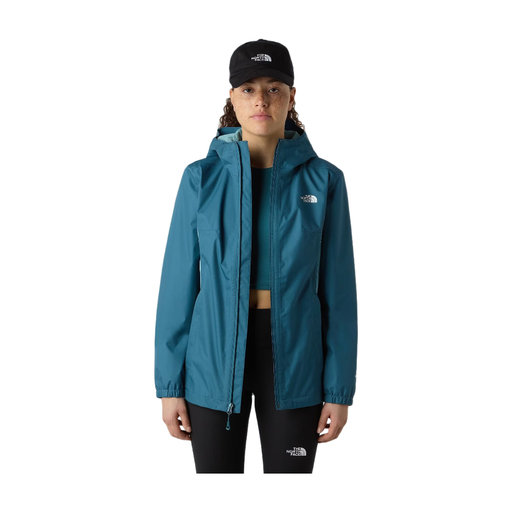
Why it suits this profile: This technical shell is designed for walking and outdoor activities in wet and windy conditions. According to the product description, the jacket can be worn on its own or combined with compatible layers.
The product description lists DryVent as waterproof, windproof and breathable technology. Before buying, however, check that it is compatible with your other Triclimate layer.
Adjustable hood, elasticated cuffs, zipped pockets and an outer fabric made from 100% polyester according to the product details.
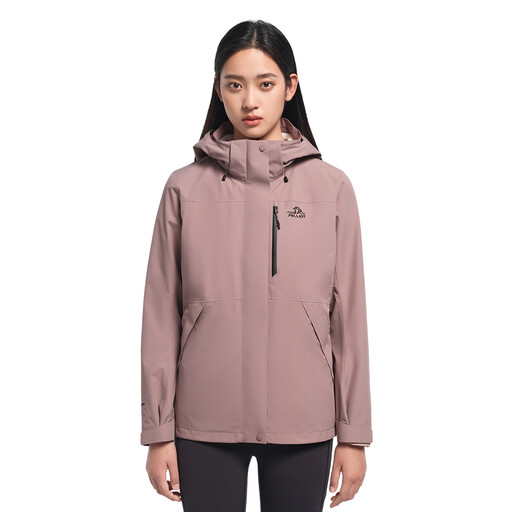
Why it suits this profile: This 3-in-1 jacket is suited to camping, trekking, travelling and commuting. According to the product description, you can wear the shell, lining or both layers.
The product description gives specific figures for hydrostatic head, MVTR and abrasion resistance. This allows you to compare the jacket more accurately than a model described only with general marketing terms.
35,900 mm H₂O, MVTR 16,000 g/m²/24 hours and more than 40,000 stated abrasion cycles according to the product description; adjustable hood, hem and cuffs.
A jacket will remain useful for longer if you follow the care label. Close zips and fasteners before washing, do not use bleach and check whether tumble drying is permitted. With many waterproof jackets, incorrect washing can affect the finish or breathability.
When trying it on, check the following:
We have put together a complete, up-to-date list of products that fully meet these strict selection criteria and the applicable European safety regulations.
Look for a jacket with a stated hydrostatic head rating, taped or well-covered seams, an adjustable hood and enough room to move. Breathability is also important for strenuous walking. A shell can be a suitable choice if you want to add your own warm mid-layer.
No. Fleece is generally designed as an insulating mid-layer, not as protection from rain. Wear a women’s fleece jacket under a waterproof outer layer when you want to combine warmth with protection from precipitation.
That depends on how often you use the different layers. A women’s 3-in-1 jacket can be practical in changeable conditions because you can wear the shell and lining separately. However, compare the fit, technical specifications, care requirements and purchase price with those of a separate rain jacket and fleece jacket.
