
Vandaag of morgen in huis

Kwaliteit gegarandeerd

Welkomstaanbiedingen ontgrendelen: GRATIS bezorging | Tot 80% korting | Gratis 30 dagen JoyPlus-proefperiode
Download de app
A women’s outdoor jacket often needs to do several jobs at once in the UK. You want to stay dry on a bike ride, feel comfortable walking in changeable weather and perhaps stay warm enough at the campsite, too. But not every jacket described as waterproof, breathable or all-weather is suitable for every situation.
The most common buying mistakes usually come down to three pitfalls:
So it pays to look beyond colour and brand and consider the construction, specifications and intended use, too.
When choosing a waterproof women’s outdoor jacket, three features matter:
A standard women’s rain jacket may be enough for your daily commute, but for camping or longer walks, a well-adjustable hood and a robust outer layer are practical features.
A breathable women’s jacket lets water vapour escape from the garment. This is particularly useful when you’re active. Some jackets list an MVTR rating, measured in grams per square metre per 24 hours.
Bear in mind that breathable fabric won’t automatically stop you feeling hot or damp. Base layers, temperature, exertion and ventilation all play a part, too. Underarm zips, a mesh lining or a fit that isn’t too tight can make the jacket more comfortable to wear.
A women’s fleece jacket usually works as a mid-layer. Fleece is suitable for walks, travel and wearing indoors, but on its own it generally won’t provide full protection from the rain. A lined jacket or synthetic insulating layer can offer more warmth in cold, damp weather.
A women’s 3-in-1 jacket usually combines a waterproof outer layer with a removable inner layer. This means you can adapt the jacket to the weather:
Check how the layers attach to each other and whether the fit leaves enough room for an extra jumper.
A women’s walking jacket should allow you to move freely through the shoulders and arms. When ordering online, check:
Sizing varies between brands and styles. Use the size guide for the specific product rather than relying only on your usual size.
Care affects how well a jacket performs. Fasten the zips before washing, follow the wash cycle and detergent instructions on the care label, and avoid fabric softener if the manufacturer advises against it. A water-repellent outer treatment may become less effective over time. Always follow the brand’s instructions when reproofing the jacket.
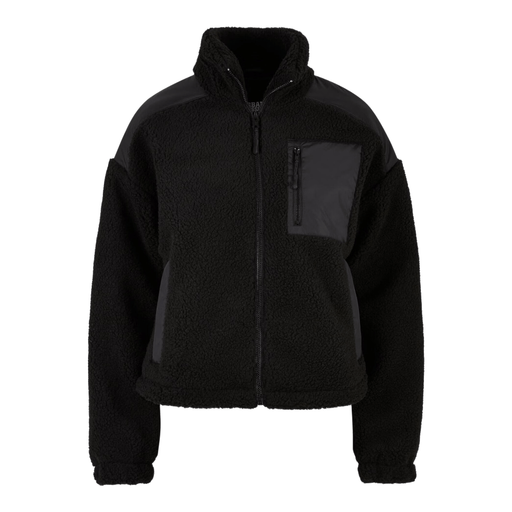
Why it suits this profile: This lightweight jacket is designed for everyday wear, travel and casual time outdoors. Its sherpa and nylon combination is a good fit if comfort and style are your priorities.
The product description clearly identifies this as a casual, lightweight design. Don’t expect to use this style as a technical rain jacket.
Sherpa fabric, mesh lining, stand-up collar, elasticated cuffs and multiple zipped pockets.

Why it suits this profile: This The North Face women’s jacket is designed as a shell for walking and changeable conditions. According to the product description, it features seam-sealed DryVent fabric, an adjustable hood and a mesh lining.
The listed features go beyond a simple water-repellent coating: the description mentions fully sealed seams and a treatment that can be renewed.
Windproof and waterproof properties according to the product description, adjustable hem and cuffs, and two zipped pockets.

Why it suits this profile: This style is designed for camping, trekking and commuting in a range of seasons. Its design combines an outer layer with a removable fleece lining.
The product description mentions different ways to wear the layers, so you don’t always have to wear a heavy winter layer. Check the size if you plan to wear extra layers underneath.
According to the product specifications: hydrostatic head of 35.900 mm H₂O, breathability of 16.000 g/m²/24 hours and abrasion resistance of more than 40.000 rub cycles.
We’ve put together a complete, up-to-date list of products that meet these strict selection criteria and current European safety regulations.
No. Check the hydrostatic head, seams, zips and hood. A jacket described as water-repellent isn’t automatically suitable for prolonged or heavy rain.
A shell, such as a waterproof women’s walking jacket, is practical when protection from rain and wind is your priority. In colder conditions, you can wear a fleece jacket or insulating layer underneath. A 3-in-1 jacket combines these functions in one system.
Its lifespan depends on use, friction, washing and care. Check the seams, zips and coating regularly. Wash it according to the care label, and only re-treat an outer layer with a suitable product. A jacket used intensively may show signs of wear sooner than one worn for everyday commuting.
