
Vandaag of morgen in huis

Kwaliteit gegarandeerd

Welkomstaanbiedingen ontgrendelen: GRATIS bezorging | Tot 80% korting | Gratis 30 dagen JoyPlus-proefperiode
Download de app
A women’s outdoor jacket needs to do more than look sporty. In the Netherlands, rain, wind and temperatures can change regularly throughout the same day. Yet many people buy a jacket that disappoints in practice. This is often due to three familiar pitfalls: mistaking a water-repellent coating for fully waterproof material, finding that a warm jacket is not breathable enough, or discovering that the size leaves too little room for an extra layer.
With the right checkpoints, you can compare a women’s waterproof jacket, women’s fleece jacket, women’s windproof jacket or women’s 3-in-1 jacket based on practical features rather than marketing language. Below, you’ll find what to look for and which models suit different situations.
A DWR finish helps raindrops roll off the surface. That does not automatically mean the jacket will keep out prolonged rain. Check whether the product description mentions a waterproof membrane, taped seams and an adjustable hood.
For commuting, a lightweight water-repellent jacket may be sufficient. For walking, hiking or camping in persistent rain, fully sealed seams and a waterproof outer layer are more logical features to focus on.
A thick women’s fleece jacket feels warm, but it does not always protect against rain or strong winds. Fleece usually works as a mid-layer. Adding a shell jacket over it can make the combination suitable for changing conditions.
A warm women’s jacket with a removable inner jacket offers greater flexibility, but pay attention to the weight, fit and room around the shoulders. A jacket that feels too tight when worn with two layers will restrict your freedom of movement.
A hood that does not fit properly, open cuffs and a back that is too short can reduce protection. When looking at a women’s jacket in size M, do not focus only on the letter size. Also check the chest measurement, sleeve length and jacket length. Will you be wearing a jumper or fleece underneath? Take this into account when choosing your size.
Look for terms such as waterproof membrane, seam-sealed or taped seams. A hydrostatic head rating, expressed in millimetres, can provide a technical indication of the water pressure a fabric withstands according to a particular test method. The test method and conditions are important here; a higher figure does not tell you everything about comfort, ventilation or the jacket’s construction.
For the PELLIOT models, the product information states a hydrostatic head of 35.900 mm according to JIS and breathability of 16.000 g/m²/24 hours according to the same standard. These are the manufacturer’s stated product specifications and are not a guarantee for every weather situation.
A waterproof women’s jacket needs to keep moisture out from the outside, while also providing sufficient ventilation during exercise. A mesh lining, ventilation openings and a breathable membrane can help. Breathability matters differently for a gentle cycle or walk than it does for intensive hiking.
According to the product description, the THE North Face Quest Jacket is made from 2L DryVent material with a DWR finish and mesh lining. The description also states that it is windproof, waterproof and breathable. Always check the current product label and care instructions.
A fleece jacket is suitable as a mid-layer for walking, travelling and camping. According to the product description, the THE North Face fleece models are made from 100% polyester fleece and feature a full-length zip, zipped hand pockets and cuffs at the sleeves and hem.
A 3-in-1 model consists of an outer layer and an inner layer that can be worn separately or together. This is practical if you are looking for one outdoor jacket for walking and camping, everyday use and travel. Do pay attention to the fit of both parts and the care instructions.
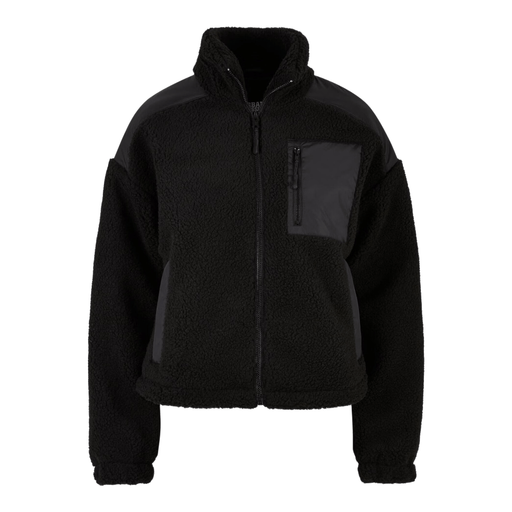
Why it suits this profile: This lightweight jacket is designed for everyday use, travel and walks around town. The combination of sherpa and nylon panels offers a casual alternative to a technical women’s walking jacket.
The product description specifically mentions a mesh lining, elasticated cuffs, an adjustable hem and multiple pockets. The jacket is not presented as a waterproof rain jacket, making it easier to understand its practical limits.
Sherpa fleece, high collar, full-length zip, side pockets and a vertical zipped chest pocket. The stated size is M.

Why it suits this profile: According to the product description, this The North Face women’s jacket is designed as a shell for hiking and changeable weather conditions. Its length and standard fit provide room for a mid-layer.
The product information states that it has fully taped seams, DryVent material, an adjustable hood, cuffs and hem. This makes important construction details visible rather than relying solely on a general claim about protection.
100% polyester outer layer, mesh lining, two zipped pockets and quick-drying fabric according to the product description. In size M, the stated chest measurement is 90–96 cm.

Why it suits this profile: The 3-in-1 construction is designed for camping, trekking and commuting. You can choose the shell, lining or combination depending on the temperature and rainfall.
The product information mentions separate wearing options, an adjustable fit and taped seams. The stated abrasion-resistance and hydrostatic head figures are manufacturer’s specifications and should be read as such.
3-in-1 system, adjustable hood and cuffs, fleece lining and a stated hydrostatic head of 35.900 mm according to JIS. Refer to the body measurement and length chart for sizing.
We’ve put together a complete, up-to-date list of products that fully meet these strict selection criteria and the applicable European safety regulations.
First, use the chest, waist and hip measurements in the size chart for the specific model. Size M can vary between brands. For example, the Quest Jacket lists size M as suitable for a chest measurement of 90–96 cm. The PELLIOT model also lists the outer and inner measurements separately.
Also check:
Wash a technical jacket according to the label. Fasten the zips before washing and do not use bleach unless permitted. Some materials may need their water-repellent finish to be reapplied over time. Follow the manufacturer’s instructions for this.
A women’s fleece jacket is generally designed as a warm mid-layer, not as a standalone rain jacket. In wet weather, combine fleece with a waterproof outer layer. Always check the product description before buying a jacket for rain.
A women’s rain jacket is usually a single protective outer layer. A women’s 3-in-1 jacket consists of a shell and an inner jacket that can be worn separately or together. The second option offers more combinations, but may be heavier and bulkier.
Its lifespan depends on how often it is worn, friction, washing and maintenance. Look for signs of wear around the shoulders, cuffs and seams. Follow the washing instructions and only reapply a DWR finish when recommended by the manufacturer. Frequent use with a heavy rucksack can put more strain on the outer fabric.
