
Vandaag of morgen in huis

Kwaliteit gegarandeerd

Welkomstaanbiedingen ontgrendelen: GRATIS bezorging | Tot 80% korting | Gratis 30 dagen JoyPlus-proefperiode
Download de app
A women’s outdoor jacket needs to cope with changeable weather in the UK. Rain on a walk, wind while cycling and chilly mornings do not always call for the same jacket. Yet many models look alike online. Marketing terms such as “all weather”, “waterproof” and “thermo” only become meaningful when you check the technical details and fit.
A jacket with a water-repellent coating can keep out light drizzle temporarily. That does not make it a waterproof women’s jacket for prolonged rain. Check whether the product description mentions a hydrostatic head, membrane or taped seams. Without this information, it is difficult to assess how well the jacket will protect you in heavy rain.
Also pay attention to the zips, hood and seams. Waterproof fabric is of little use if rain gets in through open seams or a poorly covered zip.
A thick outer jacket is not automatically warm. The lining, insulation and room for an extra layer also affect comfort. A women’s fleece jacket can be useful as a mid-layer, but it generally offers less protection against wind and rain than a jacket with a separate outer shell.
For changing temperatures, a 3-in-1 women’s jacket is a practical choice. You can wear the lining and outer layer separately or combine them. Do check that both parts fit together properly and that the size allows room for layers.
Sizes vary between brands and models. With a women’s walking jacket in particular, freedom of movement is important: the shoulders should not pull when you reach your arms forwards, while too much room can cause heat loss. Measure your bust, waist and hips, then compare these measurements with the product size chart.
With a women’s trekking jacket, also check the sleeve length, adjustable cuffs and the space around the hood. A jacket that is only comfortable when you are standing still is less suitable for walking or cycling.
Hydrostatic head is expressed in millimetres of water pressure. A higher value generally indicates greater resistance to water pressure, but performance in real-world conditions also depends on seams, wear and maintenance. The product information for the purple PELLIOT models states a hydrostatic head of 35.900 mm H₂O according to JIS. This is a verifiable product specification taken from the sales information; it is not a guarantee for every weather situation.
The pink PELLIOT version is described as featuring a microporous STORMS BREATH membrane with seam taping. As this is a brand claim, you should read it as the manufacturer’s stated information rather than as an established result from independent testing.
A breathable outdoor jacket helps release moisture and heat during exercise. A commonly used measurement is MVTR, expressed in grams per square metre per 24 hours. The purple PELLIOT jacket states 16.000 g/m²/24 hours according to JIS. For gentle commuting, this may be less important than an effective wind barrier; during trekking or climbing, it becomes more relevant.
No jacket can completely prevent you from becoming warm or damp. Use layers instead, and adjust the zip or cuffs during more strenuous activity.
For camping, trekking and travel, reinforced fabrics and proper care are important. The purple PELLIOT jacket lists 40.000+ abrasion cycles in the product information. This figure comes from the stated product specifications. It does not mean that the jacket will remain undamaged in all conditions, but it does provide a specific point of comparison.
A 100% polyester fleece jacket is particularly useful as a warm mid-layer. The listed The North Face models have a standard fit, zipped pockets and a full-length zip. Always check the care label. Many outdoor jackets should be washed in cold or lukewarm water without bleach; incorrect drying can damage the fabric, coating or insulation.
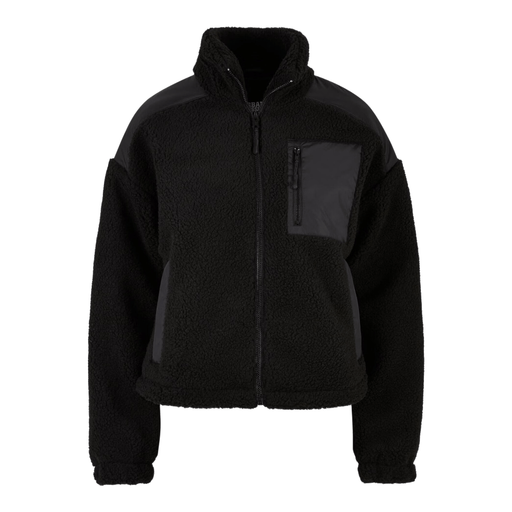
Why it suits this profile: This lightweight jacket is primarily designed for everyday use, travel and milder outdoor conditions. The combination of soft sherpa and nylon details works well with a casual wardrobe.
The product information mentions a high stand-up collar, elasticated cuffs and an adjustable drawcord. No waterproof membrane is listed, so do not use this jacket as a women’s rain jacket in prolonged showers.
Sherpa lining, mesh lining, side pockets and a zipped chest pocket. The relaxed fit leaves room for a thin layer.
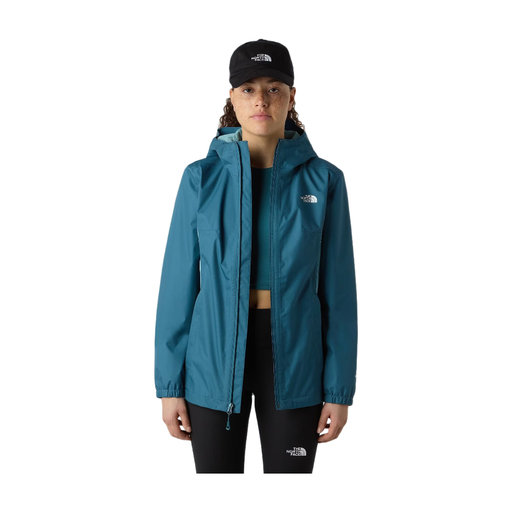
Why it suits this profile: This technical model is designed for walking and outdoor activities in wet and windy conditions. It can be worn on its own or as part of a compatible Triclimate system.
The product description mentions DryVent technology, an adjustable hood, elasticated cuffs and a PFC-free water-repellent finish. Before buying, check the size you need and compatibility with your other layer.
Zipped pockets, a concealed hood adjustment and a design described in the product information as windproof, waterproof and breathable.

Why it suits this profile: The combination of an outer layer and fleece lining is designed for camping, trekking and commuting in colder conditions. The three ways to wear it make adapting to the weather easy.
The product page lists a hydrostatic head of 35.900 mm H₂O, an MVTR of 16.000 g/m²/24 hours and more than 40.000 abrasion cycles according to the stated JIS and test data. These figures provide more useful guidance than the word “waterproof” alone.
3-in-1 construction, adjustable hood, hem and cuffs, fleece lining and zipped pockets. The listed size S has a bust measurement of 102 cm for the outer jacket.
We have put together a complete, up-to-date list of products that fully meet these strict selection criteria and the applicable European safety regulations.
A model from The North Face may be worth considering if you are looking for a fleece, insulated layer or DryVent outer shell. Always compare the product specifications, as the features of a The North Face women’s jacket can vary significantly from one model to another.
Look for a hydrostatic head rating, taped seams, an adjustable hood and a storm flap or water-resistant zip. A jacket described only as “water-repellent” is not automatically suitable for prolonged rain.
Its lifespan depends on use, friction, washing and care. A jacket worn for everyday cycling will wear differently from a women’s camping jacket that is only used occasionally. Wash it according to the care label, fasten the zips before washing and avoid bleach. With a membrane jacket, the outer finish may need periodic maintenance according to the manufacturer’s instructions.
That depends on how you plan to use it. A 3-in-1 model combines an outer layer and an insulating layer, making it versatile. Two separate jackets can sometimes offer more choice in fit, colour and material. So do not compare only the purchase price; also consider the wearing options, sizing and care requirements.
