
Vandaag of morgen in huis

Kwaliteit gegarandeerd

Welkomstaanbiedingen ontgrendelen: GRATIS bezorging | Tot 80% korting | Gratis 30 dagen JoyPlus-proefperiode
Download de app
A women’s outdoor jacket often needs to fulfil several roles in the UK. The same jacket might come with you on a walk in the countryside, a cycle to work and a weekend camping trip. But one style won’t necessarily suit every situation. A lightweight shell protects you from rain but offers little warmth. A padded winter jacket is comfortable in cold weather, but can feel too warm on an active walk.
The most common buying mistakes usually come down to three familiar pitfalls:
For a genuine women’s rain jacket, the fabric and coating aren’t the only things that matter. Check whether the product description mentions taped or fully sealed seams, an adjustable hood and cuffs that help keep out wind and water. A well-fitting waterproof women’s jacket offers better protection in heavy rain than a short jacket with unsealed seams.
Technical styles sometimes list a hydrostatic head rating. For example, according to the product description, the PELLIOT 3-in-1 jacket has a hydrostatic head of 35.900 mm H₂O according to JIS. This is a product specification provided by the brand; practical protection also depends on the construction, use, wear and care of the jacket.
If you’re looking for a women’s walking jacket for hilly terrain or brisk walks, it’s worth checking whether an MVTR rating is provided. This indicates how much water vapour the fabric can let through under a specific test method, usually expressed in g/m²/24 hours. A higher rating may be useful during exercise, but it doesn’t guarantee you’ll always stay dry.
Ventilation zips, a mesh lining and an adjustable hem are just as practical. According to the product description, The North Face Quest Jacket uses DryVent fabric, with a mesh lining and fully sealed seams. Its performance is based on the brand’s stated product specifications.
A women’s fleece jacket often works well as a mid-layer under a shell. Fleece is relatively lightweight and adds warmth without greatly restricting your freedom of movement. For colder conditions, a padded women’s winter jacket or a women’s 3-in-1 jacket is more practical, as you can adjust the layers.
When trying on a jacket, check for:
Always check the specific size guide. For some styles, a women’s size L or XL won’t correspond to the same body measurements as it would for another brand. Measurements may also be given in centimetres, inches or according to a brand-specific sizing system.

Why it suits this profile: A practical shell for walks, commuting and changeable weather, without built-in winter insulation.
The product description mentions fully sealed seams, an adjustable hood and elasticated cuffs. That means you don’t have to rely on a water-repellent outer layer alone.
100% polyester 2L DryVent according to the product description, a mesh lining, two zipped pockets and an adjustable hem.
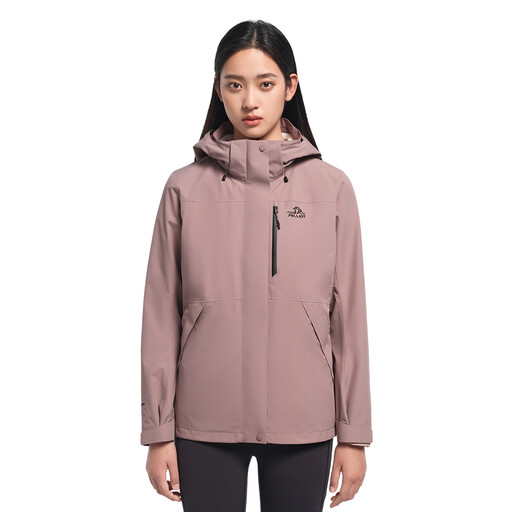
Why it suits this profile: For anyone looking for one system for camping, travel, cold days and everyday commuting.
The 3-in-1 design lets you wear the outer layer, lining or both together. This means you’re less reliant on a single fixed level of warmth.
According to the product description: 35.900 mm H₂O hydrostatic head, breathability of 16.000 g/m²/24 hours and a stated abrasion resistance of more than 40.000 rub cycles.
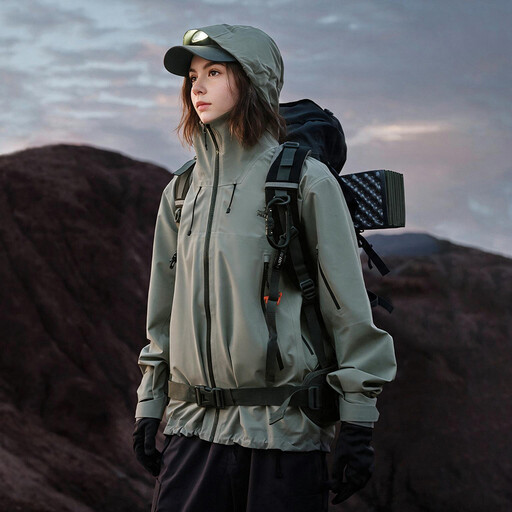
Why it suits this profile: Designed for strenuous walks, rougher terrain and activities where ventilation and freedom of movement matter.
The product description mentions long ventilation zips under the arms. These are useful when a fully zipped-up jacket feels too warm during exercise.
According to the product description, the style has a breathable mesh lining, a zipped chest pocket and a RECCO reflector. Before buying, check that the unisex fit suits your build.
We’ve put together a complete, up-to-date list of products that meet these strict selection criteria and the applicable European safety regulations.
Even a jacket with good specifications will lose performance if you don’t care for it properly. Wash a technical jacket according to the care label, and don’t use fabric softener if the manufacturer advises against it. Zip up the pockets before washing and allow the jacket to dry as instructed. A DWR treatment can wear off over time; follow the brand’s care instructions when reproofing.
A fleece jacket usually needs a gentle wash and should be left to dry naturally. Before buying, also check the returns policy, stock by colour and available sizes. This is particularly useful if you’re looking for a women’s size M, L or XL jacket.
Choose a shell with a stated waterproof construction, sealed seams, an adjustable hood and plenty of room to move. For cold conditions, pair it with a fleece or insulating layer. A lightweight women’s rain jacket is often enough for short walks; for longer trips, ventilation and layering are more important.
It can be, depending on the insulating layer, fit and weather conditions. A 3-in-1 style offers several ways to wear it, but don’t treat the manufacturer’s stated temperature guidance as a guarantee. Wear suitable base layers in cold weather too, and check that there’s room for a fleece jacket underneath.
Its lifespan depends on how it’s used, friction, washing and care. A jacket worn mainly in town may wear differently from one used on rocky terrain and camping trips. Check the seams, zips and water-repellent finish regularly. Follow the care label and don’t wash or treat the jacket at a higher temperature or more aggressively than instructed.
