
Vandaag of morgen in huis

Kwaliteit gegarandeerd

Welkomstaanbiedingen ontgrendelen: GRATIS bezorging | Tot 80% korting | Gratis 30 dagen JoyPlus-proefperiode
Download de app
A women’s outdoor jacket needs to cope with changeable weather in the Netherlands. A brief shower, strong wind or chilly morning won’t always call for the same jacket. Yet many styles look similar at first glance. Marketing terms such as “all-weather”, “waterproof” and “breathable” only tell you so much: check the technical details and construction to find out what they really mean.
In this buying guide, you’ll find out what to look for in a waterproof women’s jacket, women’s rain jacket, women’s walking jacket or jacket for camping. We’ll also compare a few styles for different situations.
A Durable Water-Repellent finish, often abbreviated to DWR, helps raindrops roll off the outer fabric. The North Face’s product description says that the Quest Jacket has a DWR finish. However, that doesn’t automatically mean the jacket will keep out heavy rain for an extended period. Check whether the seams are sealed and whether a waterproof membrane or laminate is mentioned, too.
A jacket described as “water-repellent” may be perfectly suitable for commuting in light rain, but it’s less suitable as a women’s hardshell jacket for a long walk.
A thick fleece lining can keep you warm, but during a brisk walk or climb, excess heat may not escape quickly enough. A women’s fleece jacket often works well as a mid-layer. For more strenuous activities, pair it with a breathable outer layer.
Look out for the difference between:
A jacket that fits well without a jumper may feel too tight with a fleece or thick clothing underneath. Check the chest, waist and arm measurements, and look at the jacket length. An adjustable hood, cuffs and hem help keep the wind out. Sleeves that are too long can get in the way when cycling; a back that’s too short offers less protection when bending or sitting.
A denim jacket, such as the SEMIR Women's Denim Jacket Casual Short Fit, may be suitable for everyday wear in dry weather. The available product information doesn’t mention waterproof or windproof properties, so don’t treat this type of jacket as an alternative to a women’s rain jacket.
A technical waterproof jacket should ideally specify a hydrostatic head rating, membrane or laminate. The PELLIOT fleece-lined jacket is listed as having a hydrostatic head of 35.900 mm H₂O, according to the product description. The PELLIOT hardshell is described as being made from waterproof and wind-resistant material with a waterproof laminate.
A higher figure isn’t the only thing to consider. Also check:
Breathability is sometimes expressed as MVTR, for example in g/m²/24 hours. The product description lists an MVTR of 16.000 g/m²/24 hours for the PELLIOT 3-in-1 jacket. This is a technical specification provided by the seller, not a guarantee that everyone will find the jacket equally comfortable in all conditions.
For gentle walks or everyday journeys, a mesh lining and ventilation may be enough. For more strenuous walks, cycling or climbing, breathable materials, ventilation zips and a fit that isn’t too tight are more important.
Polyester and nylon are commonly used in outdoor jackets. An outer layer protects you from the weather, while fleece mainly provides insulation. Always follow the care label. DWR finishes can become less effective with washing and wear. Fabric softener may affect technical properties, so only use care products that the label says are suitable.

Why it suits this profile: According to the product description, this shell is designed for walking and changeable weather. Sizes range from XS to 3XL, so you can choose one with room for a mid-layer.
The description mentions two-layer DryVent fabric, fully sealed seams, windproofing and an adjustable hood. Be sure to check the size and latest product information before buying.
100% polyester outer fabric, mesh lining, two zipped pockets, and an adjustable hem and cuffs.
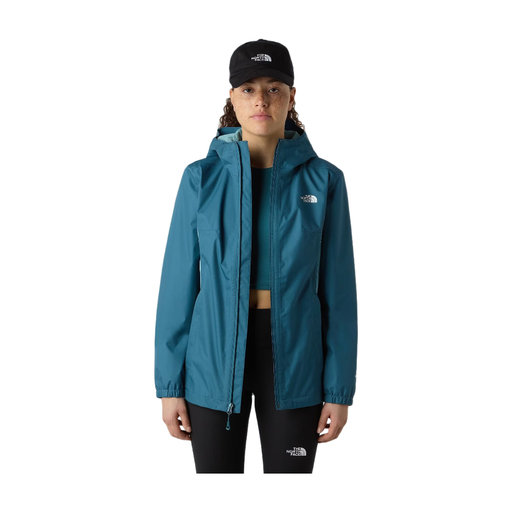
Why it suits this profile: According to the product description, this technical jacket is designed for walking and demanding outdoor activities in wet and windy weather.
The description mentions DryVent, an adjustable hood, elasticated cuffs and the option to wear the jacket as a standalone layer or as part of a compatible system.
100% polyester outer fabric, water- and windproof properties according to the product description, and a zip-in-compatible design.
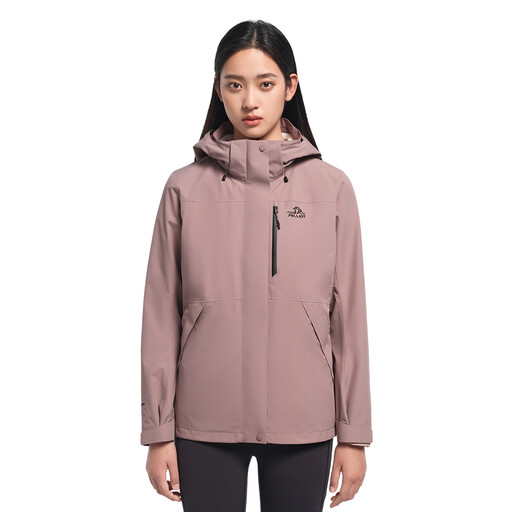
Why it suits this profile: A practical choice for camping, travelling and commuting when you want one system that works across several seasons.
According to the product description, you can wear the jacket as an outer layer, an inner layer or as a combined 3-in-1 jacket. This lets you adjust the insulation to suit the activity and temperature.
The seller lists a hydrostatic head of 35.900 mm H₂O, an MVTR of 16.000 g/m²/24 hours and a fleece inner layer.
We’ve put together a complete, up-to-date list of products that meet these strict selection criteria and the applicable European safety regulations.
A hardshell is mainly designed to protect you from rain and wind as an outer layer. A softshell usually offers greater freedom of movement and can be comfortable in dry, changeable weather, but it isn’t automatically fully waterproof. Always check the product specifications.
Its lifespan depends on how often you wear it, friction, washing and care. Check the zips, seams and outer finish regularly. Follow the care label, and only reproof a DWR finish with a suitable product. If the membrane wears out or the seams start to come away, the jacket may offer less protection.
For light walks, a women’s rain jacket with an adjustable hood and sealed seams may be enough. For camping and longer trips, combining a breathable outer layer with a women’s fleece jacket gives you more flexibility. If you expect temperatures to vary, consider a women’s 3-in-1 jacket. Alongside the technical ratings, always consider the fit, pack size, pockets and care requirements.
