
Vandaag of morgen in huis

Kwaliteit gegarandeerd

Welkomstaanbiedingen ontgrendelen: GRATIS bezorging | Tot 80% korting | Gratis 30 dagen JoyPlus-proefperiode
Download de app
A women’s outdoor jacket needs to handle more than just a brief shower in the Netherlands. During a walk along the coast, a cycle ride to work or a weekend camping trip, rain, wind and temperatures can change quickly. Yet a jacket packed with technical terminology is not automatically the right choice for your needs.
The most important consideration is not the brand or colour, but the combination of water protection, warmth, breathability and fit. Below, you’ll find which features to check and which popular options suit different situations.
Many jackets have a water-repellent finish. This helps against light precipitation, but does not automatically indicate how the jacket performs in prolonged rain. Check whether the product information specifies a water column, membrane or taped seams.
Also pay attention to the zips, hood and seams. A jacket may have a robust outer fabric, while water still gets in through poorly sealed seams.
A thick fleece jacket for women can be comfortable during a leisurely walk, but heat can quickly build up during a strenuous climb or cycle ride. Without sufficient ventilation or breathable fabric, the inside can feel clammy.
A warm women’s jacket is therefore not always the right choice for intense activity. For trekking or longer walks, a combination of insulation and breathability is often more practical.
In winter, you will often wear an outdoor jacket over a base layer, fleece or jumper. A close-fitting jacket can pull across the shoulders and arms, while an overly loose jacket allows cold air to enter.
Check the size chart and compare your chest, waist and hip measurements with the listed figures. Also confirm whether the measurements refer to the jacket itself or to body measurements. With a women’s 3-in-1 jacket, allow for the additional thickness of the inner layer.
For a women’s rain jacket or waterproof women’s jacket, construction is at least as important as the material. A stated water column is generally expressed in millimetres of water pressure. A higher figure indicates greater resistance to water pressure, but the actual level of protection also depends on the seams, zips, hood and wear over time.
The PELLIOT 3-in-1 jackets specify a water column of 35,900 mm H₂O according to JIS in the product description. This is a product specification based on the information provided; it is not a guarantee of performance in every weather condition or after intensive use. The pink version also specifies a microporous STORMS BREATH membrane and taped seams.
Breathability is often expressed as MVTR: the amount of water vapour that can pass through one square metre of fabric in 24 hours. A higher MVTR rating can be beneficial during activities that make you sweat, but ventilation openings, clothing layers and exertion levels also play a role.
The purple PELLIOT version specifies an MVTR of 16,000 g/m²/24 hours according to JIS. This makes the specification relevant for walking, commuting and camping, where you want to use one jacket in a range of conditions. Always check that the figure comes from a test method rather than from general marketing copy alone.
A women’s fleece jacket generally works as an insulating mid-layer. Fleece is relatively lightweight and usually dries faster than heavy, moisture-retaining fabrics. However, it does not automatically protect against heavy rain or wind. Pair fleece with a suitable shell when you are active outdoors in changeable weather.
A women’s 3-in-1 jacket consists of an outer jacket and a removable inner layer. According to the PELLIOT product description, you can wear the shell, liner or both layers together. This offers flexibility, but check that the attachment points, zips and fit remain comfortable when both layers are worn.
For trekking, camping and mountainous terrain, reinforced seams, sturdy zips and abrasion-resistant fabric are important. An adjustable hood, cuffs and hem help keep draughts out. Zipped pockets keep keys or your phone secure while walking.
The purple PELLIOT jacket specifies more than 40,000 abrasion cycles in the product information. Treat this as a verifiable product specification, not a promise that the jacket will remain undamaged in every situation. Also review the care instructions: for this jacket, they include washing on a cold, gentle cycle and air-drying.
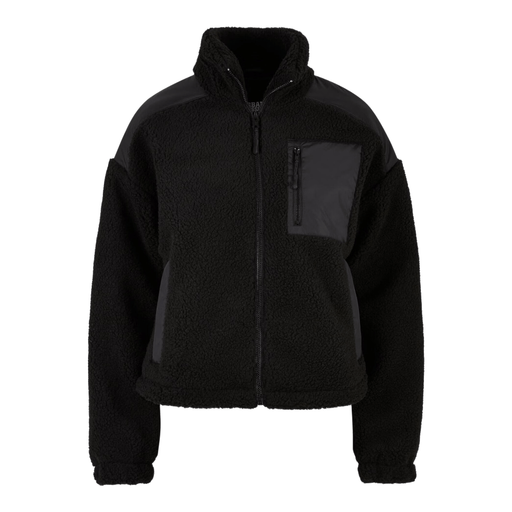
Why this choice works: The lightweight Sherpa blend is designed for everyday use, shopping, travel and commuting in dry or mildly changeable weather.
The product description clearly highlights a lightweight construction and mesh lining. Do not expect this jacket to function as a full-fledged women’s rain jacket for prolonged rainfall.
Sherpa fabric, nylon panels, elasticated cuffs, hand pockets and an adjustable hem.
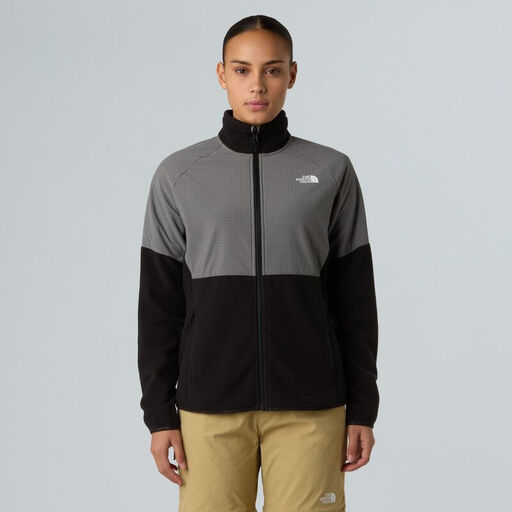
Why this choice works: This women’s fleece jacket is designed as a mid-layer for walking, camping and everyday use. According to the product description, it can be combined with compatible Triclimate clothing.
The product information positions fleece as a mid-layer. You are therefore not buying a standalone waterproof women’s jacket, but a layer intended for combination use.
100% polyester fleece, full-length zip, zipped pockets and a regular fit suitable for layering.
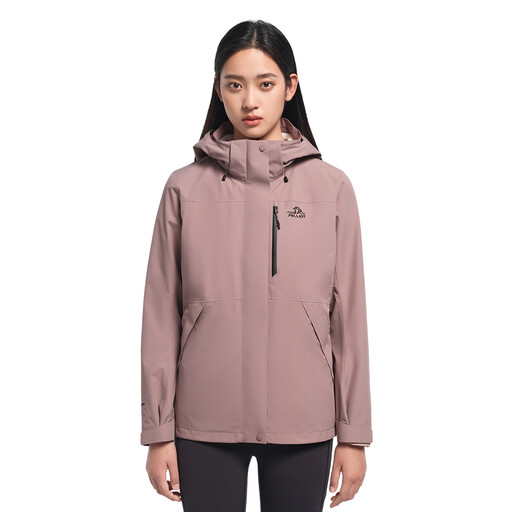
Why this choice works: According to the product description, the shell-and-lining combination is designed for camping, trekking, travel and commuting in changeable conditions.
You do not have to commit to one fixed level of warmth: according to the stated information, the inner and outer layers can be worn separately or together.
Stated water column of 35,900 mm H₂O, MVTR of 16,000 g/m²/24 hours and more than 40,000 abrasion cycles according to the product description.
Take your measurements while wearing thin clothing and compare the results with the official size chart. For the PELLIOT jacket in size M, for example, the chart specifies a 106 cm chest measurement for the outer jacket and 96 cm for the inner layer. This difference matters if you intend to wear both layers together.
For a women’s walking jacket, also check:
For The North Face models, body measurements for the chest, waist, hips and arm length are provided. Use these figures alongside your own measurements and check the selected colour and size variant separately.
Browse a current selection of jackets and compare materials, sizes and intended uses before ordering.
Look for a women’s rain jacket with a stated water column, well-finished seams and an adjustable hood. For intensive walking, a breathable women’s jacket is more practical than a fully sealed jacket without ventilation options. If you also need warmth, choose a model with a removable fleece or insulating layer.
That depends on the wind, your activity level and the layers underneath. Fleece can serve as a warm mid-layer, but on its own it offers limited protection against rain. In cold, wet weather, combine fleece with a wind- and water-resistant outer layer.
A 3-in-1 model is a practical choice for women who want to use one jacket across multiple seasons. You can wear the outer layer in the rain, the lining in mildly cold weather and both layers together when you need additional insulation. Before buying, check the weight, the fit with both layers and the care instructions.
