
Vandaag of morgen in huis

Kwaliteit gegarandeerd

Welkomstaanbiedingen ontgrendelen: GRATIS bezorging | Tot 80% korting | Gratis 30 dagen JoyPlus-proefperiode
Download de app
A women’s The North Face fleece jacket can be a good choice for walking, camping, everyday wear and as a midlayer under a waterproof jacket. However, a well-known brand name doesn’t automatically mean a particular style will suit your shape, activity or other clothing layers. Pay particular attention to the construction, sizing and intended use.
Fleece retains warmth, but on its own it doesn’t provide full protection from rain. Wind can pass through the fabric, and it can become damp in prolonged rain. If you’re looking for a warm women’s fleece jacket for changeable British weather, it’s best to wear it with a breathable outer layer.
According to The North Face’s product description, the NF0A8DZY model is designed as a midlayer and can be worn with a Triclimate jacket. That doesn’t mean every combination will automatically feel comfortable. Check that there’s still room under the fleece for a base layer and that your outer jacket isn’t too tight.
An S or M can vary between brands and styles. What’s more, a women’s fleece midlayer often needs a little extra room to fit over a shirt or lightweight thermal layer. Check your bust, waist and hip measurements, and compare them with your own.
The size chart provided for the NF0A8DZY runs from XXS to 3XL. For example, size M is listed for a bust measurement of 35.5–37 inches; size L for 37.5–40 inches. Always check the product page to see which size chart applies to your chosen colour and size.
A heavyweight fleece can feel lovely and warm, but too much bulk can be uncomfortable under a rain jacket or when walking at a brisk pace. Look for a full-zip fleece jacket, as it gives you more control over ventilation than a pullover style. Cuffs, hem and pockets also affect how practical the jacket is when you’re out and about.
According to the product information, the The North Face models mentioned are made from 100% polyester fleece. Polyester is generally practical after light exposure to moisture and is suitable for an easy-care outdoor layer. The product description calls this a classic, heavyweight fleece that provides warmth without extra bulk.
Bear in mind the difference between fleece and synthetic insulation. A fleece jacket has a soft, knitted or brushed texture; an insulated jacket has filling. Fleece is often a versatile choice for everyday wear and layering. If you’ll be sitting still in low temperatures, a padded jacket may be a better option.
A standard fit usually leaves room for a shirt or lightweight base layer. That’s practical for walking and camping, as long as the shoulders and underarms don’t pull when you move. If you want to wear the jacket under a waterproof shell, check in particular:
Zipped pockets are useful for keys, a mobile phone or a small walking map. According to the product description, the NF0A8DZY has zipped pockets for essentials and a full-length front zip. Some versions also list bound or reinforced finishes at the cuffs and hem.
For active use, a full zip is often more convenient than a half zip: you can open the jacket quickly while climbing, walking or cycling. A fleece jacket for walking should be warm, but also easy to put on and take off.
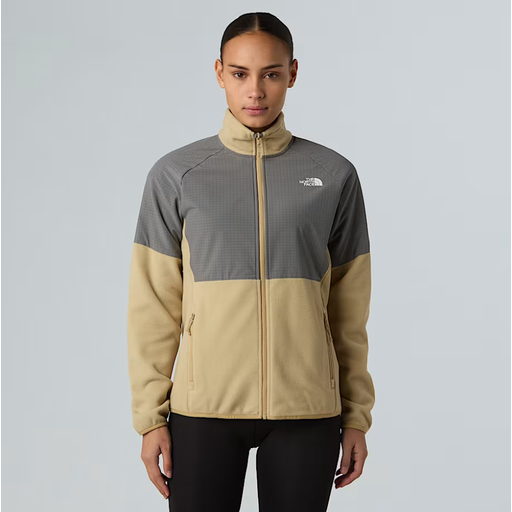
Why it suits this profile: A full-zip fleece in a neutral colour works well for everyday journeys, gentle walks and layering in spring and autumn.
The product information specifies 100% polyester fleece, a standard fit and zipped pockets. This means you can check the key material and usage details in advance.
100% polyester fleece, a full-length zip and zipped pockets; available in size XS.
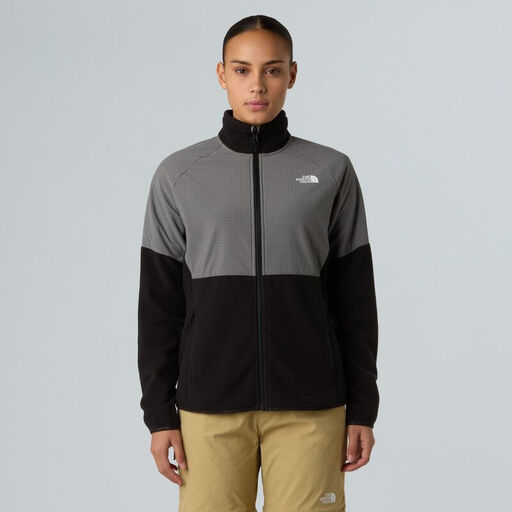
Why it suits this profile: The black version works with a range of outdoor and everyday outfits, while size M leaves room for a base layer.
The size chart lists bust, waist, hip and arm measurements. You can therefore choose based on your body measurements rather than relying on the letter size alone.
Standard fit, 100% polyester fleece and zipped pockets; according to the product description, suitable as a layer under a breathable outer jacket.
Why it suits this profile: The larger size is practical if you wear the fleece over several layers when camping, mountaineering or going on longer walks.
A full zip makes it easier to regulate ventilation during exercise. The zipped pockets help keep small items secure.
Size L, standard fit, zipped pockets and a 100% polyester fleece construction.
Always follow the care label inside the jacket. The product information recommends washing at a maximum of 40 °C with similar colours, turning the jacket inside out and using a mild detergent. Do not bleach or iron, and leave it to air dry. Avoid tumble drying unless the care label allows it.
How long the jacket lasts depends on how often you wear it, friction from rucksack straps and how many times it’s washed. Wash it only when necessary and fasten the zips beforehand. This helps reduce wear to the fabric and other garments.
We’ve put together a complete, up-to-date list of products that fully meet these strict selection criteria and the applicable European safety regulations.
Fleece is primarily an insulating layer, not a substitute for a waterproof jacket. In rainy weather, wear a suitable shell over the fleece and check that both garments allow enough room to move.
Measure your bust, waist and hips, then compare them with the size chart for the specific model. If you want to wear the fleece over a shirt or lightweight midlayer, allow for extra room. Check the sleeve length too, especially if you’ll be wearing the jacket for walks.
Wash the jacket when it’s dirty or visibly sweaty. Use a mild detergent, fasten the zips and follow the care label. Air drying helps avoid unnecessary heat and wear.
