
Vandaag of morgen in huis

Kwaliteit gegarandeerd

Welkomstaanbiedingen ontgrendelen: GRATIS bezorging | Tot 80% korting | Gratis 30 dagen JoyPlus-proefperiode
Download de app
In the Netherlands, a jacket needs to do more than look good. Rain, wind, changeable temperatures and cycling to work or school all call for different features than a walk in the woods. Yet many women’s and men’s jackets are chosen mainly for their colour, brand or discount. As a result, a jacket can turn out to be too warm indoors, not waterproof enough for a shower or difficult to care for.
When buying, look out for these three common pitfalls:
The right choice starts with when and where you’ll wear your jacket.
Brand names such as The North Face jackets and US Polo Assn. jackets can help you narrow down your search, but the brand doesn’t replace checking the product specifications.
For waterproof jackets, sealed or taped seams are important. Water can seep in through stitched seams, even when the fabric itself keeps water out. An adjustable hood, elasticated cuffs and a drawcord at the hem also help limit the gaps where rain and wind can get in.
Know the difference between:
When a brand uses technical names such as DryVent, base your assessment on the construction described. According to The North Face product information, certain styles have a waterproof, windproof and breathable DryVent layer. This is a product claim made by the brand, not a general guarantee for every situation.
A thick jacket isn’t always the most practical choice. For walking or cycling, a fleece jacket worn under a waterproof outer layer may be easier to adapt to changing conditions. A padded jacket may be more comfortable when you’re standing around or on a cold commute.
So check:
Polyester is commonly used in winter jackets, outdoor jackets and fleece jackets. It can be lightweight and easy to care for, but its properties vary depending on the weave, lining and finish. So a jacket made from 100% polyester doesn’t, by itself, tell you how warm or waterproof it is.
Measure your chest, waist and, if needed, arm length according to the product’s size guide. When shopping for women’s and men’s jackets, don’t rely on the letter size alone: size guides can vary between brands. If you want to wear a thick jumper under your jacket, allow extra room around the shoulders and underarms.
Care has a direct impact on how long your jacket lasts. Some styles can be machine-washed at a low temperature, while others can only be hand-washed. Some jackets must not be tumble-dried, ironed or dry-cleaned. Always follow the care label; incorrect washing can affect the water-repellent finish on jackets with technical coatings.
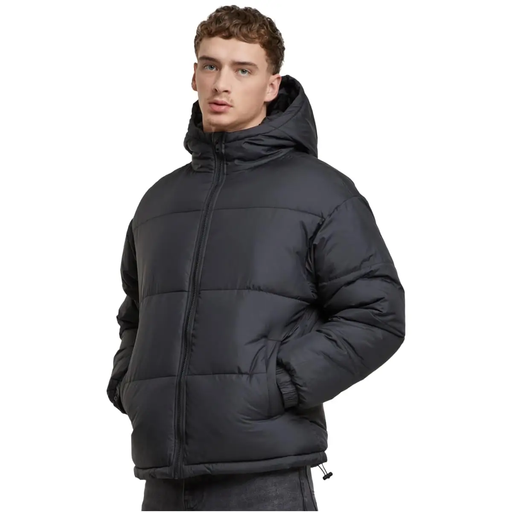
Why it suits this profile: This style is designed for everyday wear and has a hood, polyester filling and a polyamide outer layer. That makes it a practical first choice for cold days in the city.
The product information lists the outer fabric, filling and lining separately. This lets you check the composition instead of relying on the term ‘winter jacket’ alone.
Hood, polyester filling and several care options, according to the product description.

Why it suits this profile: According to the product information, this outdoor jacket is designed for walking and changeable weather. The fit and size guide can help you choose a layer to wear underneath.
The description mentions fully sealed seams, an adjustable hood and a drawcord at the hem. This makes the construction easier to assess than a general claim about rain protection.
According to The North Face: DryVent fabric, windproof and waterproof construction, mesh lining and two zipped pockets.

Why it suits this profile: The 3-in-1 system is designed for changeable conditions during outdoor activities. According to the product information, the outer layer and insulating inner layer can be worn separately or together.
Rather than offering just one level of warmth, the system gives you several ways to wear it. Check that the combined fit works with the layers you plan to wear.
3-in-1 design, GORE-TEX outer material according to the product information, and an inner layer with 550 fill power down.
We’ve put together a complete, up-to-date list of products that meet these strict selection criteria and the applicable European safety regulations.
Layering is often a practical choice: wear a fleece jacket for warmth and a windproof or waterproof outer layer for protection. A padded jacket with a hood may be enough for everyday wear, while walkers may benefit more from a technical outdoor jacket with sealed seams.
A jacket’s lifespan depends on how often you wear it, its material, friction and how you care for it. Wash it according to the care label, fasten the zips before washing and avoid tumble-drying it unless permitted. The water-repellent finish on technical rain jackets may need care or reproofing over time, if the care label allows it.
Check the exact size guide, material composition, fastening, pockets, hood and care instructions. Also check whether the jacket is only water-repellent or whether the product description specifies the seams and construction too. This helps you compare women’s and men’s jackets based on verifiable features, rather than just the photo, brand name or discount.
