
Vandaag of morgen in huis

Kwaliteit gegarandeerd

Welkomstaanbiedingen ontgrendelen: GRATIS bezorging | Tot 80% korting | Gratis 30 dagen JoyPlus-proefperiode
Download de app
A jacket may look great in a product photo and still disappoint in everyday use. When buying women’s jackets, most disappointing purchases come down to three common pitfalls: the wrong fit, unclear weather protection and not considering when and where the jacket will be worn.
For example, an elegant women’s trench coat is ideal for commuting, but not necessarily for a long walk in heavy rain. A lined women’s winter coat may be warm, but feel too heavy when travelling. And an attractive black women’s jacket or purple women’s jacket tells you nothing about breathability, pockets or adjustable cuffs.
As Joybuy Product Recommendation Officer, I therefore start by looking at verifiable product information: materials, sizing, construction and features. This allows you to compare women’s jackets based on the features that are genuinely practical in the Netherlands.
Not every women’s rain jacket offers the same level of protection. Look for terms such as hydrostatic head, taped seams and a water-repellent finish. A jacket may repel water during a short shower, while cycling, walking or camping may require greater protection.
Also check whether the hood is adjustable and whether the cuffs and hem can keep out the wind. These details help determine how useful a waterproof women’s jacket will be in changeable weather.
A jacket that fits closely can become uncomfortable as soon as you wear a jumper or fleece underneath. Check the bust, waist and hip measurements, and compare them with your own measurements. With a women’s outdoor jacket, freedom of movement around the shoulders is also important.
Remember that size charts vary between brands. For example, a Tommy Hilfiger women’s jacket may use different EU sizing compared with some outdoor brands. Do not choose based solely on the letter S, M or L.
Words such as “all-weather”, “storm-proof” or “lasting warmth” sound convincing, but they need to be considered in context. According to PELLIOT’s product information, the purple 3-in-1 model has a hydrostatic head of 35.900 mm H₂O, breathability of 16.000 g/m²/24 hours and abrasion resistance of 40.000+ rub cycles. These are technical specifications from the product description; they do not guarantee performance in every weather condition or situation.
The same applies to brand claims. According to The North Face’s own information, the Quest Jacket features DryVent construction with taped seams, waterproof and windproof properties, and a DWR finish. Always check the current product page and care label.
Hydrostatic head is measured in millimetres and indicates how much water pressure a material can withstand in a test. A higher figure may be relevant in prolonged rain, but seams, zips and the hood also make a difference. If you spend a lot of time outdoors, look for fully taped seams in a women’s rain jacket.
A water-repellent coating, such as DWR, can become less effective over time. With some jackets, reproofing in accordance with the care instructions may help. This varies depending on the material and brand.
Breathability is often shown as MVTR: the amount of water vapour a fabric can let through over 24 hours. A higher rating can be useful when walking or cycling, but fit, clothing layers and exertion also affect comfort.
For relaxed everyday use, a lined mid-layer jacket may be sufficient. For more demanding walking or camping, combining a breathable outer layer with a women’s fleece jacket as a mid-layer is often more versatile.
A fleece jacket is usually designed as a mid-layer and does not automatically protect you from prolonged rain. A shell jacket, on the other hand, protects against wind and precipitation, but may need additional insulation. A 3-in-1 model combines these functions and can be worn as an outer layer, inner layer or combination, depending on the weather.
Also check:
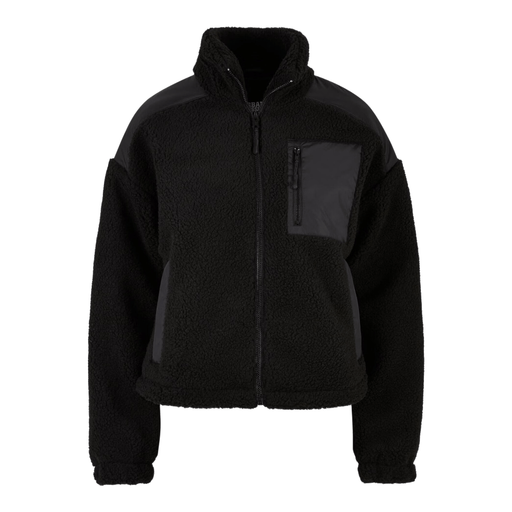
Why it suits this profile: This black women’s jacket is designed for everyday use and combines a soft Sherpa texture with nylon details. The relaxed fit leaves room for a lightweight jumper.
The product description mentions a full mesh lining, elasticated cuffs, adjustable hem and zipped pockets. The jacket is not presented as a rain jacket, making its intended limitations clearer.
Lightweight design; high stand-up collar; side pockets and vertical zipped chest pocket.
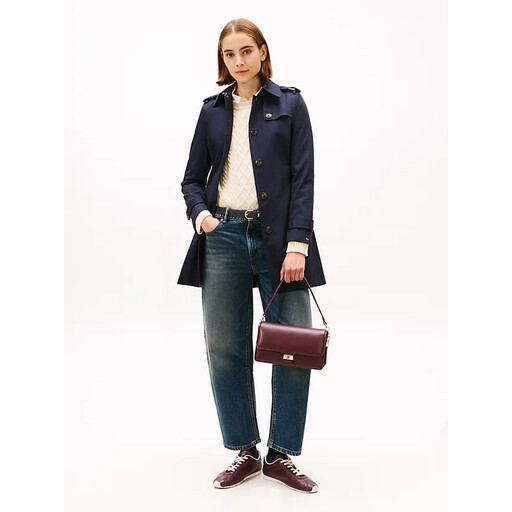
Why it suits this profile: This women’s trench coat is a good match for a polished wardrobe for the office, travel and formal occasions. The midnight colour is easy to style.
The product information specifies 100% cotton and provides separate bust, waist and hip measurements. This allows you to assess the fit more accurately instead of relying on the brand name alone.
Regular fit; detachable tie belt; polyester lining; suitable for transitional weather according to the product description.

Why it suits this profile: This purple women’s jacket is designed for camping, walking, travel and commuting. The 3-in-1 design lets you switch between the outer layer, fleece inner layer and combined jacket.
The product description includes specific figures for hydrostatic head, breathability and abrasion resistance. The hood, hem and cuffs are also adjustable, which is useful in changeable conditions.
35.900 mm H₂O according to the product information; MVTR of 16.000 g/m²/24 hours; sizes S to XXXL.
We have compiled a complete, up-to-date list of products that fully meet these strict selection criteria and the applicable European safety regulations.
Always wash and dry a jacket according to the care label. With technical fabrics, high temperatures, bleach or incorrect drying can affect their performance. Fasten zips before washing and check whether a water-repellent treatment can be reapplied.
That depends on the duration and intensity of the rain. For regular outdoor use, choose a women’s rain jacket with taped seams, an adjustable hood and a specified hydrostatic head. A cotton trench coat is mainly suitable for dry or mildly changeable weather, unless the product information states that it offers additional protection.
Measure your bust, waist and hips at the widest points, then compare these measurements with the size chart for the specific product. Allow for an extra layer if you plan to wear a fleece or thick jumper underneath the jacket. Also check the sleeve and back length, as these can vary between brands.
Its lifespan depends on the material, how often it is worn, the weather conditions and how it is cared for. A jacket worn every day will experience faster wear around the zips, cuffs and shoulders. Store the jacket somewhere dry, follow the care label and only treat technical fabrics with suitable products. Before buying, also check the warranty and returns policy.
