
Vandaag of morgen in huis

Kwaliteit gegarandeerd

Welkomstaanbiedingen ontgrendelen: GRATIS bezorging | Tot 80% korting | Gratis 30 dagen JoyPlus-proefperiode
Download de app
A women’s fleece jacket may seem easy to choose at first glance. However, models can vary considerably in terms of warmth, rain protection and fit. A women’s fleece jacket is often comfortable during a walk, but it is not automatically suitable for a shower or strong winds. If you only look at soft fabric or a familiar brand name, you may end up buying a jacket that proves less practical after a few months.
In this buying guide from the Joybuy Product Recommendation Officer, you’ll learn what to look out for. The selection is based on verifiable product information, such as materials, sizing, hydrostatic head and construction.
Fleece retains warmth relatively well, but it is generally not a rain jacket. A standalone fleece jacket is therefore mainly suitable as a mid-layer or for dry, cool weather. In Dutch conditions, with drizzle, wind and changing temperatures, you may need a separate shell.
When choosing a women’s outdoor jacket, pay attention to the difference between:
Hydrostatic head indicates how much water pressure a material can withstand according to a particular test. A higher value may indicate better rain protection, but seams, zips, the hood and wear also affect everyday performance.
For example, the product description for the PELLIOT fleece-lined jacket states a hydrostatic head of 35,900 mm H₂O according to JIS. This is a claim from the brand’s product information and should not be confused with a general guarantee that the jacket will keep you completely dry in all conditions. Also check whether the seams are taped and how the zip is covered.
A winter walking jacket should provide enough room for a shirt and, if necessary, an extra layer. A fit that is too tight restricts movement and can reduce insulation. A fit that is too loose allows more cold air in.
So don’t just look at S, M or L. Compare the chest, shoulder and sleeve measurements in centimetres with a jacket you find comfortable. With a 3-in-1 model, the inner and outer jackets may have different measurements.
A warm women’s walking jacket does not have to be heavy. Polyester fleece is often used as an insulating layer and generally dries more quickly than cotton. The North Face’s product information lists 100% polyester fleece for the fleece jacket mentioned and positions it as a mid-layer for walking, climbing and camping.
Pay attention to the construction:
For a women’s waterproof jacket, a membrane, taped seams and an adjustable hood are important features. For a women’s windproof jacket, cuffs, hem and the fit around the neck are also important.
Breathability is often expressed as MVTR: the number of grams of water vapour that can pass through one square metre in 24 hours according to a test. The PELLIOT product description states 16,000 g/m²/24 hours according to JIS. This is a specification provided by the brand; real-world performance also depends on exertion, humidity, base layers and ventilation options.
For trekking or intensive walking, underarm zips, an adjustable hood and a lightweight construction are useful. For commuting or as a women’s camping jacket, a longer cut and plenty of pocket space may be more important.
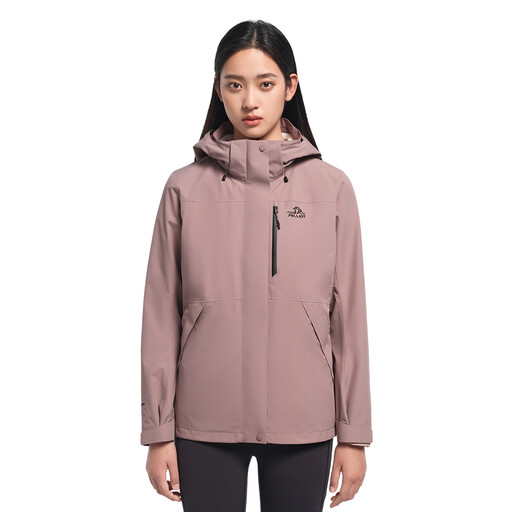
Why it suits this profile: The combination of an outer layer and removable lining offers several ways to wear it for everyday use, camping and short walks.
You’re not just buying a standalone fleece that may quickly fall short in the rain: according to the product description, this is a 3-in-1 model with a shell, liner or combined wearing option.
Stated hydrostatic head of 35,900 mm H₂O, breathability of 16,000 g/m²/24 hours and sizes S to XXXL.
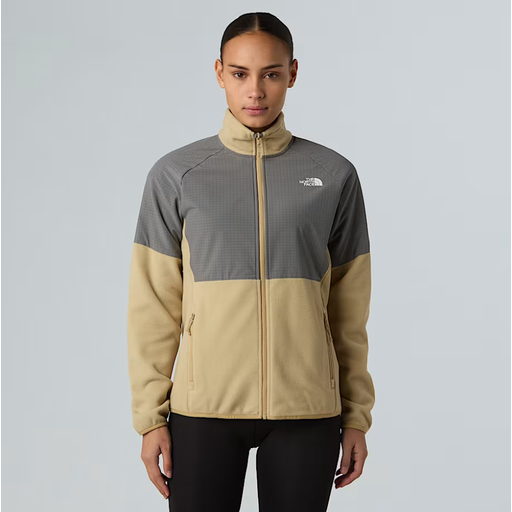
Why it suits this profile: This women’s fleece jacket is designed as a warm mid-layer for walking, alpine activities and camping, and according to the product description, it can be combined with a Triclimate outer jacket.
The product information clearly describes its role as a mid-layer. This makes its function clear: combine the fleece with a separate waterproof outer layer in rainy weather.
100% polyester fleece, full-length zip, zipped pockets and a regular fit according to the product description.
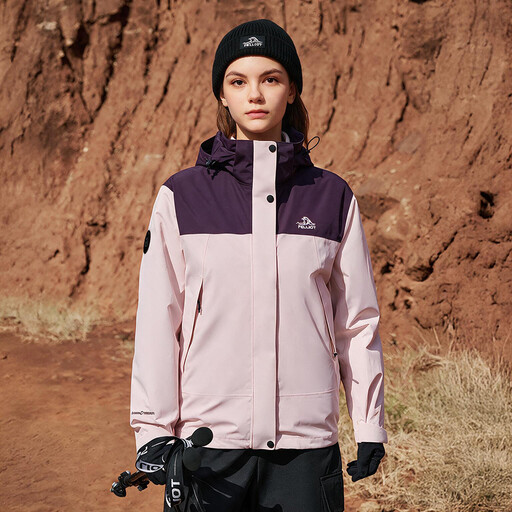
Why it suits this profile: The 3-in-1 construction is designed for camping, trekking and commuting in changing temperatures.
The product description mentions a microporous STORMS BREATH membrane, seam taping and separate wearing options. Before buying, check the current sizing and care information.
According to the product information, the shell, liner and combined wearing option can all be used; the jacket has an adjustable fit and a hard-wearing outer fabric.
We’ve put together a complete, up-to-date list of products that fully meet these strict selection criteria and the applicable European safety regulations.
Always follow the jacket’s care label. For the PELLIOT models mentioned, washing on a cold, gentle cycle is recommended. Fasten zips before washing, do not use bleach and avoid tumble-drying where this is stated in the product instructions. A water-repellent treatment may become less effective over time due to washing and friction. Store the jacket somewhere dry and allow a wet jacket to air-dry completely first.
A standalone fleece jacket is mainly an insulating layer and is generally not intended to serve as a full rain jacket. For prolonged rain, choose a hardshell or a 3-in-1 jacket whose outer layer has waterproof properties according to the product information.
For gentle walks, a fleece may be sufficient as a warm inner layer, combined with a wind- and water-resistant outer layer. In cold, wet and windy weather, a women’s 3-in-1 jacket is practical because you can adjust the layers to suit the conditions. Pay attention to freedom of movement, the hood, cuffs and ventilation.
Measure your chest, waist and hips and compare these measurements with the size chart for the specific model. Allow room for layers. The PELLIOT jackets list separate sizes for the outer and inner jackets. Don’t automatically choose the same size as you would in another brand, as fits and sizing systems can vary.
