
Vandaag of morgen in huis

Kwaliteit gegarandeerd

Welkomstaanbiedingen ontgrendelen: GRATIS bezorging | Tot 80% korting | Gratis 30 dagen JoyPlus-proefperiode
Download de app
A women's fleece jacket can keep you pleasantly warm during a walk, commute or camping trip. However, women's fleece jackets vary considerably in terms of protection, fit and versatility. A soft fleece is not automatically suitable for rain, while a waterproof women's jacket is not always comfortable during physical activity.
So don't focus only on colour or brand name. Pay particular attention to the construction, size chart and how the jacket works with other clothing layers. This will help you avoid buying something that ends up spending most of its time in the wardrobe after just a few months.
Fleece retains warmth reasonably well, but on its own it is usually no substitute for a rain jacket. If you only consider the soft inside, you could still end up soaked during a typical Dutch shower. Check whether the model has a separate outer layer, water-repellent treatment or waterproof membrane.
A women's outdoor jacket is often worn over a shirt, women's fleece gilet or lightweight jumper. A model that is too tight restricts your freedom of movement and can put strain on the zip or seams. Check the chest, shoulder and sleeve measurements, and consider the clothing you plan to wear underneath.
A high hydrostatic head or breathability rating may sound convincing, but it does not tell you everything about everyday comfort. Hood adjustment, cuffs, hem, ventilation and pockets also determine how practical a jacket is. Check the care instructions too: some materials must not be tumble-dried or require a mild detergent.
Fleece is often made from polyester. Its thickness and structure partly determine how much warmth the garment retains. A heavyweight fleece may be suitable as a standalone layer for gentle walks, but it can feel warm more quickly during active exercise. A lightweight fleece is easier to wear under a shell jacket.
The product descriptions for the The North Face models mentioned state 100% polyester fleece and a standard fit. According to the product description, these models are designed as mid-layers and can be combined with compatible Triclimate jackets. This makes them an interesting option as a women's walking jacket for anyone who uses a layering system.
For a waterproof women's jacket, waterproofing is often expressed as a hydrostatic head, for example in millimetres H₂O. A higher figure refers to the greater pressure the material can withstand according to the testing method. Practical protection also depends on the zips, seams, hood and care.
Breathability is often shown as MVTR, in grams per square metre per 24 hours. This is a technical measure of moisture transfer through the fabric. Testing methods and conditions may vary, so only compare figures when the testing standard is the same.
For the PELLIOT jacket, the product description states a hydrostatic head of 35.900 mm H₂O according to JIS and an MVTR of 16.000 g/m²/24 hours according to JIS. According to the brand's product description, the jacket also has an abrasion resistance of more than 40,000 rub cycles. Treat these figures as product specifications, not as a guarantee that you will stay dry or comfortable in every weather condition.
Measure your chest, waist and hips before ordering, then compare these measurements with the chart for the specific model. Sizes vary between brands and designs. For a jacket for walking and camping, extra room around the shoulders and arms is practical. For everyday use, a less generous, more urban fit may feel more comfortable.
Pay attention to the washing instructions. The The North Face fleece models state that they can be washed at a maximum of 40 °C, inside out and with similar colours. Do not bleach, iron or dry-clean are also listed instructions. The PELLIOT product description recommends cold washing on a delicate cycle and states that the jacket must not be tumble-dried.
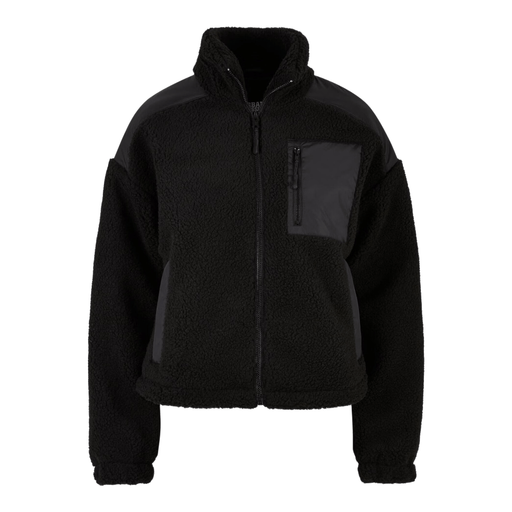
Why it suits this profile: This model is designed for everyday use in the city, travelling and relaxing outdoors. The oversized fit provides plenty of room, while the combination of sherpa and nylon gives the jacket a casual look.
The product description does not mention a waterproof membrane. This makes it clear that the jacket is primarily intended for dry weather and everyday use, rather than as a replacement for a rain jacket.
Sherpa fabric, mesh lining, high collar, elasticated cuffs, side pockets and a zipped chest pocket.
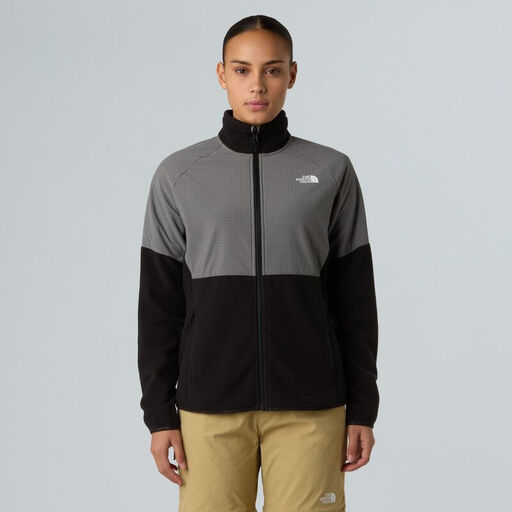
Why it suits this profile: This fleece is ideal for walkers and campers looking for a recognisable mid-layer to wear with a waterproof shell.
The standard fit and stated size chart make it easier to check in advance whether there is enough room for layers. According to the product description, the jacket is offered as a mid-layer, not as rain protection.
100% polyester fleece, full-length zip, zipped pockets and finished cuffs and hem.

Why it suits this profile: The combination of an outer layer and fleece lining is practical for camping, travelling, commuting and changeable weather.
The 3-in-1 design allows the outer and inner layers to be used separately. According to the product description, the hydrostatic head, MVTR and abrasion resistance are listed according to JIS, allowing you to compare these claims with other models.
Detachable combination option, adjustable hood, hem and cuffs; stated hydrostatic head of 35.900 mm H₂O and MVTR of 16.000 g/m²/24 hours according to JIS.
We've put together a complete, up-to-date list of products that fully meet these strict selection criteria and the applicable European safety regulations.
A standard fleece jacket is primarily designed as a warm mid-layer and generally does not provide complete rain protection. In heavy rain, choose a model with a stated waterproof membrane or wear fleece underneath a waterproof women's jacket. Also check that the seams, zips and hood are suited to the design.
In spring and autumn, fleece can be worn as an outer layer in dry weather. In winter, fleece often works as an insulating mid-layer under a shell or warm women's jacket. In summer, a lightweight fleece is useful for cool evenings, travelling and camping.
Always follow the care label for the specific garment. Many polyester fleece models can be washed at a maximum of 40 °C. Fasten the zips, wash inside out and use a mild detergent. Avoid bleach and check whether tumble-drying is permitted. This helps the jacket retain its fit and prevents unnecessary wear.
