
Vandaag of morgen in huis

Kwaliteit gegarandeerd

Welkomstaanbiedingen ontgrendelen: GRATIS bezorging | Tot 80% korting | Gratis 30 dagen JoyPlus-proefperiode
Download de app
A pair of women’s trainers might look appealing in photos, but that tells you little about how they’ll feel after a long day at work, a walk or a training session. If you focus only on colour, brand or discount, you could overlook some common buying pitfalls.
1. Fashion trainers are used for the wrong activity
Casual women’s trainers, such as low-cut leather trainers, aren’t automatically suitable for running. Women’s running shoes generally have a different midsole, fit and outsole construction from everyday trainers. For off-road paths, women’s trail running shoes with tread and extra protection are a more suitable choice.
2. “Comfort” isn’t checked against specific features
Comfort isn’t a fixed standard. So look at details you can check, such as the upper material, insole, sole thickness, fastening and width. A soft insole may feel comfortable, but a non-removable insole leaves less room for your own orthotic insole.
3. You choose a size based on your usual size without checking
Sizing varies between brands and models. For example, the product details for some Skechers women’s trainers state that the model comes up large and recommend going down a size. The Puma Speedcat OG, by contrast, is listed as true to size in European sizing. Always check the size chart, foot length in centimetres and fit information.
For everyday wear, features such as a flexible upper, a standard fit and a rubber outsole are often practical. According to its product description, the New Balance 574 combines suede and mesh with a rubber outsole. That makes it suitable for casual wear, but doesn’t automatically make it suitable for intensive running training.
Women’s running shoes are designed with greater emphasis on cushioning, flexibility and a sport-specific sole. According to the product information, the adidas Runfalcon 5 W has an engineered mesh upper, a lightweight design and a flexible outsole. Use these details as a starting point, but choose according to your running distance, surface and personal fit.
Other features matter on muddy or mixed terrain. The product description for the Salomon Speedcross 5 GTX W mentions a GORE-TEX membrane and a Contagrip TA outsole with deep lugs. According to the brand’s product information, these features are designed to provide water resistance and grip on softer surfaces. That doesn’t guarantee your feet will stay dry in all conditions: maintenance, wear and tear, and how water gets in all play a part.
Mesh and textile are often lightweight and breathable. They can be suitable for walking, travelling and everyday wear, but usually need careful cleaning. The adidas Runfalcon 5 W has a mesh upper and, according to the product information, should be cleaned with a damp cloth.
Leather can give trainers a more structured look and is used on styles including the Nike Dunk Low for women and Puma Speedcat for women. Leather isn’t the same as waterproof material. Follow the care instructions and only apply a protective treatment if this is recommended for the specific model.
Canvas is used on styles such as Converse women’s trainers. According to the product description, the material is lightweight and breathable, but stains may remain visible. A damp cloth and gentle cleaning are usually safer than putting the shoes in the washing machine without checking first.
Check whether the sole is flat, flexible, thick or deeply treaded. A flat rubber sole is more suited to streetwear and casual use; deep lugs are more relevant for trail running. Pay attention to the width of the shoe, too. The supplied product details list width D for several models.
A removable insole can be useful if you need extra room or want to use your own orthotic insole. Not every model offers this option. Several Skechers models are explicitly listed as having a non-removable insole, while the Skechers Bobs Sport Sparrow 2.0 is listed in the product details as having a removable insole.
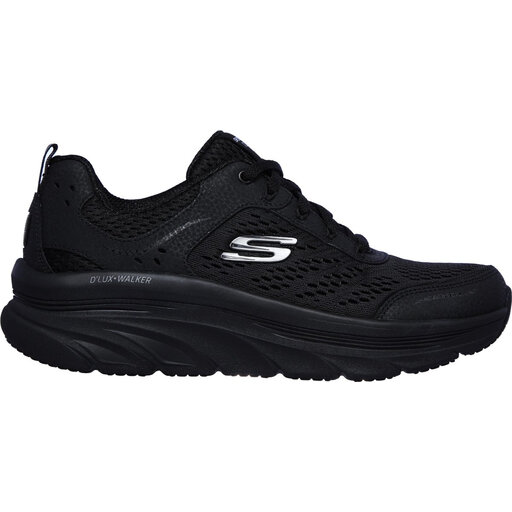
Why it suits this profile: According to the product details, this low-cut style is designed for everyday wear and has a mesh-like upper, lace-up fastening and rubber sole. Be sure to check the size: the sizing information says this model comes up large.
The product information specifies its intended use, width D and size warning. That means you don’t have to rely on looks alone.
Low-cut design, lace-up fastening and rubber sole. According to the product description, they can be machine-washed at a maximum of 30 °C on a delicate cycle.
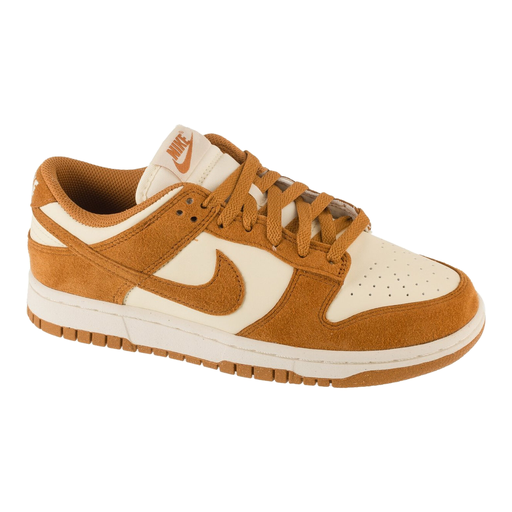
Why it suits this profile: According to the product description, these Nike Dunk Low trainers for women have a leather upper, padded collar and rubber outsole with a pivot-point tread pattern. This makes them a good match for everyday outfits and streetwear.
The materials and sole construction are clearly specified. However, don’t assume these are running shoes: they’re designed primarily for casual wear.
Leather upper, padded collar and rubber sole. Follow the care instructions on the specific product label.

Why it suits this profile: According to the product information, this trail shoe is designed for muddy and mixed terrain. It has a GORE-TEX membrane, Quicklace fastening and an outsole with deep lugs.
Its intended use and sole construction are clearly described. That makes it a more targeted choice than an ordinary white trainer for wet woodland paths.
GORE-TEX according to the product description, Quicklace fastening, OrthoLite insole and treaded Contagrip TA rubber.
We’ve put together a full, up-to-date list of products that meet these strict selection criteria and the applicable European safety regulations.
Look for a standard fit, an adjustable fastening and a sole that’s flexible enough for walking and standing. Based on their product descriptions, Skechers, New Balance, Converse and some Nike Dunk Low models are designed primarily for everyday or casual wear. Always check the material and care instructions.
Their lifespan depends on how often you wear them, the surface, your body weight, how well you care for them and the fit. Everyday trainers can wear out more quickly if you also use them for running or trail running. Look for loose seams, worn-smooth tread, cracks in the upper and compressed cushioning. Alternating between two pairs can give the materials more time to recover.
Remove dirt as soon as possible with a soft brush or damp cloth. Don’t use bleach unless the manufacturer explicitly recommends it. Leave your shoes to air-dry, away from direct heat. Always check the specific care instructions for leather, mesh and canvas trainers; machine washing isn’t suitable for every model.
