
Vandaag of morgen in huis

Kwaliteit gegarandeerd

Welkomstaanbiedingen ontgrendelen: GRATIS bezorging | Tot 80% korting | Gratis 30 dagen JoyPlus-proefperiode
Download de app
A women’s outdoor jacket needs to cope with more than a brief shower in the Netherlands. The weather can change during a walk, you can face a headwind on your bike, and when camping, every layer counts. But an expensive jacket isn’t automatically right for the way you’ll use it. The difference often comes down to details such as the seams, fit, ventilation and room for a fleece.
A jacket with a Durable Water-Repellent finish, often shortened to DWR, initially causes rain to bead on the fabric. That doesn’t automatically mean the jacket will stay waterproof for a prolonged period. Check whether the seams are taped or fully sealed and whether the product description gives a hydrostatic head rating or mentions another testing method.
A waterproof women’s jacket is particularly useful for longer walks, cycling and camping. A basic women’s rain jacket may be enough for short trips around town, but construction and ventilation matter more for more intensive use.
A thick lining retains warmth, but can quickly feel too hot when you’re walking briskly or climbing stairs. A shell with room for a fleece offers more flexibility. A 3-in-1 women’s outdoor jacket usually consists of an outer layer and a removable inner layer. You can wear the layers separately or together.
If you’re considering a fleece-lined women’s jacket, check whether the lining can be removed. That way, you can wear the same jacket in different temperatures without buying several jackets.
Breathability means that moist air can pass from inside the jacket to the outside. How well it works in practice also depends on your activity level, humidity, base layers and ventilation openings. According to some brands’ own product information, this is expressed as MVTR, for example in grams per square metre per 24 hours. Only compare these figures when the same testing method has been used.
A breathable outdoor jacket with underarm zips can be more comfortable for active walks than one without ventilation. However, no jacket can completely prevent you from sweating during intense activity.
Look for the following information:
A jacket described only as “rainproof” or “water-repellent” won’t necessarily offer the same protection as a demonstrably waterproof women’s jacket.
For a windproof women’s jacket, a hood that can be adjusted, close-fitting cuffs and an adjustable hem are practical features. They limit gaps where cold air can get in. A high collar or soft chin guard makes the jacket more comfortable to wear, especially when you zip it all the way up.
Measure your chest, waist and hips according to the size guide for the specific model. Sizes vary between brands and models. Also look for:
A women’s walking jacket should fit comfortably without pulling across the shoulders. Freedom of movement is particularly important in a women’s trekking jacket.

Why it suits this profile: According to the product description, this shell is designed for walking and changeable weather. Its regular fit and size M make it suitable for everyday wear with a lightweight mid-layer.
The description mentions fully sealed seams, a mesh lining and an adjustable hood. This gives you a clearer idea of the jacket’s construction than a simple “rain-resistant” claim.
100% polyester 2L DryVent according to the product details, two zipped pockets, adjustable cuffs and hem.

Why it suits this profile: According to PELLIOT’s own product information, this model combines an outer layer with a thermal inner layer. This makes it a flexible choice for commuting, travelling and walks in colder months.
The product information gives specific figures: a hydrostatic head of 35.900 mm H₂O, an MVTR of 16.000 g/m²/24 hours and more than 40.000 abrasion cycles. When buying, check the JIS testing method specified and whether these brand figures apply to the product.
3-in-1 wearing options, adjustable hood, hem and cuffs, plus a thermal lining according to the product description.
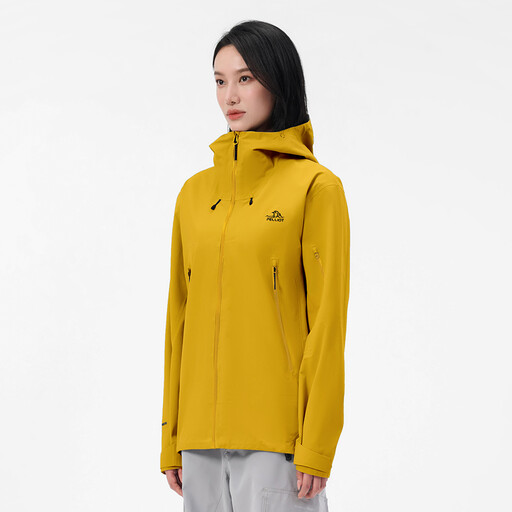
Why it suits this profile: The product description focuses on camping, mountainous terrain and intensive outdoor use. The yellow colour may also help improve visibility in dark or overcast conditions, though this is not a safety guarantee.
The jacket features longer underarm ventilation zips and a hard-wearing outer fabric. This means it takes heat management and freedom of movement into account, not just rain protection.
Underarm ventilation zips, a zipped sleeve pocket and, according to the product description, a RECCO reflector.
We’ve put together a complete, up-to-date list of products that meet these strict selection criteria and the applicable European safety requirements.
Even a durable women’s outdoor jacket needs looking after. Fasten the zips and hook-and-loop fastenings before washing, and always follow the care label. Don’t use bleach unless the label says it’s safe to do so. Detergents and high temperatures can damage a water-repellent finish. Some jackets may need to be reproofed; check the manufacturer’s instructions.
Let a wet jacket dry completely before putting it away. Don’t leave it compressed in a bag for long periods. After each season, check the seams, cuffs, zips and hem. Repairing minor damage early can stop it becoming a bigger problem during a walk.
Choose a model with sealed seams, an adjustable hood and a hem that can be tightened. A lightweight shell may be enough for short walks. For longer outings, breathability and ventilation zips are useful additions. Don’t just look for the term “water-repellent”; check the full product specifications.
Yes, if you value flexibility. You can wear the outer layer in rain and wind, the inner layer in dry, cooler weather, and both together when it’s cold. Bear in mind that it may be heavier, and check that the jacket isn’t too loose or too tight when you wear both layers.
Use the chest, waist and hip measurements in the size guide for the model you’ve chosen. Measure over the clothes you plan to wear underneath. If in doubt, also compare the jacket and sleeve lengths. A women’s rain jacket or trekking jacket should allow you to move freely without pulling at the cuffs or shoulders.
