
Vandaag of morgen in huis

Kwaliteit gegarandeerd

Welkomstaanbiedingen ontgrendelen: GRATIS bezorging | Tot 80% korting | Gratis 30 dagen JoyPlus-proefperiode
Download de app
At first glance, a wok seems simple: a deep pan with a round shape and a long handle. However, models vary considerably in heat distribution, maintenance, capacity and suitability for induction hobs. Choosing the wrong one can result in food sticking, an unstable pan on the hob or a coating that wears out sooner than expected.
Pay particular attention to these three common pitfalls:
A stainless steel wok is sturdy and suitable for intensive use. Without a non-stick coating, stainless steel does require the right cooking technique. Heat the pan, add oil and avoid putting ingredients into a cold pan too early. Some models may discolour or cause food to stick if the pan becomes too hot.
A carbon steel wok heats up quickly and is suitable for stir-frying at higher temperatures. With regular seasoning and oiling, the surface develops a natural patina. On the other hand, a carbon steel wok must be washed by hand, dried immediately and lightly greased to help prevent rust.
A wok with a multi-layer construction, such as stainless steel with an aluminium core, is designed to distribute heat more evenly across the base. According to PURECOOK’s product description, the construction consists of stainless steel-aluminium-stainless steel. This is a verifiable material specification, but the practical cooking experience also depends on the hob, the amount of food and the temperature.
If you are looking for an induction wok, check that the base is magnetic and makes flat contact with the cooking zone. A traditional round Chinese wok does not always work well on a flat induction hob. A flat-bottomed model is therefore usually more practical in UK kitchens.
Pay attention to these combinations:
A wok for all hobs can be useful if you move house or use several heat sources. However, always check the hob types listed in the product information rather than relying solely on the marketing term.
For one or two people, a wok measuring approximately 28 to 30 cm may be sufficient. A 30 cm wok will generally provide enough room for stir-fries for a small family, but the actual capacity varies from model to model. A high side is useful for curries, stews and one-pot meals.
A wok with a lid is more practical if you also want to braise, simmer or keep ingredients warm in addition to stir-frying. A glass lid allows you to view the dish without lifting the lid. Check that the lid is actually included; some woks do not come with one.
Also check:
The selection below is based on stated specifications such as material, diameter, hob compatibility and maintenance. Brand claims about non-stick performance, durability or reduced smoke come from the brands’ product descriptions and are not presented here as guaranteed results.
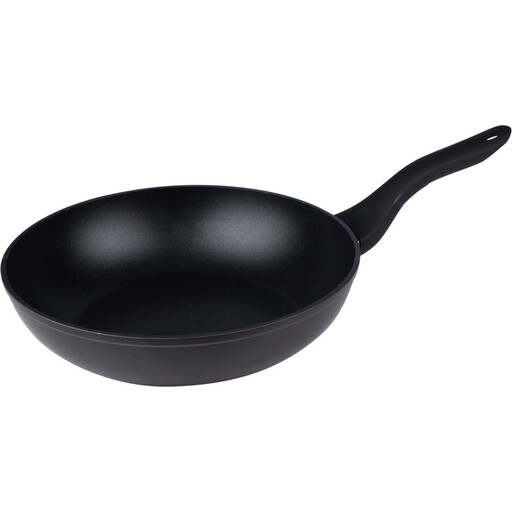
Why it suits this profile: The 28.5 cm diameter is suitable for everyday stir-fries without taking up the space required by a large pan. According to the product information, this model works on gas, ceramic, halogen and electric hobs.
The product specifications name the compatible hob types and mention a PFOA-free, PFAS-free non-stick coating. Hand-washing is required, which helps avoid incorrect expectations about using the dishwasher.
Aluminium body, 28.5 cm diameter and a stated 1 mm non-stick coating.
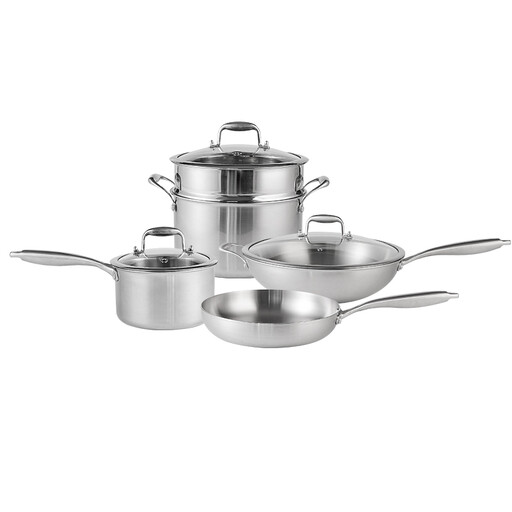
Why it suits this profile: This set combines a 34 cm wok with a milk pan, a stock pot with steamer and a frying pan. It is well suited to families who prepare several dishes at the same time.
The three layers of stainless steel and aluminium are clearly described. The glass lids are listed for each compatible pan, so you can see in advance what is included.
34 cm 316 stainless steel wok and several pans in one set; glass lids for the specified cooking pans.
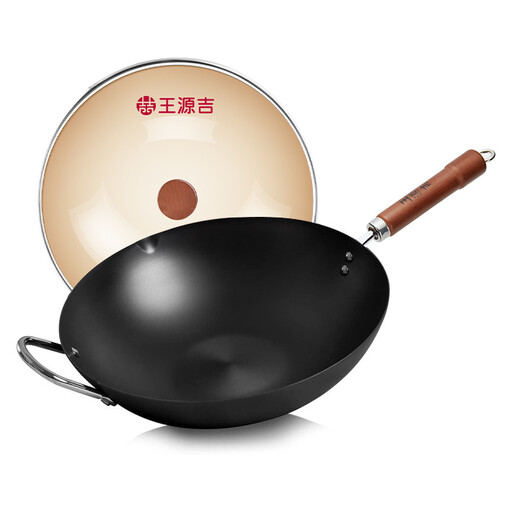
Why it suits this profile: This Chinese wok has a flat base and, according to the product information, is suitable for gas, induction and electric cooking. Its capacity is suitable for approximately two to four portions.
The product description does not mention a synthetic non-stick coating, but it does state that seasoning, hand-washing and drying are required. This makes the maintenance requirements clear from the outset.
Uncoated carbon steel, flat base and glass lid; suitable for gas, induction and electric hobs.
We have put together a complete, up-to-date list of products that fully meet these strict selection criteria and the applicable European safety regulations.
Choose a wok with a magnetic, flat base and check that induction is explicitly stated in the product specifications. A round Chinese wok without a flat underside often makes less effective contact with a standard induction zone.
A non-stick wok is particularly practical for cooking with minimal sticking and easy cleaning. Follow the manufacturer’s temperature and maintenance instructions. Do not use sharp utensils if the product information advises against them. For very high temperatures, many users prefer carbon steel or uncoated stainless steel.
Wash the wok by hand, dry it immediately over low heat and rub a thin layer of oil over the surface before storing it. Do not use a dishwasher. A wok that has been pre-treated, such as a pre-seasoned model, still requires this maintenance.
