
Vandaag of morgen in huis

Kwaliteit gegarandeerd

Welkomstaanbiedingen ontgrendelen: GRATIS bezorging | Tot 80% korting | Gratis 30 dagen JoyPlus-proefperiode
Download de app
A fresh, crusty loaf deserves a perfect slice. Yet, the search for a good bread knife often ends in disappointment: crooked slices, a crushed crust, or a blade that's dull after just a few months. Many knives look fine in their packaging, but the details determine whether you're making a poor investment. As a Joybuy Product Recommendation Officer, I'll help you see through the marketing jargon and choose a knife you'll enjoy for years to come.
Before you consider a WMF bread knife or another professional bread knife, it's crucial to recognise the most common pitfalls.
To avoid a bad purchase, focus on a few concrete specifications. These features determine the performance and lifespan of your knife, whether you're a home baker or simply love a good slice of bread.
A serrated knife for bread is essential, but the execution makes all the difference. As mentioned, single-sided serration leads to crooked cuts. A knife with double-sided serration, a feature of some WMF knives, cuts straight and effortlessly through both hard crusts and soft rolls without crushing the bread. This ensures clean, even slices.
A good knife is forged from a single piece of steel, which provides better balance and sturdiness. Look for the following terms:
A knife's sharpness is determined not only by its grind but also by the hardness of the steel and the technology used. WMF, for example, uses Performance Cut technology. According to WMF, this process combines traditional forging with modern precision technology, resulting in knives that stay sharp for a long time and exceed standard sharpness norms. When you want to buy a sharp bread knife, it's worth looking at brands that invest in such technologies.
Not everyone has the same needs or budget. Below is a selection tailored to different user profiles, based on objective product features.
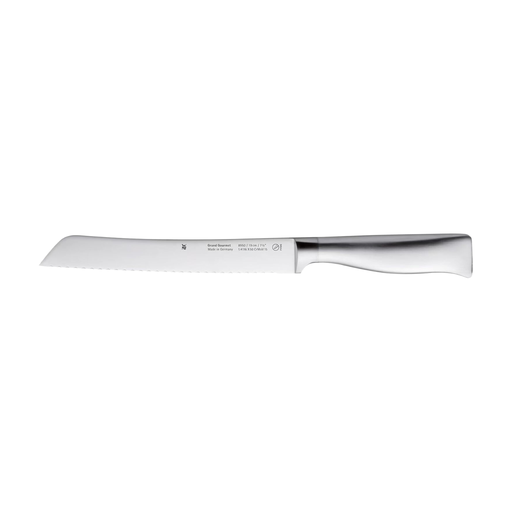
Why it's a match: For the enthusiast who invests in durability and design. This knife is engineered for precision and a long lifespan, ideal for slicing artisanal bread with a hard crust.
The patented double-sided serration prevents crooked slices. The seamless design of the Cromargan handle guarantees optimal hygiene.
Forged from a single piece of special blade steel with Performance Cut technology for exceptional and long-lasting sharpness. Made in Germany.
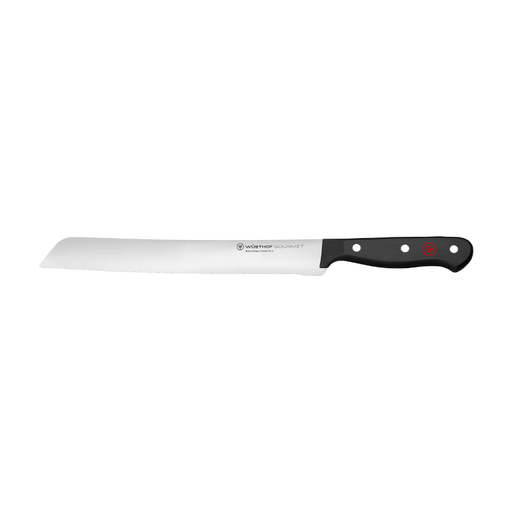
Why it's a match: Ideal for those seeking a reliable and functional German kitchen knife without the premium features of a top-tier collection. Perfect for daily use.
Made from stainless steel that retains its sharpness well. The handle is securely and hygienically attached, which enhances its durability.
A practical and lightweight knife that is dishwasher safe. The 23 cm blade cuts effortlessly through various types of bread.
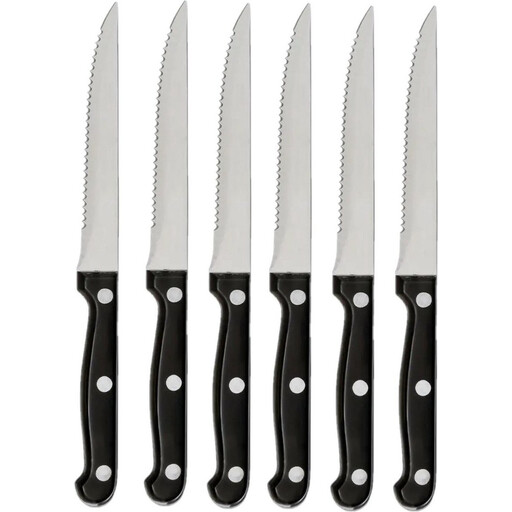
Why it's a match: Although these are steak knives, the fine serration is also suitable for slicing soft rolls, croissants, or pizza. A versatile and affordable starter set.
These knives are intended for direct use at the table. The simple design with a synthetic handle is easy to clean by hand.
You get a set of six serrated knives for an accessible price. They are multifunctional and can be used for more than just bread.
We have compiled a complete, up-to-date list of products that fully meet these strict selection criteria and local regulations.
Sharpening a serrated knife for bread is a specialist's job. Unlike a smooth chef's knife, you can't just use a standard honing steel or knife sharpener. There are special sharpening rods that can sharpen each serration individually, but this is a precise and time-consuming task. Investing in a knife made of high-quality steel, like a WMF bread knife, ensures it retains its sharpness for much longer, making sharpening necessary less often.
For maximum longevity, even if the manufacturer states the knife is dishwasher-safe, hand washing is the recommended method. Aggressive dishwasher detergents and contact with other dishes can dull the blade over time. Wash the knife with a soft sponge and mild detergent, dry it immediately, and store it safely in a knife block or with a blade guard. This prevents damage and keeps your knife sharp.
A forged knife, such as the WMF Grand Gourmet, is made from a single piece of heated steel that is hammered into shape. This process creates a stronger, heavier, and better-balanced knife with a thick bolster between the blade and the handle. A stamped knife is cut from a sheet of steel, making it lighter and cheaper to produce. For tasks that require force, such as cutting with a bread knife for hard crusts, a forged knife generally offers more control and durability.
