
Vandaag of morgen in huis

Kwaliteit gegarandeerd

Welkomstaanbiedingen ontgrendelen: GRATIS bezorging | Tot 80% korting | Gratis 30 dagen JoyPlus-proefperiode
Download de app
A wireless solar-powered outdoor lamp may seem simple: place it, charge it and enjoy the light. Yet some buyers run into its limitations after just a few weeks. A small solar panel may not provide enough energy in all conditions, a mood lamp may sometimes be too dim for practical use, and IP ratings are often misunderstood.
For a balcony, patio, garden or camping spot, three purchasing pitfalls are particularly important:
Light output is measured in lumens (lm). A 170 lm lamp is suitable as a patio, balcony or garden lamp for ambience and limited practical lighting. For illuminating a path or workspace, a different type of outdoor lamp may be more appropriate.
A dimmable outdoor lamp offers greater flexibility. Check whether it has several fixed settings or stepless adjustment. The recommended Viani models feature three-stage dimming. A colour temperature of 3000 K falls within the warm white range and generally suits a relaxed seating area or outdoor dinner.
Also consider the light function. An RGB outdoor lamp can display various colours in addition to warm white. This is appealing for decorative outdoor mood lighting, but unnecessary if you mainly want calm, warm light.
A solar outdoor lamp works most effectively in a location where the panel receives enough daylight every day. Direct sunlight helps, but actual operating time depends on factors including battery capacity, light intensity, shade and the weather. Manufacturers do not always use the same method to measure operating time, so compare such figures carefully.
An outdoor lamp with USB provides a useful backup. You can charge the integrated lithium-ion battery via a USB A cable when there is little sunlight. Check where the connection is located beforehand and use a suitable low-voltage USB power supply. The Viani lamps are listed with a 100 cm cable.
IP44 outdoor lighting is suitable for splashing water from different directions. This makes the lamp suitable for a sheltered patio, balcony or garden, but not for immersion. Always place a freestanding lamp on a flat, stable surface rather than on an edge where it could easily fall over.
A metal and plastic housing may offer a different look and level of stability from an all-plastic model. Also consider the dimensions. A lamp approximately 25 cm high works well as a visible table lamp, while a more compact model is easier to take camping.
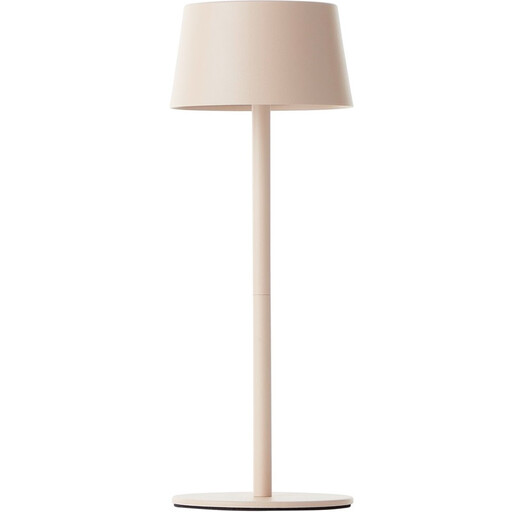
Why it suits this profile: This beige solar outdoor lamp combines a simple freestanding design with two charging options. This makes it ideal for anyone who wants to get started with outdoor lighting without permanent wiring.
USB charging provides an alternative when cloud or shade means the solar panel receives less energy. IP44 is clearly stated as protection against splashing water, not complete waterproofing.
170 lm, warm white light at 3000 K, three dimming settings and a metal/plastic housing in beige. The stated height is 25 cm.
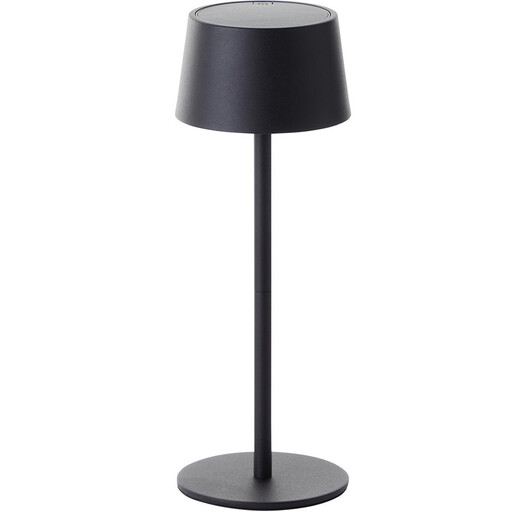
Why it suits this profile: The black outdoor lamp complements a modern patio or balcony, offering the same combination of solar power, USB charging and dimmability in a dark metal design.
The lamp does not rely on just one charging method. Thanks to the USB connection, you can top it up when solar output is insufficient. The IP44 rating makes its usage limits clear.
170 lm, 3000 K, three dimming settings, an integrated 18650 Li-Ion battery and two possible mounting heights. Freestanding positioning requires no wiring.
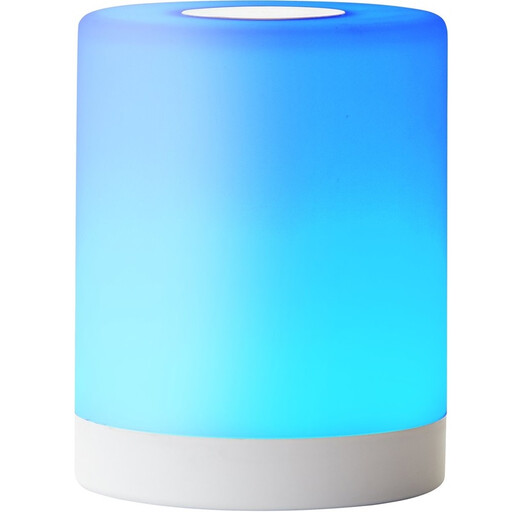
Why it suits this profile: This portable outdoor table lamp is designed for users who move it frequently, for example between a balcony, patio, garden and camping table.
The lamp uses USB charging rather than relying solely on solar power. The touch dimmer and memory function make it easier to use, while IP44 specifies protection against splashing water.
140 lm, RGB function, warm white at 3000 K, touch control and an integrated 18650 Li-Ion battery. Its compact size is 11.6 cm high and 9.2 cm in diameter.
We have compiled a complete, up-to-date list of products that fully meet these strict selection criteria and the applicable European safety regulations.
Place the solar panel somewhere with as much daylight as possible and avoid permanent shade from walls, parasols or trees. Also check that the lamp is standing securely. If the battery has not charged sufficiently after cloudy days, models with a USB connection can be topped up manually.
IP44 means that the lamp is protected against splashing water and solid objects of certain sizes. This rating is suitable for many sheltered outdoor locations, such as a balcony, covered patio or garden area. The lamp must not be immersed and is not designed for direct water jets or prolonged exposure to severe weather.
A lamp charged via solar power does not use mains electricity during normal solar operation. The actual saving depends on the weather and how often USB charging is used. For a USB-rechargeable outdoor lamp, also consider its power consumption, battery capacity and the desired light intensity. A dimming function can help you match the available battery charge to the situation: soft light for ambience and a higher setting when you need better visibility.
The lifespan of an integrated Li-Ion battery depends on factors including charging cycles, temperature, storage and intensity of use. Manufacturers do not specify a fixed lifespan for every model. Therefore, check whether the battery is replaceable; on the models mentioned, the LED light source is integrated and cannot be replaced by the user.
