
Vandaag of morgen in huis

Kwaliteit gegarandeerd

Welkomstaanbiedingen ontgrendelen: GRATIS bezorging | Tot 80% korting | Gratis 30 dagen JoyPlus-proefperiode
Download de app
Wireless open-ear headphones let you listen to music or conversations without completely blocking your ear canal. This is practical when walking, in the office, on public transport or during light exercise. You can remain more aware of your surroundings than with many traditional in-ear models.
However, open-ear audio is not automatically suitable for everyone. Marketing copy often focuses on comfort, powerful bass or long battery life, while important details receive less attention. Pay particular attention to the fit, protection against moisture, call quality and how the battery life has been measured.
A clip-on model, ear hook or supra-aural speaker feels different from TWS earbuds. The shape of your ear partly determines whether the headphones stay firmly in place. A model that fits well during a walk may still shift when running or making quick movements.
Therefore, check:
A comfortable pair of headphones for everyday use is therefore not automatically the right choice for intensive training.
The IP code consists of two digits. The first digit concerns protection against solid particles, while the second refers to water. In practice, IP55 means a certain level of protection against dust and water jets. IPX5 indicates water protection, but says nothing about resistance to dust because the first digit has not been specified.
An IP rating does not make a product suitable for swimming. Also check whether the charging contacts need to be dry before you place the device back in the charging station. For cycling in the rain, running or training, water-resistant sports earbuds may be worth considering, but the instructions remain the final authority.
A claim such as “up to 8 or 14 hours” is generally a maximum playback time under specific conditions. Volume, phone calls, codec usage and temperature can affect actual battery life. Also check whether the stated time applies to a single charge or includes the charging case.
If you are often on the move, it is better to consider:
With open-ear models, ambient sound can still reach your ears. This can be useful at home, in the office or while out walking. However, music may sound less clear on a busy train, beside a road or in a noisy gym. Sound may also leak out to people nearby when the volume is high.
Wireless open-ear headphones are most suitable when awareness of your surroundings is more important than complete sound isolation. Choose an in-ear model if you are looking for a more enclosed listening experience.
Bluetooth 5.4 is found on several Soundcore models in this selection. A newer Bluetooth version can support an efficient and stable connection, but the overall experience also depends on your smartphone, software and distance from the device. Check that your phone is compatible and that automatic reconnection is supported.
Bluetooth headphones with touch controls are convenient for short commands, while physical buttons can sometimes work better during sport or in cold weather.
For wireless earbuds for making calls, the number and positioning of the microphones are relevant specifications. However, wind, traffic and people talking nearby can still affect how clearly you can be heard. A claim such as “noise cancellation” should therefore not be mistaken for a guarantee of perfect calls.
The Soundcore AeroClip lists four microphones. According to the product specifications, the AeroFit 2 models have two microphones. The Liberty 4 Pro lists six microphones, but this model is an in-ear TWS headset rather than open-ear headphones.
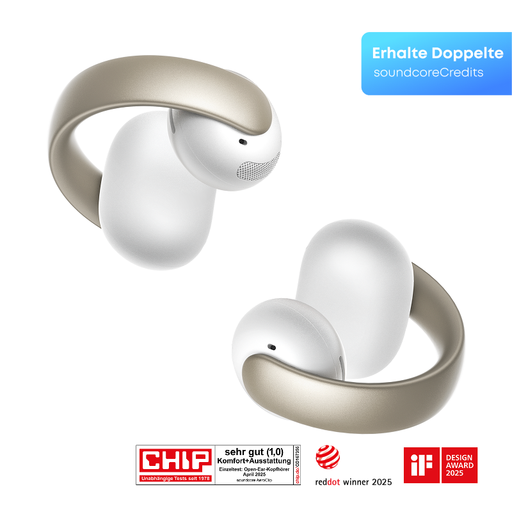
Why it suits this profile: The AeroClip combines an open-ear design with Bluetooth 5.4, touch controls and a stated playback time of up to 8 hours. That makes it suitable for commuting, calls and everyday listening.
The product information specifies open-ear, on-ear positioning, four microphones and clear use cases for calls, music, sport and everyday use. However, check that the clip fits your ear.
Bluetooth 5.4, touch controls, four microphones and up to 8 hours of continuous playback according to the product specifications.
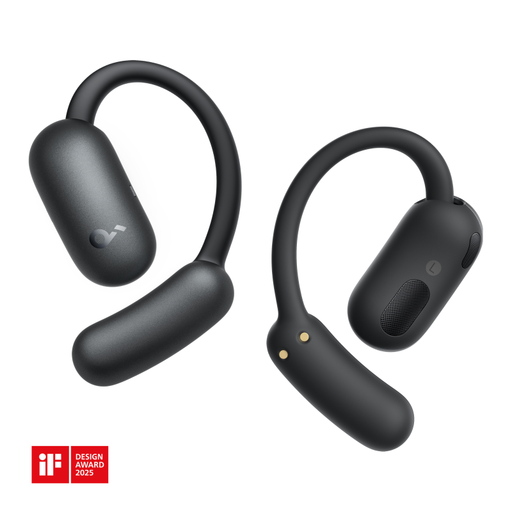
Why it suits this profile: The AeroFit 2 is designed for everyday use and sport, with Bluetooth 5.4, a supra-aural fit, two microphones and IP55 protection.
The IP55 rating makes the water and dust protection clear. This rating does not mean the headphones are suitable for swimming or submersion.
IP55, Bluetooth 5.4, buttons and a 750 mAh battery with charging station according to the product specifications.
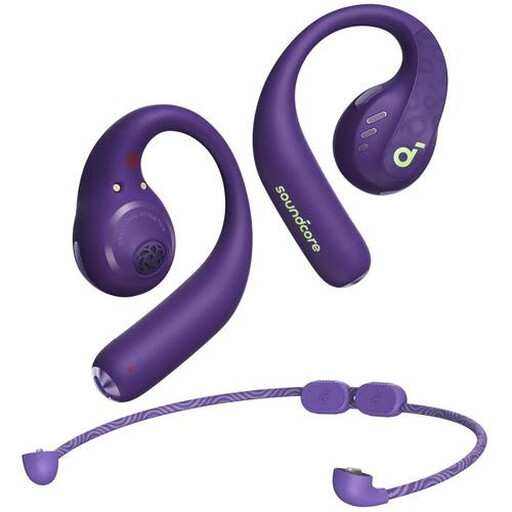
Why it suits this profile: The ear hook, IPX5 rating and stated playback time of up to 14 hours are designed for longer listening sessions and active users.
The ear hook addresses the risk of the headphones shifting during movement. IPX5 is relevant for sweat or rain, but not for swimming.
Bluetooth 5.3, IPX5, ear hook, storage case and up to 14 hours of continuous playback according to the product information.
Open-ear audio helps you remain aware of sounds around you, but it does not replace attentiveness. Do not use headphones while driving or cycling if they limit your vision, hearing or ability to react. Keep the volume low enough to hear traffic and warnings.
Clean the housing with a soft, dry cloth and only charge the product once the connectors are dry. Stop using the product if the battery swells, leaks or becomes unusually hot.
We have put together a complete, up-to-date list of products that fully meet these strict selection criteria and the applicable European safety regulations.
That depends on the fit and the IP rating. An ear hook or clip may stay more securely in place during movement than a loose on-ear model. Also check whether the product specifies protection against sweat and rain. Do not use the headphones if they make it harder for you to hear traffic signals or other warnings.
First charge the headphones, open your phone’s Bluetooth settings and select the product name. When pairing for the first time, you may need to press and hold the button or touch panel for a few seconds. Consult the supplied manual if the headphones do not appear.
The service life of the built-in battery depends on charging cycles, temperature and usage. The stated playback time, such as 8 or 14 hours, is a product specification for continuous use and not a guarantee for every situation. Keep the headphones dry, avoid extreme heat and use a suitable charger.
