
Vandaag of morgen in huis

Kwaliteit gegarandeerd

Welkomstaanbiedingen ontgrendelen: GRATIS bezorging | Tot 80% korting | Gratis 30 dagen JoyPlus-proefperiode
Download de app
A wireless gaming mouse gives you more freedom of movement than a wired model. However, wireless does not automatically mean fast, accurate or suitable for every gamer. Particularly in FPS games, the wrong shape, limited battery life or an unstable connection can quickly become frustrating.
So do not focus solely on a high DPI rating or eye-catching RGB lighting. The practical combination of weight, sensor, polling rate, connectivity and software determines whether a mouse suits your PC, laptop and gaming style.
A wireless gaming mouse with a high DPI rating can be set to be extremely sensitive. That does not mean you will want to play every game at 26,000 or 30,000 DPI. Many FPS players actually use lower sensitivity for more controlled movements.
As well as DPI, look at:
DPI is therefore mainly a range, not a guarantee of quality on its own.
A gaming mouse with an 8K polling rate sends up to 8,000 position reports per second, according to the product specifications. This can refine how movement is displayed, but it also requires more system resources. On some systems, a high polling rate may cause additional CPU load.
A gaming mouse with an 8K polling rate is particularly interesting for competitive players with a powerful PC and a monitor with a high refresh rate. For many users, 1,000 Hz is already more than adequate in practice. According to RAPOO’s product information, the VT9Pro may cause higher CPU usage at a 4K polling rate; if you experience stuttering, you can lower the setting.
Battery life depends on factors including polling rate, RGB lighting, connection mode and software settings. The stated play time is therefore usually a maximum value measured under specific conditions.
Always check:
A lightweight gaming mouse weighing approximately 53 to 70 grams can be comfortable for fast flicks and frequent lifting movements. A heavier model may feel more stable. The ideal weight depends on your grip, hand size and desk space.
The shape also matters. A symmetrical model may suit different grip styles, but that does not always mean that all buttons will be comfortably reachable for left- and right-handed users. Therefore, check the stated hand orientation and dimensions.
An optical sensor detects movement using light and is widely used in gaming mice. Do not look only at the maximum DPI; also consider the available profiles and the software used to save your settings.
A programmable gaming mouse can provide additional functions for MMO, MOBA and RTS games. For FPS players, two easily accessible side buttons and a reliable primary click are often more important than a large number of buttons.
For gaming, 2.4GHz via a USB receiver is often the most logical wireless mode. Bluetooth is useful if you want to use the same mouse with a laptop, tablet or second computer, but not every model is designed to deliver maximum gaming performance over Bluetooth.
A tri-mode gaming mouse usually combines 2.4GHz, Bluetooth and USB-C cable use. This is practical for a gaming PC and laptop, as you do not need a separate mouse for each device.

Why it suits this profile: A straightforward model for PC and laptop gamers looking for a wireless mouse with essential features, without immediately moving up to 8K technology.
The specifications clearly state 2.4GHz, a 1,000 Hz polling rate, six programmable buttons and up to 80 hours of battery life.
75 grams, an optical sensor up to 4,800 DPI, USB-C charging and the ability to play while charging.
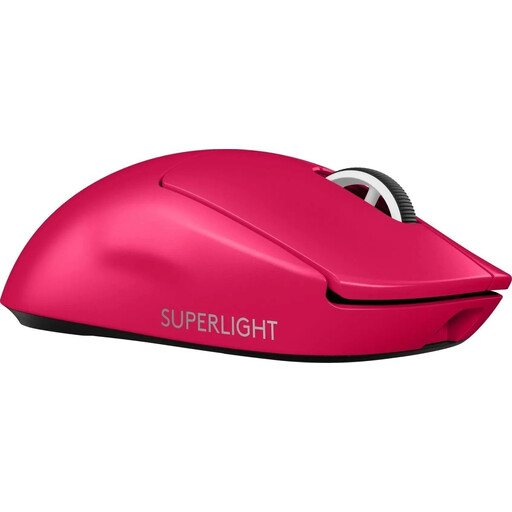
Why it suits this profile: Designed for right-handed players who want a lightweight mouse with well-known wireless technology and USB-C charging.
The product information lists a weight of 60 grams, LIGHTSPEED connectivity, an optical HERO 2 sensor and a maximum polling rate of 4,000 Hz.
Up to 32,000 DPI according to the product overview, USB-C and a right-handed design.
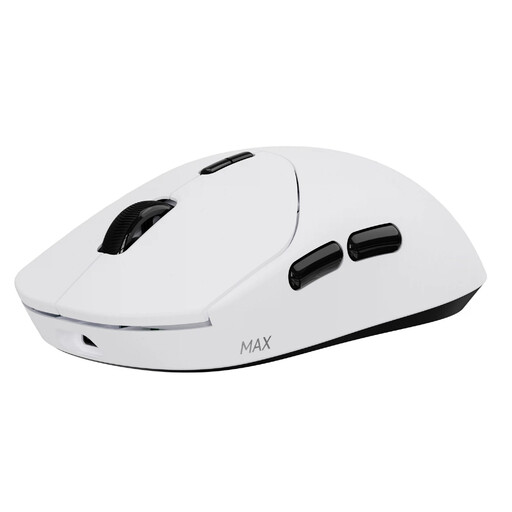
Why it suits this profile: For competitive players who want to combine low weight, 8K polling and exceptionally long battery life in a single model.
The product specifications state native 8K, a weight of 53 grams and up to 750 hours at 1,000 Hz. However, check that your PC can handle the higher polling rate.
30,000 DPI with independent X/Y adjustment, ten programmable buttons and optical switches.
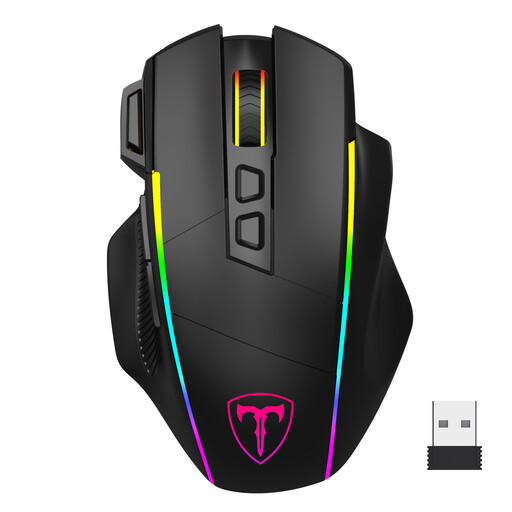
Why it suits this profile: Ideal for anyone who wants to use a gaming mouse with a PC and laptop and switch between multiple devices.
The three connection modes make it clear how you can use the mouse. Please note: according to the product information, the programming software only works in wired mode on Windows.
2.4GHz, USB-C and Bluetooth, up to 10,000 DPI, eight programmable buttons and a rechargeable battery.
We have put together a complete, up-to-date list of products that fully meet these strict selection criteria and the applicable European safety regulations.
Yes, provided the model has a stable 2.4GHz connection, an optical sensor and a suitable polling rate. For competitive FPS games, weight, shape and reliable tracking are often more important than the highest DPI rating.
This varies considerably between models and settings. In the range, stated battery life varies from around 80 hours to hundreds of hours. A higher polling rate and RGB lighting can reduce battery life. Therefore, always check the settings under which the manufacturer states the battery life.
Only if Bluetooth is explicitly listed in the specifications. Some models work exclusively via a 2.4GHz receiver, while a tri-mode gaming mouse also supports Bluetooth and a USB cable. Also check whether programmable buttons and macros are available in every connection mode.
