
Vandaag of morgen in huis

Kwaliteit gegarandeerd

Welkomstaanbiedingen ontgrendelen: GRATIS bezorging | Tot 80% korting | Gratis 30 dagen JoyPlus-proefperiode
Download de app
Wireless earbuds are handy for listening to music, making calls, travelling, working and exercising. However, an appealing product is not automatically suitable for your everyday use. A long list of features can conceal important details, such as an average fit, a charging case that is not moisture-resistant or a battery life that only applies in ideal conditions.
As a Joybuy Product Recommendation Officer, I filter marketing claims against verifiable specifications. This helps you see more quickly which Bluetooth earbuds suit the way you use them and what to look out for before buying.
Manufacturers often state the total playback time, including the wireless earbuds with charging case. That figure sounds impressive, but says little about how long you can listen without recharging. Always check both figures:
A model offering, for example, 7 hours per charge and 28 hours including the case may be sufficient for commuting. If you take long flights or spend a lot of time in meetings, you may benefit more from a model with a higher-capacity case or fast charging.
Active noise cancellation, also known as ANC, uses microphones and electronics to reduce certain environmental sounds. Its effectiveness varies depending on the type of noise, the fit and your surroundings. Low, constant sounds such as train or aeroplane noise are generally a different scenario from voices or sudden sounds.
Also consider transparency mode. This lets ambient sound through, which can be useful in the street or during a conversation. Do not use ANC in situations where you need to continue hearing traffic or other warning signals clearly.
An IP rating consists of two numbers, or a number and a letter. With earbuds, you will often see a rating such as IPX4, IPX5 or IP54. The precise level of protection depends on the complete rating and does not always apply to the charging case.
Always check whether the case is water-resistant separately. With many models, only the earbuds themselves are protected. Avoid submerging them, heavy rain and charging when the connectors are damp.
In-ear, half-in-ear, open-ear and clip-on models do not all feel the same. Silicone earbuds usually create a stronger seal in the ear canal, while open-ear models allow more ambient sound through. An ear hook or clip can provide extra support when you are on the move.
Pay attention to the weight of each earbud, the shape of the housing and the sizes of the included ear tips. A lightweight model is not automatically comfortable; pressure distribution and fit are just as important.
Bluetooth 5.3, 5.4 or 6.0 mainly indicates the connection technology used. Your actual experience also depends on your phone, laptop, software and distance. For everyday use, stable pairing, a range of around 10 metres in an open environment and features such as multipoint are often more relevant than the version number alone.
For gaming and watching videos, low latency is important. Some true wireless earbuds include a dedicated gaming mode for this purpose, such as 60 milliseconds or 0.06 seconds. Check whether this feature needs to be enabled manually.
If you regularly attend online meetings, make calls or send voice messages, it is worth checking the number of microphones and how call noise cancellation is described. Four or six microphones may be a technical indication, but on their own they do not guarantee perfect speech clarity.
Phrases such as “AI-clear calls” are product claims. According to a brand’s own research, such systems may pick up your voice more effectively in noisy conditions. In practice, however, performance depends on wind, traffic, the phone being used and the positioning of the microphones.
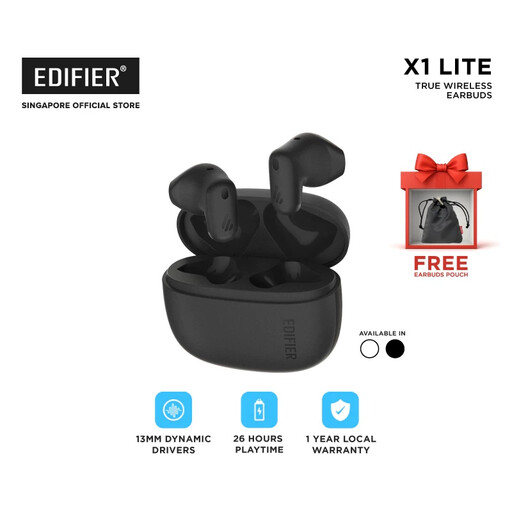
Why it suits this profile: This model combines a weight of 4 grams per earbud with Bluetooth 5.4, low latency and a charging case. It is suitable for music, video and everyday travel without needing an extensive list of features.
The product information states up to 7 hours per charge and 26 hours with the case separately. It also lists IP54, which does not indicate protection against submersion.
13mm dynamic drivers, 15-minute fast charging for around 1.5 hours of playback and support through the EDIFIER ConneX app.
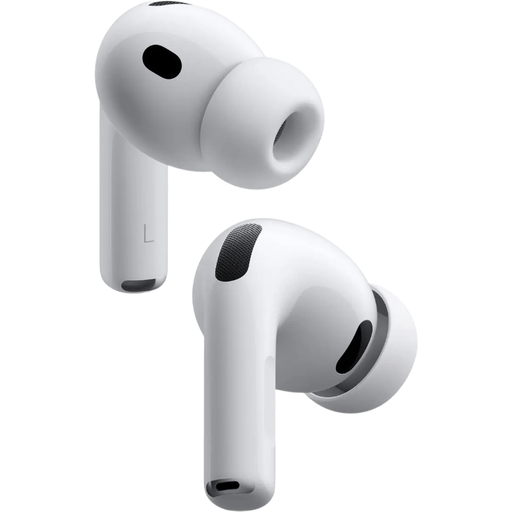
Why it suits this profile: For users looking for extensive Apple integration, ANC and multiple fit options, this model offers features suited to music, films, travel and fitness.
The product details state up to 8 hours with ANC and up to 10 hours in transparency mode. The five included sizes of silicone ear tips help you fine-tune the fit.
Active noise cancellation, spatial audio, microphone, heart-rate sensor and IP57 according to the product listing.
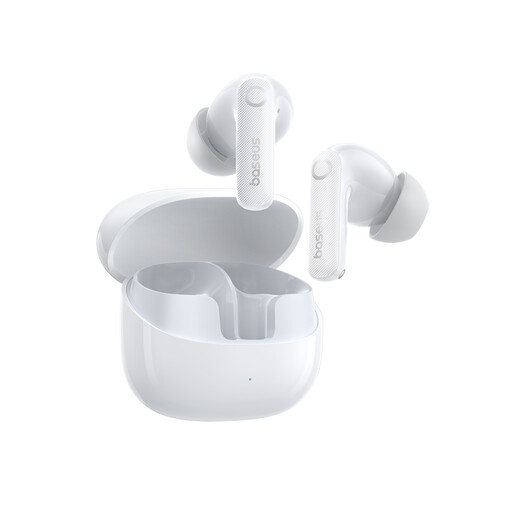
Why it suits this profile: This model is aimed at users who combine long listening sessions, ANC and calls with an active schedule.
The specifications distinguish between listening time per earbud and total battery life. IP55 is described as splash-resistant, not suitable for submersion.
Up to 11 hours of listening time at 50% volume, according to the specifications; adaptive hybrid ANC up to -50 dB and six microphones for calls.
We have put together a complete, up-to-date list of products that fully meet these strict selection criteria and the applicable European safety regulations.
Open the charging case, activate Bluetooth on your phone and select the earbuds’ name from the device list. When pairing for the first time, the brand’s app may offer additional settings. If you cannot connect, place the earbuds back in the case, charge them and check that they are not already connected to another device.
Usage time per charge varies by model and settings. ANC, volume, codec and phone calls all affect playback time. Battery capacity decreases over time as a result of charging cycles. Keep lithium batteries away from heat and do not use damaged earbuds or a damaged charging case.
After purchase, the main costs are electricity and possible replacement when the built-in battery has lost capacity. Power consumption per charge is generally limited. Pay particular attention to the included charging case, USB-C support and the availability of replacement ear tips; these factors have a greater impact on practical use than the small difference in charging costs.
