
Vandaag of morgen in huis

Kwaliteit gegarandeerd

Welkomstaanbiedingen ontgrendelen: GRATIS bezorging | Tot 80% korting | Gratis 30 dagen JoyPlus-proefperiode
Download de app
A new speaker can quickly look appealing on paper. Manufacturers mention high wattages, long play times and features such as Dolby Atmos or RGB lighting. However, these terms do not always say enough about the practical experience in a Dutch living room, garden or on a bike.
The biggest purchasing mistakes usually come down to three pitfalls:
The right choice therefore mainly depends on the space, how you plan to use the speaker and the available connections. Below, we explain which specifications matter and which wireless speakers suit different user profiles.
A compact portable Bluetooth speaker is convenient for a bag, bike ride or picnic, but physically has less room for large drivers. So do not look only at the stated power. Also consider:
A 1.0 speaker can be perfectly suitable for background music and mobile use. For gaming, films or music at a desk, a 2.0 set such as gaming speakers often produces a clearer stereo image. A soundbar with subwoofer or a 5.1 system is more suitable when deep bass and immersive sound are important.
When considering stated power ratings, pay attention to the difference between RMS and peak power. RMS is generally more useful for comparison, while peak power may indicate a temporary maximum.
A speaker with long battery life is practical for a day outdoors, but the stated play time is usually a maximum. Volume, lighting, Bluetooth connection and audio type can all affect battery life.
So check:
For example, the Sony SRS-XB100 states up to 16 hours of battery life. The Tronsmart Bang 2 states up to 26 hours with the lighting switched off and the volume at 50 per cent, while play time can be considerably lower with the lighting on. This difference shows why usage conditions matter.
For an outdoor speaker, the IP code is important. The first digit indicates protection against solid particles, such as dust. The second digit relates to water.
Therefore, do not automatically use an IP67 speaker in the sea or a swimming pool. The Sony SRS-XB100 specifically warns against salt water, chlorine and high-pressure water jets.
A speaker with Bluetooth 5.3 or a newer version is not automatically an improvement for every user. Also check the supported codecs, such as SBC and AAC, the connection range and whether two devices can be paired at the same time.
USB and 3.5mm AUX are useful connections for computers. The Edifier G1500 offers Bluetooth 5.3, USB and AUX, making it suitable for a computer, laptop or games console with the appropriate output. A TV speaker generally works more reliably via HDMI ARC or eARC than via Bluetooth, particularly if you want to continue using the remote control.
With Dolby Atmos, the source, TV and connection must also support the format. A soundbar with Atmos support does not automatically turn every stereo recording into full cinema-quality sound.

Why it suits this profile: Its compact size, weight of 274 grams and adjustable carrying strap make it a practical entry-level option for use at home, on the go or on your bike.
The product specification states both battery life of up to 16 hours and IP67 protection. This means you can compare these points concretely rather than relying solely on marketing terms.
Bluetooth 5.3, USB-C, stated battery life of 16 hours, IP67 and pairing with another speaker via TWS.
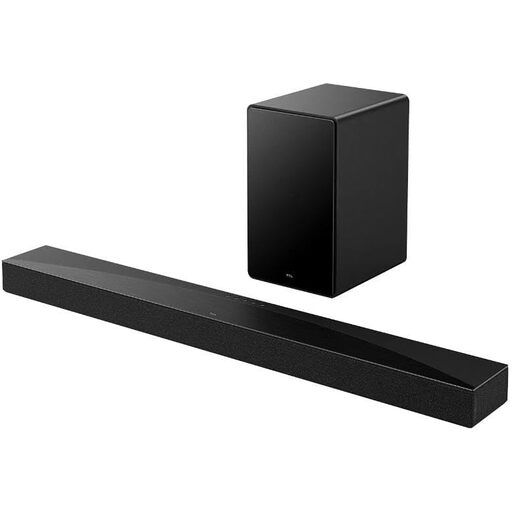
Why it suits this profile: This set is designed for films, series and gaming in the living room, with a soundbar, wireless subwoofer and connections for a permanent TV setup.
The choice here is not based on power alone: the set specifies 5.1 channels, HDMI eARC, an optical connection and a separate subwoofer.
5.1-channel setup, stated RMS power of 580 W, Dolby Atmos, DTS:X, Bluetooth 5.3 and wireless subwoofer.
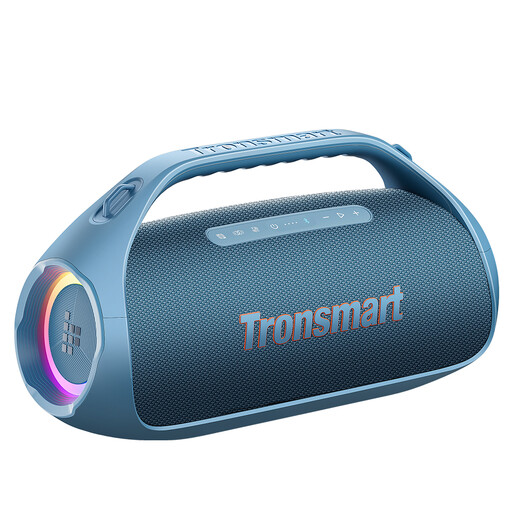
Why it suits this profile: The handle, carrying strap and large battery make this party speaker suitable for garden parties and groups who want to play music outdoors.
The product specification distinguishes between play time with and without lighting. The IPX6 rating is also clearer than a general claim about water resistance.
Stated output power of 90 W, Bluetooth 5.3, IPX6, TWS pairing, lighting and up to 26 hours of stated play time without lighting.
We have put together a complete, up-to-date list of products that fully meet these strict selection criteria and the applicable European safety regulations.
First, check whether your TV supports Bluetooth, HDMI ARC/eARC, optical audio or AUX. For a soundbar for TV, HDMI ARC or eARC is often preferable, as it usually allows you to control the TV sound and volume centrally. Then put the speaker into the correct input mode and select it in the TV menu.
This varies by model and usage. Manufacturers usually state a maximum play time at a particular volume. Higher volumes, RGB lighting, phone calls and demanding audio files can drain the battery more quickly. So, as well as the maximum play time, check the charging port and battery indicator.
That depends on the IP rating. A model with IP67 offers protection against dust and temporary immersion according to the product specification. An IPX6 speaker can withstand powerful water jets, but is not automatically suitable for immersion. Protect every speaker from extreme heat, prolonged direct sunlight and liquids that the manufacturer does not approve for use.
