
Vandaag of morgen in huis

Kwaliteit gegarandeerd

Welkomstaanbiedingen ontgrendelen: GRATIS bezorging | Tot 80% korting | Gratis 30 dagen JoyPlus-proefperiode
Download de app
A wireless speaker may seem easy to choose at first glance. However, terms such as “powerful sound”, “waterproof” and “long battery life” do not always tell the full story. The right choice depends on the room, the device you are connecting to and how often you plan to take the speaker with you.
Whether you are looking for a Bluetooth speaker, portable speaker, Wi-Fi speaker, multi-room speaker or soundbar for your TV, focus above all on the specifications that really make a difference in your situation.
A higher wattage may indicate greater volume, but it does not tell you how clearly voices will sound or how the speaker handles bass. The casing, driver size and placement also affect your listening experience. A bedroom speaker needs different features from one designed for a garden party.
As well as the power rating, check:
An IP rating consists of two numbers, or a number and an X. The first part refers to protection against dust, while the second refers to water. IP67 generally means complete protection against dust and protection against temporary immersion under certain conditions. IPX6 provides protection against powerful water jets, but says nothing about protection against dust.
The exact conditions and limitations are always stated in the manual. So do not automatically use a waterproof speaker underwater, in salt water or while charging in the rain.
The stated playback time is usually measured at a particular volume, with specific features switched off. Higher volumes, lighting, bass boost and an active app can drain the battery more quickly. For example, the product information for the Tronsmart Bang 2 states a longer playback time without LED lighting than with the lighting switched on.
So consider how you will use the speaker rather than looking only at the highest number of hours.
A Bluetooth speaker is convenient for smartphones, tablets and laptops. Check the Bluetooth profile, version and range. A stated range of 10 metres generally applies without major obstacles; concrete walls and other wireless devices can affect the connection.
A Wi-Fi speaker is particularly useful for listening to music at home. Wi-Fi can be suitable for streaming and multi-room features, while Bluetooth is simpler for temporary use outdoors. If you want to synchronise several rooms, check whether the speaker supports a platform such as AirPlay 2, Spotify Connect or a brand app.
USB and 3.5mm connections are useful for a computer or gaming setup. A wireless connection can be more convenient, but a wired connection can sometimes prevent delays or pairing issues.
A battery is important for commuting or a day out. Look out for:
A compact portable speaker weighing around 250 grams is easier to carry than a party speaker weighing several kilos. On the other hand, larger models can usually deliver more volume and bass.
For outdoor use, a carry handle, attachment loop and sturdy casing are practical features. Check the IP rating and the manufacturer’s warnings. A speaker with an IP67 rating is not the same as a model without a protection rating.
For TV sound, dimensions and connections are just as important. A Dolby Atmos soundbar often requires HDMI eARC or ARC to pass certain audio formats from the TV. Check that your TV has the correct HDMI port. According to the product information, Dolby Atmos or DTS:X can support more spacious sound, but the final experience also depends on the room, source and placement.
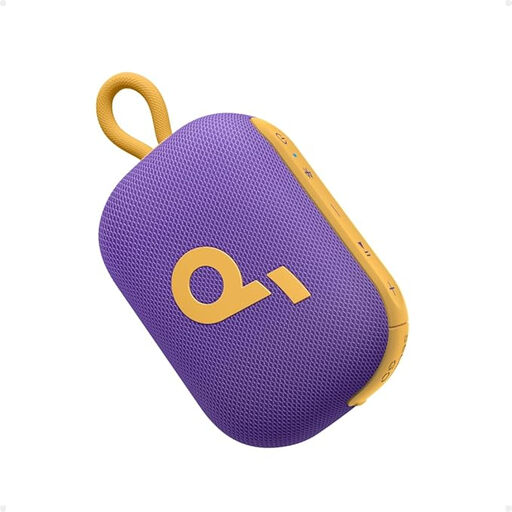
Why it suits this profile: A compact Bluetooth speaker for smartphones, tablets, laptops or occasional outdoor use. The built-in loop and low weight make it easy to take with you.
The product information states up to 20 hours of playback, IP67 protection and a floating design. Always check the manual before using it outdoors, and do not connect the speaker to the charger in a damp environment.
263.65 grams, 5W output power, Bluetooth and TWS pairing for two speakers.
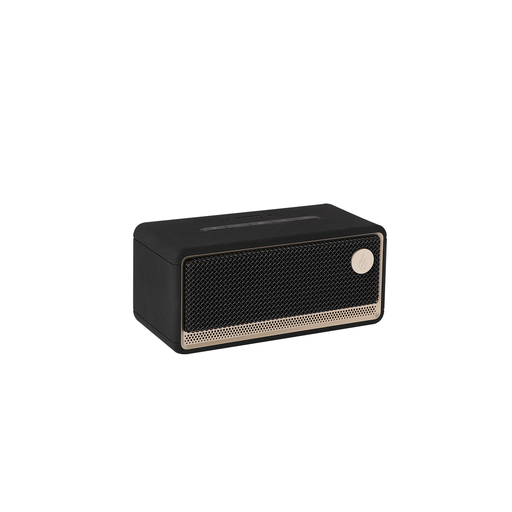
Why it suits this profile: For anyone who combines music, films and gaming at home and wants to use both Wi-Fi and Bluetooth.
The choice is not based on wattage alone: the product specifications list Bluetooth 5.3, Wi-Fi on 2.4 and 5 GHz, USB and AUX. According to the product information, AirPlay 2 supports grouping for multi-room use.
60W according to the product listing, 12 hours of battery life, USB/AUX and multi-room support via AirPlay 2.
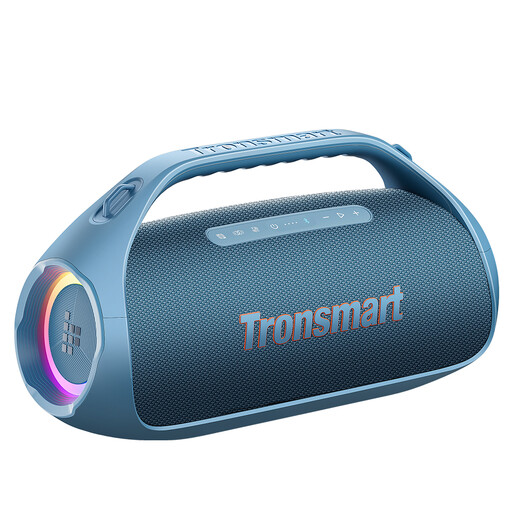
Why it suits this profile: For outdoor gatherings and parties where portability, volume and long battery life matter more than a compact size.
The stated IPX6 rating is suitable for water jets, but is not the same as dustproof or submersible protection. The product information also distinguishes between playback time with and without lighting.
90W according to the product listing, Bluetooth 5.3, up to 26 hours without LED lighting and TWS pairing.
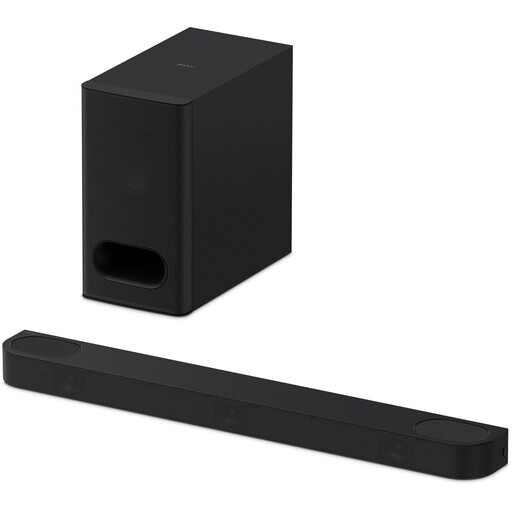
Why it suits this profile: A system for TV, films and gaming when you want immersive sound and a separate wireless subwoofer.
The product specifications list HDMI eARC/ARC, an optical connection and a 3.1.2-channel configuration. Check your TV’s connections beforehand and allow extra space for the subwoofer.
Dolby Atmos and DTS:X according to the product information, Bluetooth 5.3, wireless subwoofer and 350W RMS stated power.
We have put together a complete, up-to-date list of products that fully meet these strict selection criteria and the applicable European safety regulations.
Switch on Bluetooth on your phone, turn on the speaker and select the model name from the Bluetooth list. With a Wi-Fi speaker, you will usually use the accompanying app and your home network. For a soundbar, check whether your TV is connected via HDMI ARC/eARC or an optical cable.
This varies by model and usage. Volume, LED lighting, equaliser settings and temperature all affect playback time. Compare the stated capacity and playback time, but allow for shorter playback when listening at high volume or using the speaker intensively outdoors.
A battery-powered Bluetooth speaker mainly uses electricity while it is charging. A Wi-Fi speaker or soundbar usually remains connected to the mains. Actual consumption depends on the power rating, how long it is used and its standby mode. For long-term use, check the energy label or technical specifications for the specific model.
