
Vandaag of morgen in huis

Kwaliteit gegarandeerd

Welkomstaanbiedingen ontgrendelen: GRATIS bezorging | Tot 80% korting | Gratis 30 dagen JoyPlus-proefperiode
Download de app
A wireless smoke alarm can be a practical solution for houses, flats, garages and small business premises. You don’t need to connect multiple alarms with cables, and some models can all sound at once when smoke is detected. However, not every wireless model is suitable for every home.
Marketing copy often focuses on long battery life, a loud siren or an app. The important details can be less obvious: does the alarm work independently, do you need a hub, what type of connection does it use, and how do you check that it’s working? Use these checks to avoid buying an alarm that doesn’t suit your needs once it’s installed.
Some alarms use a wireless connection only for an app or central hub. That doesn’t automatically mean all the alarms in your home will trigger one another wirelessly. Look specifically for terms such as interconnectable smoke alarm, radio-networkable or wirelessly interconnected smoke alarms.
Also check the maximum number of alarms that can be linked. One alarm may be enough for a flat, while a multi-storey home may benefit from a network of alarms.
A smoke alarm with a 10-year battery means you’re less likely to need to replace the batteries in the meantime. However, you still need to test the alarm regularly. Dust, cooking fumes and steam can also cause false alarms or affect its performance.
Check the difference between a battery that lasts ten years and a product with a stated lifespan of ten years. Some models need to be replaced in full after that time.
A smoke alarm with an app can send alerts to your phone, but first check whether it needs Wi-Fi, an account or a separate hub. An app also doesn’t automatically replace the audible alarm in your home. A clear alarm signal remains important in bedrooms and hallways.
Similar points apply to an outdoor security camera: check the Wi-Fi frequency, power supply, storage costs and weather resistance. A camera also doesn’t detect the same things as a smoke or carbon monoxide alarm.
EN14604 is a European standard for smoke alarms in homes. Check that the product information clearly mentions this standard, and keep the manual and proof of purchase. A reference to the standard doesn’t mean that every installation automatically meets all local requirements. Install alarms according to the manual and check any additional requirements that apply to your home.
An optical smoke alarm uses a light sensor to detect smoke particles. This type is common in home smoke alarms. Actual performance depends on the design, installation and maintenance. Don’t use a smoke alarm as a substitute for an escape plan or other fire-safety measures.
A volume of 85 dB is often quoted for smoke alarms. This is a specification you can check, but how audible it is in practice depends on walls, doors, the distance to bedrooms and background noise.
So don’t place all your alarms in one room. Consider bedrooms, landings, hallways and living areas. Avoid placing alarms right next to a hob, bathroom or ventilation opening if the manual advises against it.
A wireless network may use radio, while a smart model connects to an app via Wi-Fi. These systems aren’t necessarily interchangeable. Check the following:
A separate carbon monoxide alarm is needed to detect carbon monoxide. A smoke alarm doesn’t automatically detect carbon monoxide. For a CO alarm, check the stated standard, sensor lifespan, battery type and installation instructions.
The selection below is based on the stated features, connection options, alarm volume, battery type and certification information. Always check the current product page and the manual supplied before buying.
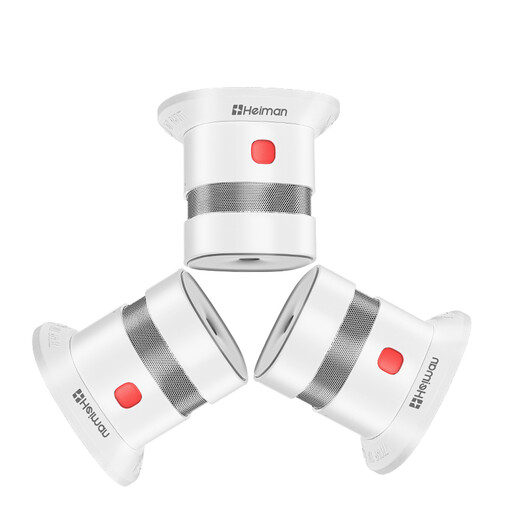
Why it suits this profile: This model is a good fit if you’re looking for a compact, standalone alarm without complicated linking or an app. According to the product listing, it has a photoelectric sensor, an 85 dB alarm and a built-in battery with a stated lifespan of ten years.
The product information lists both EN14604 and TÜV, and clearly states the sensor type and battery life. That means you can check these details in advance rather than relying on the compact design alone.
Optical sensor, 85 dB alarm and stated EN14604 certification. Suitable for basic coverage in places such as bedrooms, hallways or living rooms.
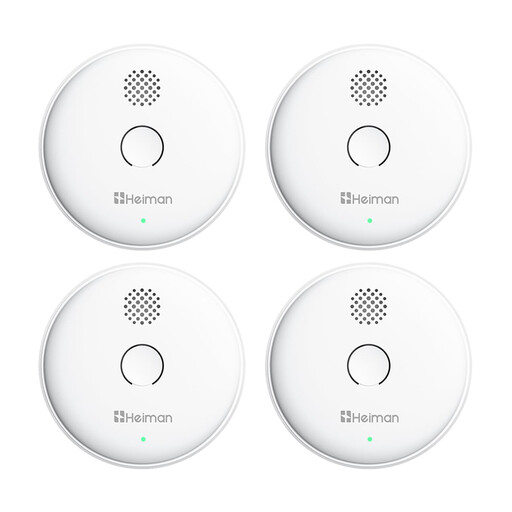
Why it suits this profile: This pack is a good match for homes with several rooms or floors. According to the product listing, up to 40 alarms can be linked via radio signal, so all connected units sound when one alarm is triggered.
The product description specifies the radio connection, maximum number of units and mute function. After installation, use the test button to check that all linked alarms respond.
Four alarms in one pack, up to 40 linkable alarms according to the product information, an 85 dB alarm and a built-in battery with a stated lifespan of ten years.
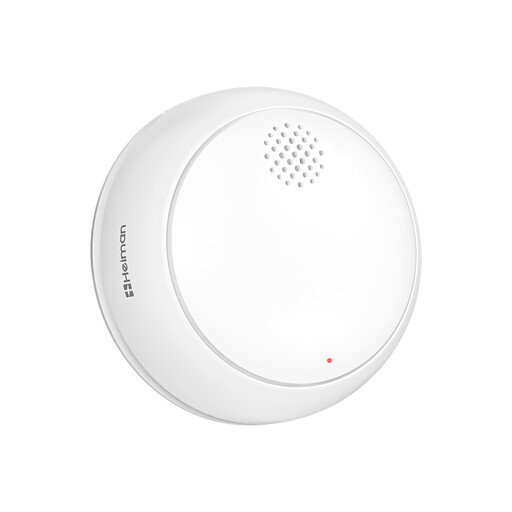
Why it suits this profile: This model may suit you if you’re interested in Wi-Fi or app features as well as a local alarm signal. According to the product listing, it has a replaceable battery, an 85 dB alarm and a stated EN 14604 standard.
The replaceable battery means you don’t automatically have to replace the whole alarm when the battery runs out. However, check the app requirements and Wi-Fi compatibility first.
App-based control, replaceable battery, 85 dB alarm and stated EN 14604 standard.
We’ve put together a complete, up-to-date list of products that meet these strict selection criteria and the applicable European safety requirements.
At the very least, place alarms along sensible escape routes and near sleeping areas. In a multi-storey home, having an alarm on each floor is often more practical than relying on one centrally located device. Also consider the layout, floor area and local requirements.
Press the test button regularly, for example once a week, following the product manual. Check that you can hear the alarm and that linked alarms respond. Carefully remove dust from the outside, and replace an alarm when it reaches the end of its stated lifespan.
It depends on the model. Radio-interconnected smoke alarms can communicate with one another without Wi-Fi or internet access. A smoke alarm with an app usually needs Wi-Fi, a gateway or an account to send remote alerts. Check this before buying, especially if you plan to install the alarm in a garage, rented home or property where Wi-Fi may change.
