
Vandaag of morgen in huis

Kwaliteit gegarandeerd

Welkomstaanbiedingen ontgrendelen: GRATIS bezorging | Tot 80% korting | Gratis 30 dagen JoyPlus-proefperiode
Download de app
The idea is appealing: a perfectly manicured lawn with zero effort on your part. An automatic lawnmower promises just that. But the first generation of robotic mowers came with a tedious chore: burying a perimeter wire. Fortunately, technology has advanced. The wireless robotic lawnmower is now a reality, but the market is flooded with marketing jargon and models that don't always deliver on their promises.
As a Joybuy Product Recommendation Officer, I'm here to help you filter through the noise. We'll look at the common pitfalls and the specifications that truly matter, ensuring you choose a model that fits your garden, not a brand's marketing department.
Before you invest, it's crucial to know what can go wrong. Many disappointments can be prevented by avoiding these three common missteps.
To make the right choice, it's helpful to understand the key specifications. These are the three factors that separate a gadget from a reliable garden assistant.
The way a mower determines its position is crucial for a quality cut.
Look beyond the number in m?. A robotic mower for slopes needs powerful motors and high-traction wheels. Check the maximum slope, expressed as a percentage (%). For instance, a 45% slope is quite steep, and not every mower can handle it. Do you have multiple lawn zones with narrow passages in between? Make sure the mower supports this feature.
A smart lawnmower with an app is standard, but functionality varies widely. Useful features include:
Based on these criteria, we have selected several models that suit different user profiles.
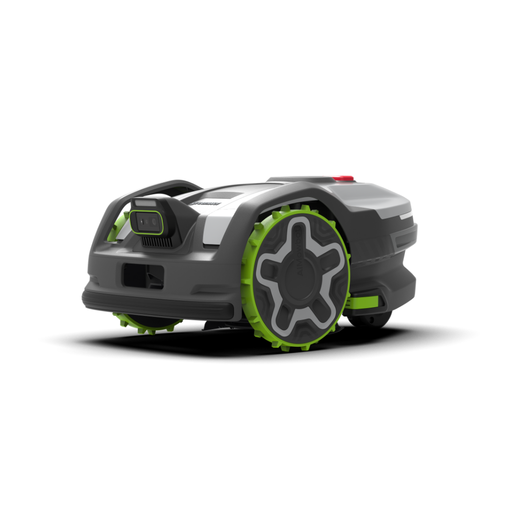
Why This Fits Their Persona: For those who demand the highest precision in a garden with obstacles, trees, and slopes. This user wants app control and a reliable, systematic mowing result.
Tackles the pitfall of inaccurate navigation. The combination of RTK-GPS and a 3D ToF sensor ensures centimetre-accurate positioning and reliable obstacle detection, even in shade or at twilight.
Can handle slopes up to 45% and is very quiet at 58 dB(A). The app offers extensive control over zones and mowing schedules.
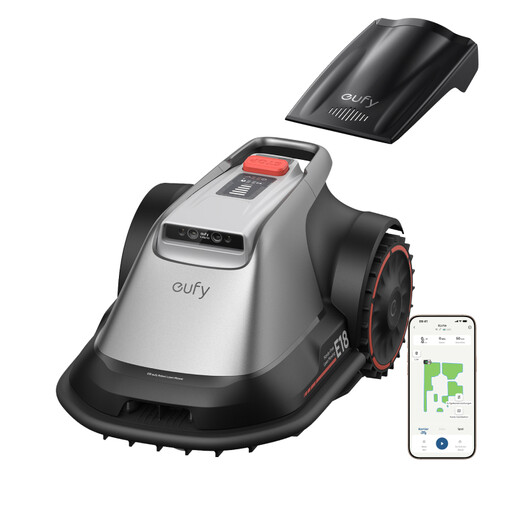
Why This Fits Their Persona: Ideal for those seeking a reliable, wireless solution for a fairly standard garden without the complexity and cost of an RTK system. Convenience and a 'set it and forget it' experience are paramount.
This model bypasses the "AI" marketing trap by being clear about its technology. It uses TrueVision (cameras) and a GNSS system, providing a solid wireless experience without promising superfluous, complex AI features.
No RTK station is needed, which simplifies installation. The mower maps the garden itself via the app, and its 3D perception helps it accurately avoid obstacles.
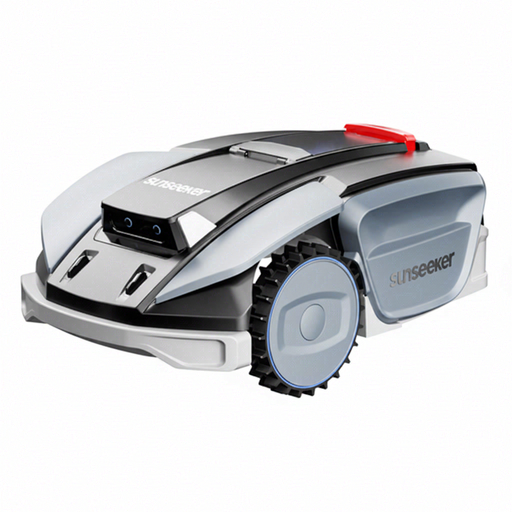
Why This Fits Their Persona: For the owner of a large property (up to 1600 m?) with challenging terrain. Steep slopes, uneven ground, and the need for a true powerhouse are the main focus here.
This model avoids the pitfall of underestimating garden capacity. Where other mowers get stuck on slopes, this model is specifically designed for tough terrain, with power that lives up to its specifications.
The all-wheel drive (AWD) is unique and enables the mower to climb slopes of up to 60%. The combination of RTK and Vision simultaneously ensures accurate navigation over large areas.
We have compiled a complete, up-to-date list of products that fully meet these strict selection criteria and local regulations.
The lifespan depends on maintenance. The battery typically lasts for several years, depending on usage. The blades are wear-and-tear parts and must be replaced periodically (usually once or twice per season) for an optimal cutting result. Regularly cleaning the mower and its charging station will significantly extend its lifespan.
This is where navigation technology makes all the difference. An RTK robotic mower generally performs best here, as its base station continuously corrects the signal. Models that rely solely on cameras (Vision) can sometimes struggle with the transition from bright light to deep shade. Systems with only standard GPS are the most susceptible to signal loss.
The installation is significantly simpler than with wired models. The process usually involves placing the charging station and (if applicable) the RTK antenna in a strategic location. You then use the smartphone app to guide the mower along the edges of your lawn once to set the virtual boundaries. This typically takes less than half an hour.
