
Vandaag of morgen in huis

Kwaliteit gegarandeerd

Welkomstaanbiedingen ontgrendelen: GRATIS bezorging | Tot 80% korting | Gratis 30 dagen JoyPlus-proefperiode
Download de app
Wireless over-ear headphones with noise cancelling can be a great choice on the train, while working from home or when listening to music. But a long list of product features doesn’t necessarily tell you how well they’ll work day to day. A high battery-life figure, “premium” sound quality or active noise cancellation may perform differently in practice than you expect.
Look out for these three common pitfalls:
Battery life without context
Manufacturers often quote the maximum playback time with noise cancelling switched off. With ANC, phone calls or the volume turned up, battery life may be shorter. Always check whether the quoted figure is with or without active noise cancellation.
Expecting noise cancelling to create complete silence
Active noise cancellation uses microphones and electronic signal processing. How well it works depends on your surroundings. Low, constant sounds such as train or plane engines are usually different from voices, sudden noises or wind. A good fit around your ears is still important.
Only assessing comfort after you’ve bought them
Over-ear headphones can feel warm, press against your glasses or start to feel heavy after a while. So check the weight, adjustability, shape of the ear cushions and whether the headphones fold up. “Comfortable” is a brand claim; the design and dimensions are easier to check.
With ANC headphones, microphones pick up ambient noise and counteract it. Don’t just look at a dB figure in the product title. Check whether the headphones have different modes, such as noise cancelling, transparency and off.
Transparency mode is useful when you want to hear an announcement at a station or have a quick chat. When cycling, driving or in other situations where you need to hear what’s happening around you, follow the manufacturer’s safety instructions and stay aware of your surroundings.
If you travel often, headphones with long battery life can be useful. Compare:
For example, the Sony WH-1000XM5 is listed as offering up to 30 hours with noise cancelling and up to 40 hours without it. The Sony WH-CH720N is listed as offering up to 35 hours with ANC and up to 50 hours without. According to the product description, the Soundcore Space One Pro offers 40 hours with ANC and 60 hours without ANC.
Bluetooth 5.2, 5.3 or 5.4 mainly indicates the generation of the connection; it doesn’t automatically mean every device delivers the same audio quality. So check codec support and multipoint connectivity too.
Bluetooth headphones with multipoint can connect to, for example, a laptop and smartphone at the same time. This is useful when working from home. If you’re looking for Hi-Res Audio headphones, check whether Hi-Res is available over Bluetooth, via a specific codec or only through a USB-C or audio cable. The source, playback device and music service also play a part.
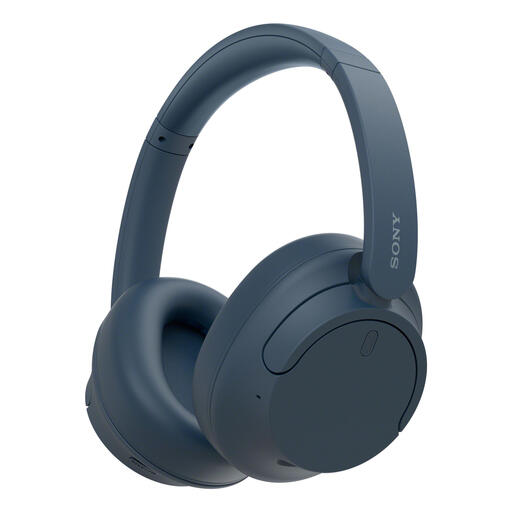
Why it suits this profile: According to the product specifications, these lightweight wireless headphones weigh 192 grams and offer ANC, multipoint connectivity and control through the Sony app. That makes them a good choice for everyday use if you’d rather not go straight for a heavier model.
Battery life is listed separately for ANC on and off: up to 35 and 50 hours. This makes it clearer which conditions the claim applies to.
192 grams, multipoint connectivity, USB-C and quick charging: according to the product information, a 3-minute charge gives you around 1 hour of use.
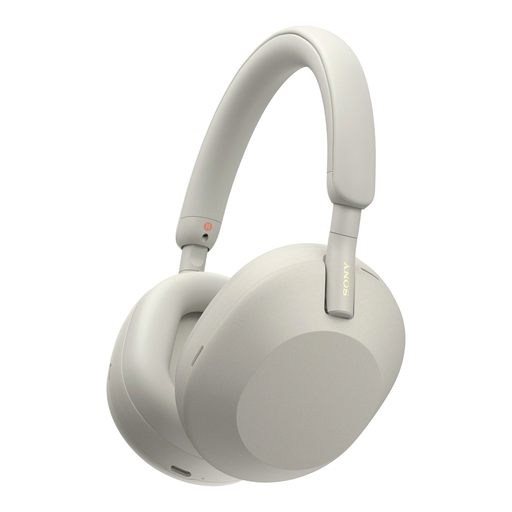
Why it suits this profile: The product description mentions LDAC, high-resolution audio, multipoint connectivity and four microphones. That makes these a good fit if you want one pair of headphones for music, work calls and travel.
The product information lists both 30 hours with ANC and 40 hours without ANC. An audio cable is also included for wired use.
Bluetooth 5.2, LDAC, multipoint connectivity, a microphone and quick charging, with 5 hours of playback from a 10-minute charge according to the description.
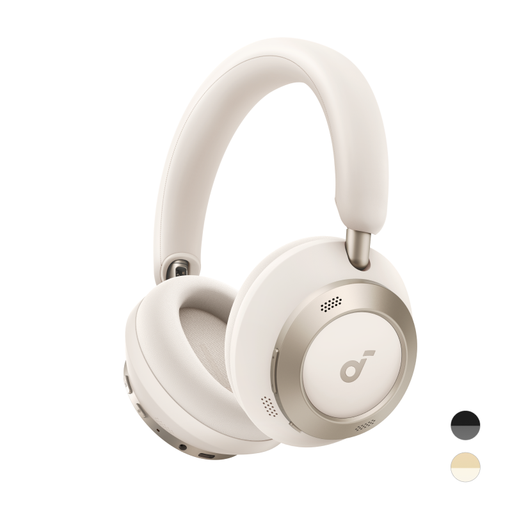
Why it suits this profile: This model is aimed at travellers and anyone who often takes their headphones with them. The product details mention a foldable design, adaptive ANC and long battery life.
The specifications distinguish between ANC on and off. They also explicitly mention the foldable design and pressure-relieving materials, so portability and comfort are easier to assess.
According to the product information, 60 hours without ANC and 40 hours with ANC, LDAC, and 5 minutes of quick charging for up to 8 hours of playback.
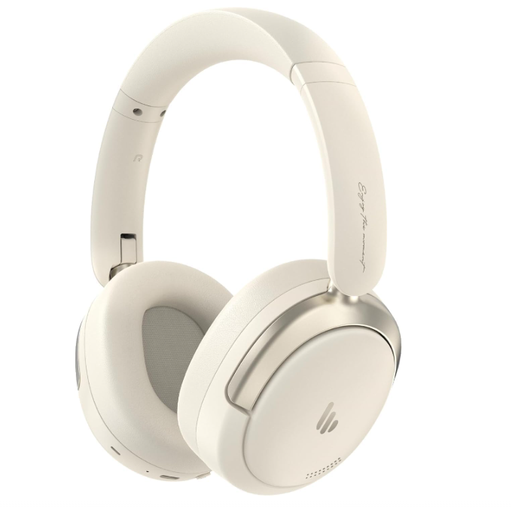
Why it suits this profile: The built-in microphone, ability to connect to two Bluetooth devices at once and app personalisation make it practical to switch between a laptop and phone.
The product description lists hybrid ANC up to -44 dB, Bluetooth 5.4 and a USB-C connection for Hi-Res Audio. The dB figure is a stated product specification, not a guarantee of the same experience in every environment.
Up to 45 hours of playback according to the product information, 40mm drivers, dual-device connectivity and a built-in microphone.
We’ve put together a complete, up-to-date list of products that meet these strict selection criteria and comply with the applicable European safety regulations.
Yes, over-ear headphones can be practical on trains, planes or in the office, thanks to the combination of closed ear cushions and ANC. Check the battery life with ANC switched on, the weight and whether the headphones fold up. An audio cable can be useful if Bluetooth or the battery isn’t available.
Battery life per charge is different from the overall lifespan of the product. Battery life per charge can vary depending on ANC, volume and calls. For long-term use, a sturdy hinge design, replaceable ear cushions, software support and your statutory EU conformity rights are all worth considering. Keep the headphones dry and follow the manufacturer’s charging instructions.
Yes. Active noise cancellation uses microphones and electronic processing. That’s why manufacturers often list two figures: with ANC on and with ANC off. Always compare figures measured under the same conditions, and check whether quick charging is available. This helps you avoid choosing headphones based on a high maximum battery-life claim that doesn’t reflect your everyday use.
