
Vandaag of morgen in huis

Kwaliteit gegarandeerd

Welkomstaanbiedingen ontgrendelen: GRATIS bezorging | Tot 80% korting | Gratis 30 dagen JoyPlus-proefperiode
Download de app
Wireless outdoor lighting makes a garden, patio or balcony usable in no time, without digging trenches or running cables to a socket. However, rechargeable outdoor lights, solar lights and smart models can vary greatly in how they perform. A lamp that looks atmospheric in a product photo might not provide enough light in practice, may not stand up to the rain or could have a shorter battery life after a long winter.
Before you buy, look out for these three common pitfalls:
The IP code consists of two digits. The first indicates protection against solid objects, while the second indicates protection against water.
An IP rating doesn’t automatically make a product suitable for immersion or extreme weather conditions. Check the safety instructions too. On a rechargeable light, pay particular attention to the charging port: charge the light indoors and only use a suitable USB power supply.
Lumens indicate the total amount of visible light. For garden ambient lighting, 100 to 300 lumens is often practical, depending on where the light is placed. A wireless table lamp on a dining table needs less light than one used to highlight a path.
Also consider the colour temperature:
A dimmable outdoor light is handy when you switch between eating, reading and decorating. Touch controls, a remote control or Bluetooth outdoor lighting can be more practical than a small switch on the lamp itself.
When choosing a rechargeable outdoor light, check the battery type and capacity, charging time and stated run time. The stated run time usually applies to a particular brightness setting, so a lamp may last longer on a low setting than at maximum brightness.
For solar outdoor lighting, check:
A wireless lamp is only truly flexible if its charging method suits the way you plan to use it. A lamp with a USB cable is suitable for regular use on a table. A solar model is a better fit for a fixed position where you don’t want to keep recharging it.
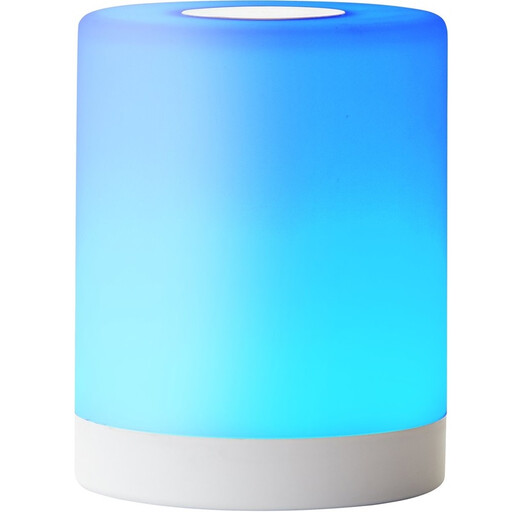
Why it suits this type of user: This compact wireless table lamp is ideal for a balcony, small table or sheltered patio. Its built-in battery charges via USB, and the lamp has touch controls.
The product specifications state 140 lumens, 3000K, dimmability and IP44. This makes it clear that it’s an ambient light for sheltered spots, not a powerful light for illuminating a large area.
RGB function, memory function, integrated 1W LED and a compact size of approximately 11.6 by 9.2 cm.
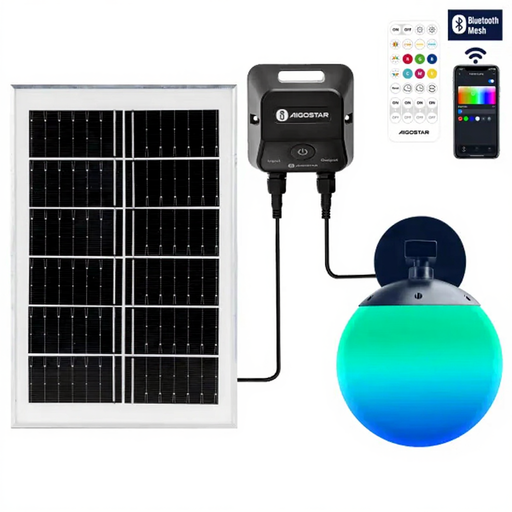
Why it suits this type of user: This solar wall light is a good choice if you’re looking for fixed garden lighting without mains power and with smart controls. According to the product information, Bluetooth Mesh can connect multiple devices.
The solar panel has a 5-metre cable, giving you more freedom to position it. The stated charging time is 4 to 6 hours, although plenty of daylight is still essential.
RGBCCT lighting, 200 lumens, a 4000 mAh battery and automatic activation, according to the product description.
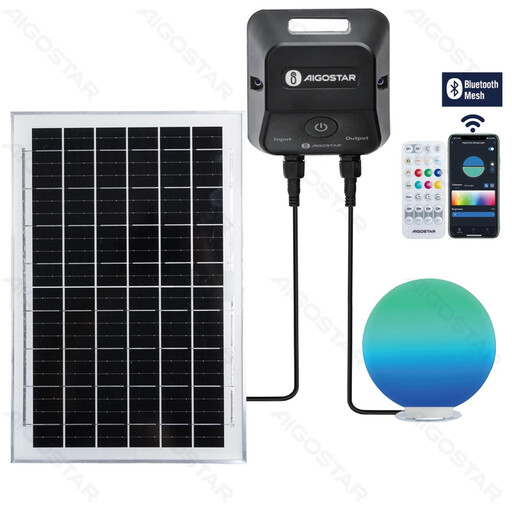
Why it suits this type of user: This solar ground spotlight is designed for a permanent place in the garden and offers smart colour and brightness settings. Its larger solar panel is handy when the light stays outdoors every day.
The stated IP65 rating and temperature range of -10°C to 50°C give you more specific information than simply calling it ‘weatherproof’. Make sure the panel is positioned away from shade.
35W, 350 lumens, an 8000 mAh battery, RGBCCT and Bluetooth Mesh, according to the product specifications.
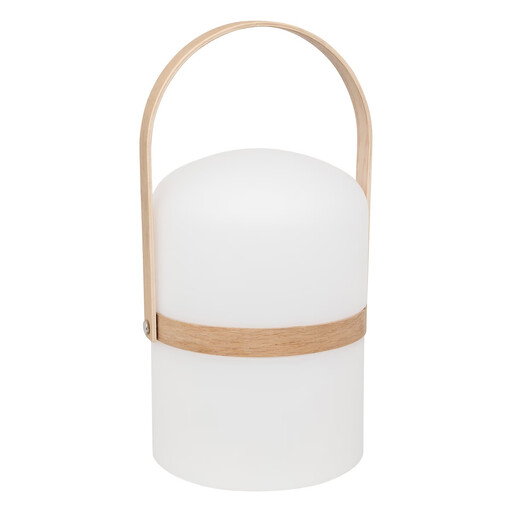
Why it suits this type of user: This portable LED outdoor lamp has a handle, making it handy for a dining table, patio or temporary use during a garden party. You can move it around without having to install it.
The manufacturer states three light levels and a run time of 4 hours at full brightness, 9 hours on medium and 60 hours on low. This helps you set realistic expectations for the level you choose.
270 lumens, warm white light, dimmer, USB Type A cable and IP44 protection, according to the product details.
We’ve put together a full, up-to-date list of products that meet these strict selection criteria and the applicable European safety regulations.
That depends on its IP rating and the manufacturer’s instructions. An IP65 model is better protected against dust and water jets than an IP44 model. A lamp with a USB charging port and IP44 protection is best placed somewhere sheltered and charged indoors. Store portable lights away during frosty weather, prolonged rain or whenever you’re not using them for a while.
Run time varies by model and light setting. Check the stated run time, battery capacity and charging time. For example, the stated run time for the Atmosphera Kiara ranges from 4 hours at full brightness to 60 hours on the low setting. In practice, temperature, battery age and the chosen light colour can all make a difference.
A solar outdoor light doesn’t need to be connected to the mains during normal use. According to the product information for the Aigostar models mentioned, the battery charges via the solar panel during the day and the light switches on automatically in the evening. However, its run time depends on how much daylight it receives and the condition of the panel.
