
Vandaag of morgen in huis

Kwaliteit gegarandeerd

Welkomstaanbiedingen ontgrendelen: GRATIS bezorging | Tot 80% korting | Gratis 30 dagen JoyPlus-proefperiode
Download de app
As an automotive technology professional, you know that a modern vehicle is more of a computer on wheels than a purely mechanical machine. A reliable automotive diagnostic tool is therefore not a luxury, but a necessity. However, the market for wireless OBD2 scanners is saturated with devices that promise a lot but don't always deliver. The wrong choice costs not only money but also valuable time in the workshop.
As a Joybuy Product Recommendation Officer, I'll help you cut through the marketing hype. Here, we'll discuss the common pitfalls and the specifications that truly matter, so you can make an informed decision.
Before we get to the recommendations, it's crucial to recognise the most common missteps. Many technicians and workshop owners fall for these, leading to frustration and unnecessary costs.
To avoid these pitfalls, a professional car diagnostic tool must meet several non-negotiable requirements. Pay close attention to the following three specifications.
A simple fault code reader can only receive data from the car. A professional bi-directional scanner can also send commands to the vehicle's ECU. This is also known as an active test scanner. It allows you to command components and actuators to check their operation without disassembling them. Think of testing the wipers, opening and closing the EGR valve, or activating the fuel pump. This function is indispensable for efficient and accurate diagnostics.
Modern cars process an ever-increasing amount of data. The traditional CAN bus is too slow for this. CAN FD (Flexible Data-Rate) and DoIP (Diagnostics over Internet Protocol) are the new standards that enable faster and more complex communication. A CAN FD DoIP tool is not a luxury but a requirement to work on the latest generation of vehicles. Without this support, you risk having to turn away new customers.
Clearing fault codes is just the beginning. A valuable piece of workshop diagnostic equipment offers a wide range of service functions. These include:
The more of these functions that are available without extra cost, the higher the return on your investment.
Based on the criteria above, we have selected several devices that suit different professional profiles.
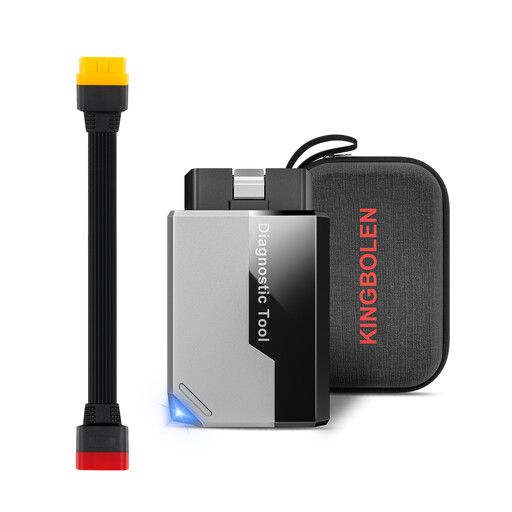
Why This Fits Their Persona: This device turns your smartphone into a powerful diagnostic tool. Ideal for on-site jobs, roadside assistance, or the serious hobbyist who wants professional features without investing in a full tablet.
According to the manufacturer KINGBOLEN, updates for full system diagnostics are free for life. This avoids the pitfall of unexpected subscription costs for core functionality.
Offers bi-directional control and support for CAN-FD in a very compact Bluetooth dongle. The EDIAG app works on both Android and iOS.
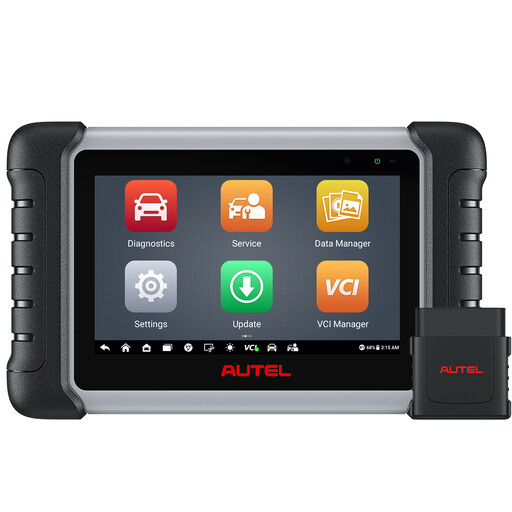
Why This Fits Their Persona: A robust, wireless tablet scanner that offers an excellent balance between advanced features and ease of use. This workhorse covers most daily diagnostic and maintenance tasks in a universal garage.
Delivers OE-level diagnostics for all available systems and broad vehicle coverage. This bypasses the "incomplete coverage" pitfall that plagues cheaper scanners.
According to Autel, the device features over 38 service functions and stable bi-directional control. The wireless VCI provides freedom of movement in the workshop.
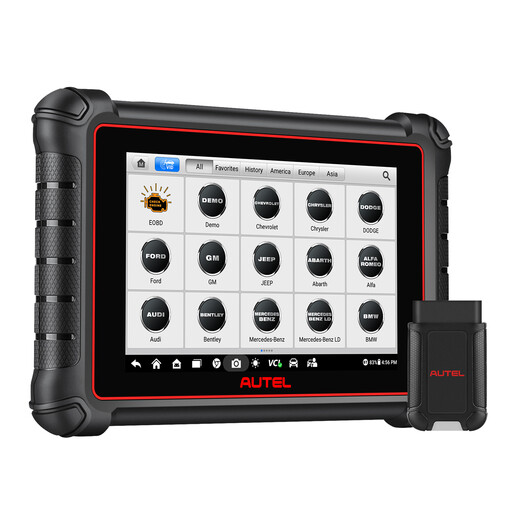
Why This Fits Their Persona: For the workshop that focuses on the newest and most complex vehicles. This Autel MaxiCOM MK900-BT tool is built for the future and offers the most comprehensive diagnostic capabilities.
Tackles the protocol problem head-on with built-in CAN FD and DoIP support, requiring no extra adapters. This avoids the pitfall of outdated technology.
A future-proof investment thanks to native support for the latest communication protocols. It runs on a modern Android 11 operating system for fast performance.
We have compiled a complete, up-to-date list of products that fully meet these strict selection criteria and current regulations.
A basic OBD2 reader, often called a simple fault code reader, can only read and clear generic fault codes from the engine control unit (ECU). A professional diagnostic tool provides access to all modules in the car (ABS, SRS, transmission, etc.), displays live data, and features service functions and bi-directional control to actively test components.
Vehicle manufacturers continuously release updates for their software and introduce new models and systems. Regular software updates for your scanner ensure you remain compatible with the latest vehicles and features. They can also update security protocols, such as FCA AutoAuth for working on newer Chrysler, Dodge, and Fiat models, and improve the accuracy of the diagnostic data.
A bi-directional scanner is a powerful tool. It allows you to send commands to the car that affect the operation of components. While this is essential for diagnostics, improper use can potentially cause damage. It is intended for professional technicians and experienced users who understand the tests they are performing and the potential consequences. Always read the instructions and proceed with caution.
