
Vandaag of morgen in huis

Kwaliteit gegarandeerd

Welkomstaanbiedingen ontgrendelen: GRATIS bezorging | Tot 80% korting | Gratis 30 dagen JoyPlus-proefperiode
Download de app
Wireless headphones with noise cancellation can help make train noise, chatty colleagues and traffic less intrusive. But an impressive ANC claim doesn’t tell you everything about how they’ll perform day to day. Fit, battery life, microphones and controls all play an equally important part in making Bluetooth headphones comfortable to use.
If you focus only on a high decibel rating or long playback time, you could end up with a product that disappoints. Below, we cover the main pitfalls and specifications to look out for, along with some suitable models for different needs.
Brands sometimes advertise a maximum noise reduction figure in decibels. According to the brand’s own research, this figure may have been measured under specific conditions. Your experience on a train in the Netherlands, in the office or out for a walk may be different. The shape of the ear cups and the seal around your ears also make a difference.
So don’t focus on the claim alone. Check for:
Advertised battery life often depends on volume, codec, calls and the listening mode you choose. For example, the Sony WH-CH720N offers up to 50 hours without noise cancellation and 35 hours with it. The Sony WH-1000XM5 offers 40 hours without ANC and 30 hours with ANC.
Always compare battery life with noise cancellation switched on. Also check how long charging takes and whether fast charging is available. A quick charge can be more useful on the go than a high theoretical capacity alone.
Over-ear headphones are generally stable for travelling or working, but can feel warm during exercise. In-ear earbuds are lighter, but fit varies considerably from ear to ear. If you plan to exercise with them, check the IP rating. IPX4 is designed to protect against splashes and sweat, while IPX5 offers protection against water jets under certain conditions, according to the product information. Neither rating means a product is suitable for immersion.
ANC headphones use microphones to pick up surrounding sounds and produce an opposing signal. The results vary by frequency: steady low sounds, such as engine noise, are often handled differently from voices or sudden noises.
Transparency mode lets outside sounds through again. It’s useful at a station or during a conversation. Don’t use noise cancellation in situations where you need to hear traffic or warning sounds.
Bluetooth 5.2, 5.3 and 5.4 describe the wireless connection, but a higher version number doesn’t automatically guarantee better sound. Check which codecs are supported too. Models with AAC, SBC or LDAC may work differently with Android and Apple devices, so check compatibility with your smartphone.
For work and travel, multipoint may be more useful than an extensive range of codecs: it lets your headphones stay connected to two devices. A detachable cable and a 3.5mm socket are handy if the battery runs out or you’re using an in-flight entertainment system.
Over-ear headphones cover the whole ear and often provide extra passive sound isolation. In-ear models take up little space and are handy for commuting or exercise. For earbuds, check whether several sizes of ear tips are included.
Look at the stated battery life per charge, as well as the total including the charging case. A model might offer 10 hours per session, for example, while the case provides several extra charges. If you listen for long periods, keeping the volume moderate is important to reduce strain on your hearing.
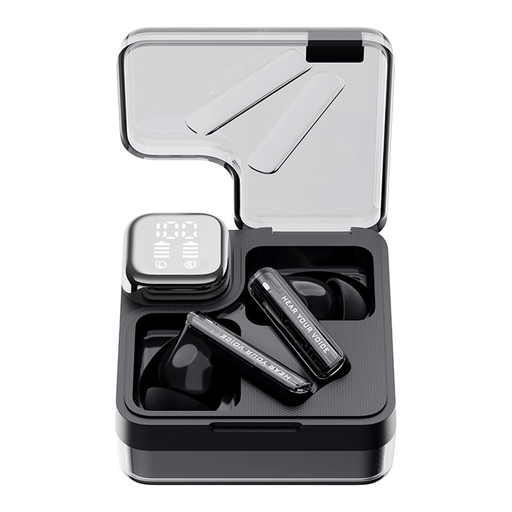
Why it suits this profile: These wireless earbuds combine ANC and transparency mode with a compact charging case and a stated total playback time of around 28 hours.
The specifications list not only ANC, but also an IPX5 rating, an app and a transparency mode. The case does need to stay dry.
Bluetooth 5.3, around 6–7 hours per charge, around 28 hours in total and a 0.06-second low-latency mode, according to the product information.

Why it suits this profile: This over-ear model has Bluetooth 5.4, spatial audio features and both wireless and wired connections, making it suitable for music, films and travel.
The detachable cable is an alternative when Bluetooth or the battery isn’t available. The stated battery life is 24 hours.
ANC, Hi-Res Audio according to the product specifications, Bluetooth 5.4, multipoint, and 3.5mm and 2.5mm sockets.
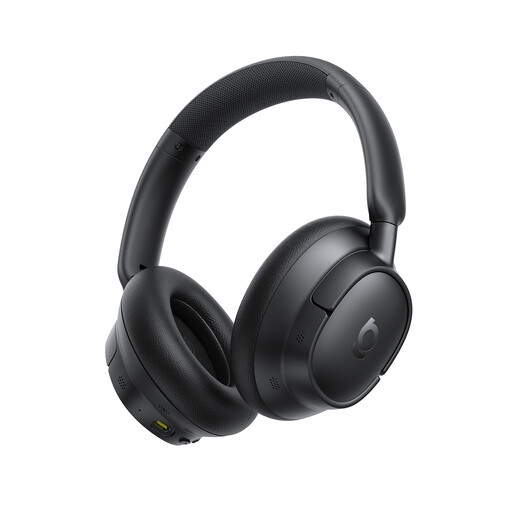
Why it suits this profile: If you travel often or work long days, this over-ear design offers a stated battery life of up to 80 hours without ANC and 55 hours with ANC.
The product information lists ANC and five microphones for calls. Before buying, check that the weight and fit will be comfortable for long sessions.
Bluetooth 6.0 according to the product description, LDAC, Hi-Res Audio, five microphones and a stated fast-charging feature that provides 10 hours of playback from a 10-minute charge.

Why it suits this profile: These in-ear earbuds are designed for everyday use, with ANC, transparency mode, wireless charging and Android controls.
Three sizes of ear tips are included, so you can adjust the seal. The IPX4 rating means splash resistance; the earbuds aren’t suitable for immersion.
Hi-Res Audio according to the product specifications, Bluetooth 5.0, Qi wireless charging, a microphone and transparency mode.
We’ve put together a complete, up-to-date list of products that meet these strict selection criteria and current European safety regulations.
It depends on the microphones and how they process surrounding sounds. ANC affects what you hear; the microphones and ENC mainly determine how clearly the other person can hear you. Check the number of microphones, multipoint support and reviews of call quality. For work calls, a model with a detachable cable or a stable Bluetooth connection can be especially useful.
Battery life per charge varies by model and listening mode. Battery capacity decreases over time, while ear cushions and silicone tips wear with daily use. Keep the product dry, avoid extreme temperatures and charge it according to the manufacturer’s instructions. If the battery swells or becomes unusually hot, stop using the product immediately.
Beyond the purchase price, there are usually few ongoing costs. You may need a USB-C cable, replacement ear cushions or ear tips, and a charging adapter if one isn’t included. Also check whether an app is needed for extra features and whether certain functions only work with Android or iOS.
