
Vandaag of morgen in huis

Kwaliteit gegarandeerd

Welkomstaanbiedingen ontgrendelen: GRATIS bezorging | Tot 80% korting | Gratis 30 dagen JoyPlus-proefperiode
Download de app
Wireless noise-cancelling headphones can be a great choice on the train, in the office, on a flight or during online meetings. However, a high dB rating or long battery life doesn’t tell you everything. Comfort, microphone quality, connectivity and the difference between active noise cancellation and a noise-cancelling microphone all help determine whether a product is right for the way you use it.
Brands sometimes quote a figure such as -44 or -45 dB. According to the manufacturer’s own product information, this usually refers to the maximum reduction under certain conditions. The results also depend on the fit, the shape of your ears and the type of noise.
The low rumble of a train may be cancelled differently from voices, keyboards or sudden sounds. So treat a dB rating as one product specification, not a guarantee of complete silence.
With active noise cancellation, usually referred to as ANC, the headphones or earbuds reduce ambient noise for the wearer. A noise-cancelling microphone, by contrast, aims to reduce background noise for the person on the other end of a phone call or meeting.
So a Bluetooth headset may have good ANC but still be less suitable for calls on a busy street. Check the number of microphones, the microphone technology and the information about calls or meetings separately.
Battery life is often measured in a specific operating mode. Playback time may be lower when ANC, spatial audio, high volume levels or a particular Bluetooth codec is in use. So when comparing headphones with long battery life, check:
Over-ear headphones surround your ears, and the ear cushions can help block out some ambient noise. This can be comfortable for travel and long listening sessions, but these models are usually larger and warmer.
In-ear earbuds are compact and easy to take with you. Fit matters more: earbuds that don’t seal properly may deliver less bass and less effective ANC. Extra ear tip sizes, a light weight and a secure fit are practical advantages.
Also consider the weight. An over-ear model weighing around 200 to 260 grams may be comfortable for many users, but headband pressure and the shape of the ear cushions matter just as much.
Bluetooth 5.3 or 5.4 tells you which Bluetooth version is used, but doesn’t automatically guarantee sound quality or range in every situation. Check which audio codecs are supported, such as AAC, SBC or LDAC, and make sure your smartphone, laptop or tablet is compatible.
Latency is especially important for gaming. Some wireless gaming earbuds use a USB-C dongle to reduce latency. A standard Bluetooth connection may be perfectly good for music, but less suitable for competitive gaming.
An IPX4 rating means protection against splashes according to the usual IP classification, not submersion. IP57 offers a different level of protection, but you should still follow the manufacturer’s instructions. Check that the product is suitable for how you plan to use it, whether for commuting or exercise.
Controls matter too. Touch controls are compact, while physical buttons can sometimes be easier to use with cold hands. Multipoint connectivity can be useful if you switch between a laptop and smartphone.
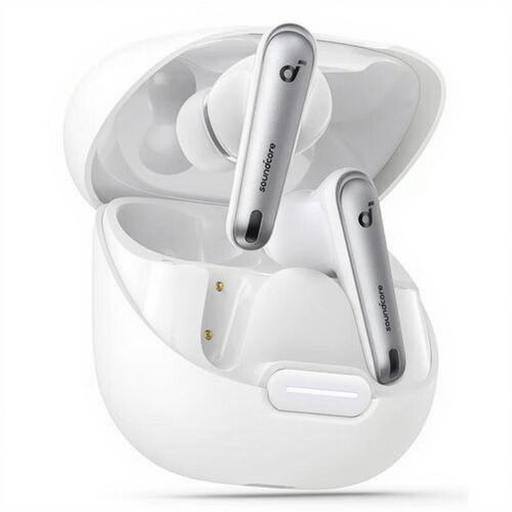
Why it suits this profile: These wireless earbuds are compact for everyday use and offer Bluetooth 5.3, six microphones, a charging case and up to 10 hours of audio, according to the product specifications.
The specifications list both calls and music as intended uses, as well as IPX4 splash resistance. Do check that the in-ear fit suits your ears.
Bluetooth 5.3, USB-C, extra ear tips, touch controls and up to 10 hours of audio per charge.

Why it suits this profile: These over-ear headphones are designed for long listening sessions and combine adaptive ANC, transparency mode and up to 60 hours of playback, according to the product information.
The stated battery life is accompanied by information about ANC and wired use. This makes it easier to compare the claim with your own listening habits.
42mm transducers, four microphones, app settings, a 3.5mm jack and a stated battery life of up to 60 hours.
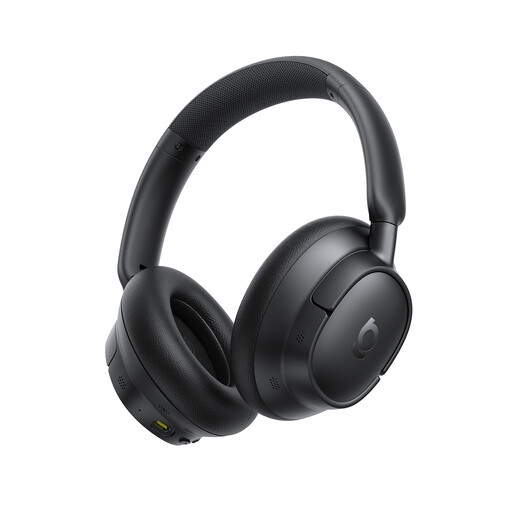
Why it suits this profile: These over-ear headphones are worth considering for long working days, travel and frequent calls. According to the product information, playback time is 80 hours without ANC and 55 hours with ANC.
The manufacturer lists battery life separately for ANC on and off. This makes it easier to compare than a single general playback-time figure.
Bluetooth 6.0, LDAC, five microphones, USB-C fast charging and a stated playback time of up to 55 hours with ANC.
We’ve put together a complete, up-to-date list of products that meet these strict selection criteria and the applicable European safety requirements.
Many ANC models let you switch on noise cancellation without playing audio. The level of cancellation varies by product and surroundings. Constant low-frequency sounds are often treated differently from voices or sudden noises.
It depends on the model and settings. For example, headphones may have longer battery life without ANC than with it. Also check whether the manufacturer gives playback time per earbud, including the case, or for the full headphones.
They can be, but check the microphone specifications and compatibility with your computer. For a fixed workstation, a USB headset such as the Trust Ayda or a wireless business headset may be practical. Pay particular attention to mute controls, cable or dongle support, and how background noise is transmitted to the person you’re speaking to.
