
Vandaag of morgen in huis

Kwaliteit gegarandeerd

Welkomstaanbiedingen ontgrendelen: GRATIS bezorging | Tot 80% korting | Gratis 30 dagen JoyPlus-proefperiode
Download de app
Wireless noise-cancelling headphones can make train noise, office chatter and engine sounds during a flight less intrusive. However, a big ANC claim does not tell you everything about the day-to-day experience. An uncomfortable fit, limited battery life with active noise cancellation or mediocre microphones can make your purchase less useful than expected.
With this buying guide, you can compare the most important features of Bluetooth headphones and wireless earbuds. The selection below is based on verifiable product specifications and information from the relevant product descriptions.
A claim such as “up to -45 dB” does not automatically describe how quiet every environment will become. Active noise cancellation works particularly well with constant low-frequency sounds, such as the hum of an aeroplane or train. Voices, sudden noises and high frequencies may still be audible. The seal around your ears also makes a difference.
So do not look only for an ANC mode. Also consider:
Manufacturers often quote the longest playback time with noise cancellation switched off. With some models, battery life decreases as soon as ANC and other features are active. So check the playback time in both situations. Long battery life is particularly useful for commuting, travelling and long working days.
A fast-charging feature can also be more valuable than an extremely high total number of hours. A few minutes of charging for several hours of playback means you are less likely to be left without audio while out and about.
Terms such as Hi-Res Audio and LDAC indicate support for specific audio quality standards and Bluetooth codecs. Your smartphone, tablet or laptop must support the same codec. Otherwise, the connection will switch to a compatible codec such as SBC or AAC.
Also check for multipoint, the Bluetooth version and any wired connection. A 3.5mm or USB-C connection can be useful when the battery is empty or when you want to use audio with low latency.
Over-ear headphones surround the ear and generally provide more physical sound isolation than a semi-in-ear model. This can be useful on an aeroplane or in a busy office. On the other hand, an over-ear model may feel warmer and take up more room in your bag.
Wireless earbuds are lighter and suitable for exercise or short journeys. With earbuds, check the fit, the sizes of the included ear tips and the protection against splashes. An IP rating is not a general guarantee that a product can be used in the rain or submerged.
Always compare:
Actual playback time can vary depending on volume, codec, calls and other settings. Treat the stated hours as a product specification under particular conditions, rather than a fixed usage time.
Comfortable headphones need more than soft cushions. Also consider the weight, the pressure from the headband, the adjustability and whether the ear cups can swivel. With daily use, replaceable ear cushions can be a practical advantage.
For calls, the number of microphones, wind-noise reduction and microphone placement are all relevant. Headphones for music and calls should suit how you use them in both situations.
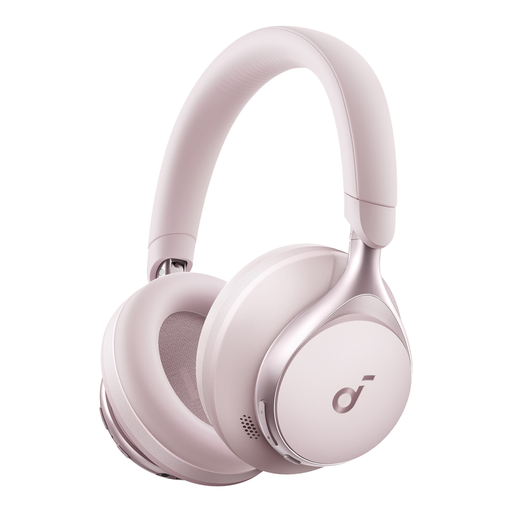
Why it suits this profile: This wireless over-ear model is designed for everyday listening, calls and commuting. The stated battery life is up to 55 hours.
The specifications clearly state the intended use and battery life, so you do not have to rely solely on an isolated ANC claim.
Bluetooth, USB-C charging, an over-ear fit and up to 55 hours of battery life according to the product information.

Why it suits this profile: The combination of a 42mm transducer system, adaptive ANC, transparency mode and app settings is well suited to music lovers who want to customise their sound.
The product information mentions both ANC and transparency mode, as well as a wired connection, giving you more flexibility than Bluetooth alone.
Up to 60 hours of playback, four microphones, app-based EQ and use with a 3.5mm cable according to the product description.
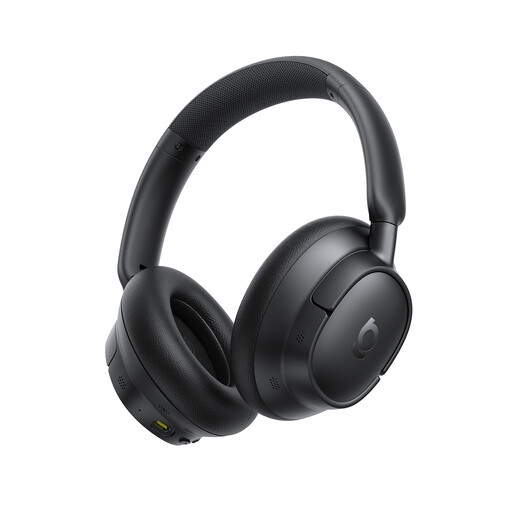
Why it suits this profile: For long journeys, working from home and intensive daily use, the stated playback time, hybrid ANC and fast-charging feature stand out.
The description distinguishes between a maximum of 80 hours without ANC and 55 hours with ANC. This gives you a more realistic picture of everyday use.
LDAC, Hi-Res audio, five microphones and 10 minutes of fast charging for up to 10 hours of playback according to the product information.

Why it suits this profile: These wireless earbuds are compact and suited to users who value touch controls, a charging case and integration with Galaxy devices.
The specifications list playback time separately with ANC, without ANC and including the charging case. The IP57 rating is also clearly stated.
Bluetooth 6.1, 24-bit/96 kHz audio, six microphones and 6 to 7 hours of playback per earbud according to the product specifications.
We have put together a complete, up-to-date list of products that fully meet these strict selection criteria and the applicable European safety regulations.
Yes, with many models you can switch on ANC without playing music. The headphones will then reduce certain ambient sounds, particularly constant low frequencies. The result depends on the fit, the surroundings and the ANC setting being used.
The lifespan depends on the battery, hinges, ear cushions and how the headphones are used. Check whether the ear cushions are replaceable and charge the headphones according to the instructions. Avoid heat, moisture and prolonged use at maximum volume. A built-in battery is generally not designed to be replaced by the user.
No. Check the number of microphones, wind-noise reduction and the product information about hands-free calling. If possible, also test the fit and speech clarity in a busy environment. For online meetings, multipoint can be useful when switching between a laptop and phone.
