
Vandaag of morgen in huis

Kwaliteit gegarandeerd

Welkomstaanbiedingen ontgrendelen: GRATIS bezorging | Tot 80% korting | Gratis 30 dagen JoyPlus-proefperiode
Download de app
Wireless headphones with noise cancelling can be ideal on the train, in the office or during a long flight. However, a high decibel rating or long battery life does not tell the whole story. An uncomfortable fit, mediocre microphone or limited compatibility can mean you use the headphones less often than expected.
Joybuy Product Recommendation Officer filters the most important product specifications and highlights the areas where marketing copy is often less clear.
Brands sometimes quote noise reduction of, for example, -44 or -45 dB. According to the product specifications for Baseus and Edifier, this refers to the stated maximum reduction under certain conditions. It does not mean that every sound on the train or in the street will disappear completely.
ANC generally works best with constant low-frequency sounds, such as aircraft or train engines. Voices, sudden noises and high-pitched sounds may still be audible. So also check whether the headphones offer a transparency mode or ambient sound mode.
Claimed playback time depends on factors including volume, Bluetooth codec, calls and active noise cancellation. For example, according to the product information, the Baseus EH10 offers up to 80 hours without ANC and 55 hours with ANC. The Soundcore Space One Pro is listed with 60 hours without ANC and 40 hours with ANC.
With wireless earbuds, you should also distinguish between the playback time of the earbuds themselves and the total usage time including the charging case.
Headphones for music and calls need more than a decent speaker. Check the number of microphones, how ambient noise is reduced and whether the microphone remains usable in a busy environment.
A system with multiple microphones can help with calls, according to the product description, but the actual experience also depends on wind, the distance from your phone and the calling app you use. For working from home, headphones with a microphone or a wireless headset with multipoint connectivity is often more practical than a model designed solely for music.
Over-ear headphones cover the ear and usually provide better physical isolation. This can be useful when travelling or working for long periods. However, pay attention to the weight, headband pressure and ventilation around the ear cushions.
In-ear earbuds are more compact and fit easily into a coat pocket. The seal depends heavily on choosing the right ear tip size. So check whether several sizes of ear tips are included. For sports use, the IP rating is also relevant. IPX4 means protection against splashing water; it does not guarantee protection against immersion.
Bluetooth headphones should work well with your smartphone, tablet or laptop. Bluetooth 5.3, 5.4 or 6.0 mainly indicates the generation of the connection; on its own, it does not guarantee better sound quality.
Also check the supported codecs. AAC and SBC are commonly supported. According to the product specification, LDAC can transfer more audio data, but your phone and selected settings must support this codec too. Android and Samsung users in particular should check this in advance.
Long battery life is useful for commuters and travellers, but also consider charging time and the fast-charging function. A short charge that provides several hours of playback may be more useful on the go than simply having a high maximum playback time.
A USB-C headset can mean two different things: a charging port or a wired audio connection. So check whether USB-C is used only for charging or also transmits audio. An included AUX cable provides extra back-up when Bluetooth is not available.
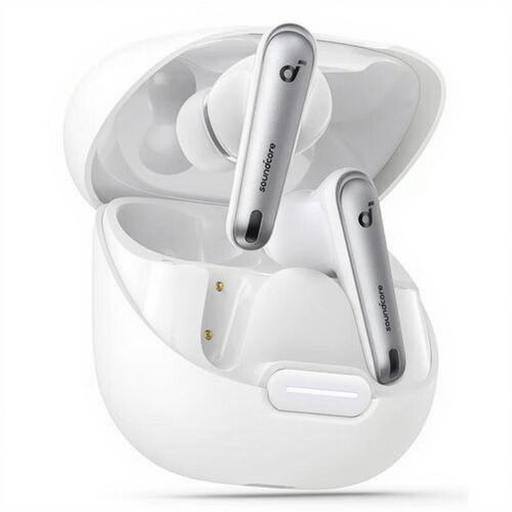
Why it suits this profile: These in-ear earbuds are compact for everyday use and support Bluetooth 5.3, USB-C and touch controls. The stated playback time is 10 hours per charge.
The product information states IPX4 splash resistance, multiple microphones and additional ear tips. This makes it easier to adjust the fit and everyday use to your needs.
Bluetooth 5.3, LDAC support listed, USB-C, six microphones according to the product specification and a charging case.
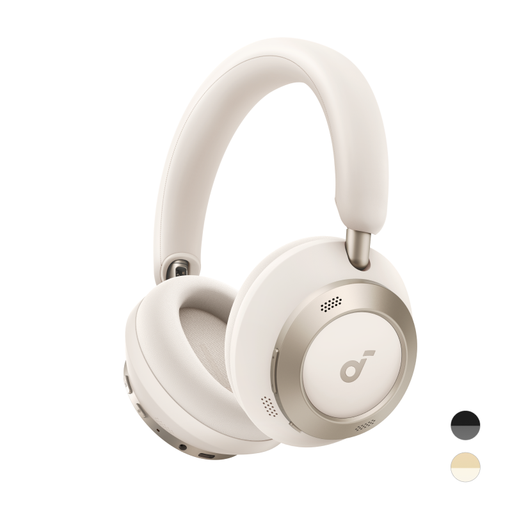
Why it suits this profile: This over-ear model is aimed at travellers and music lovers who want to combine adaptive ANC, LDAC and long battery life.
The product specification gives separate battery-life figures for ANC on and off. This makes the expected usage clearer than quoting one general playback time.
60 hours without ANC, 40 hours with ANC, LDAC, foldable design and, according to the product information, five minutes of charging for eight hours of playback.
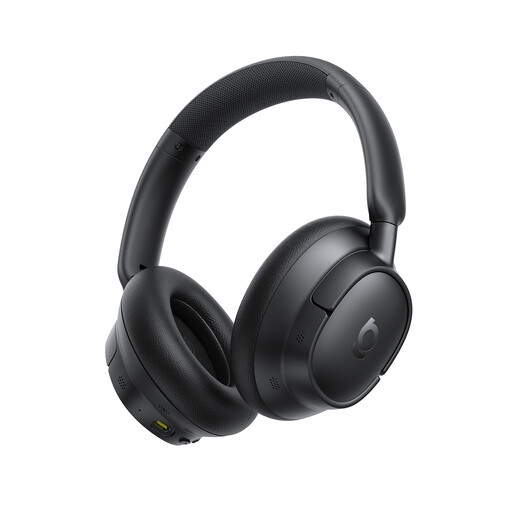
Why it suits this profile: These over-ear headphones are designed for work, travel and long listening sessions. The product description mentions Hi-Res, LDAC, five microphones and an adjustable ANC setting.
The stated battery life is broken down into 80 hours without ANC and 55 hours with ANC. The product also lists 10 minutes of fast charging for 10 hours of playback.
Hi-Res Audio, LDAC, Bluetooth 6.0 according to the product listing, five microphones and up to 80 hours of playback without ANC.
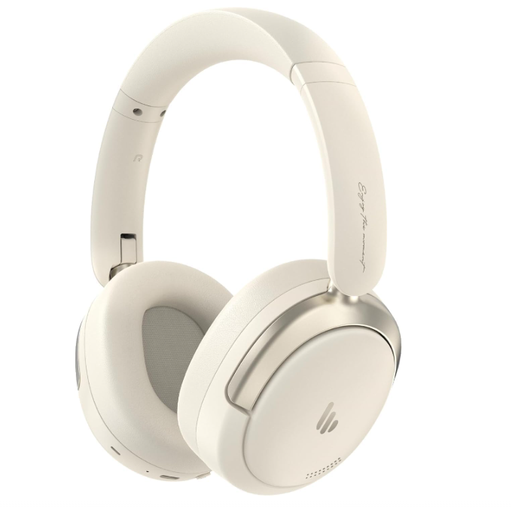
Why it suits this profile: This model combines Bluetooth 5.4 with a microphone, app personalisation and connection to two Bluetooth devices. That makes it well suited to switching between a laptop and smartphone.
The product information states that it supports both wireless use and Hi-Res audio via USB-C. This provides a wired option when you want to conserve battery power.
According to the product specification, 45 hours of playback, Bluetooth 5.4, dual-device connectivity and a USB-C audio connection.
We have put together a complete, up-to-date list of products that fully meet these strict selection criteria and the applicable European safety regulations.
First, position the headphones or earbuds correctly and, with in-ear models, choose the right ear tip. Then use ANC mode in an environment with consistent background noise. Switch to transparency mode when you need to hear traffic, announcements or colleagues.
Their lifespan depends on charging habits, hinges, ear cushions and the built-in battery. Keep the device dry, avoid extreme temperatures and charge it with a suitable USB-C cable. A battery that starts running down noticeably faster can limit use over time, even if the rest of the headphones still works.
Yes, ANC uses additional power. That is why the product specifications for various models show shorter playback times with ANC than without it. Check both figures before buying and see whether fast charging is available for use on the go.
