
Vandaag of morgen in huis

Kwaliteit gegarandeerd

Welkomstaanbiedingen ontgrendelen: GRATIS bezorging | Tot 80% korting | Gratis 30 dagen JoyPlus-proefperiode
Download de app
Wireless noise-cancelling headphones can be ideal on the train, in the office or at home. However, a high dB rating or long battery life does not tell you everything. The fit, microphones and the way the manufacturer measures performance can have just as much impact on your experience.
If you only look at the product title, you risk paying for features that are not well suited to everyday use. Below, you’ll find out which specifications you should actually check and which models suit different user profiles.
Brands sometimes advertise noise reduction of, for example, -44 or -45 dB. According to Edifier and Baseus’s own product information, this refers to the maximum reduction under certain conditions. It does not guarantee that voices, sudden sounds or wind will be filtered out completely.
Active noise cancellation, also known as ANC, is usually most effective against constant low-frequency sounds, such as the noise of an aeroplane or train engine. For conversations nearby, a good seal from the ear cushions or ear tips remains important.
Headphones with long battery life can offer different usage times. According to the product information, the CMF Headphone Pro provides up to 100 hours of playback without ANC and 48 hours with ANC. With the Sony WF-C710N, the figures are up to 30 hours with noise cancellation and 40 hours without it, including the charging case.
Therefore, always check:
Over-ear headphones can passively reduce external noise, but a heavy headband or strong clamping force can become uncomfortable after a full day at work. With wireless earbuds, the shape of the earbud and the choice of different silicone tips play a particularly important role.
As well as the weight, consider the following:
ANC headphones use microphones to measure ambient noise and create an opposing signal. Their performance varies depending on the surroundings. A transparency mode does the opposite by allowing ambient sound through, so you can hear an announcement or colleague, for example.
For travelling and working, a combination of hybrid ANC, well-fitting ear cushions and a transparency mode is practical. For sports, low weight, a secure fit and a suitable IP rating are more important than the maximum ANC figure alone.
Bluetooth 5.3, 5.4 or 6.0 mainly indicates the connection standard being used. The overall experience also depends on your phone, laptop and the supported audio codecs.
If you mainly listen to podcasts or make a lot of calls, you will generally benefit more from a stable connection and good microphones than from an advanced audio codec.
Headphones for music and calls need to transmit your voice clearly in noisy surroundings. Therefore, look at the number of microphones and features such as ENC or wind-noise reduction. According to Edifier’s own product information, the Atom Max uses a microphone with AI-assisted noise reduction. Baseus lists five microphones and an AI-assisted ENC system for calls.
These are brand claims from product descriptions, not a universal guarantee. Also check user reviews and consider where you usually make calls: a quiet home office has different requirements from a busy railway platform.
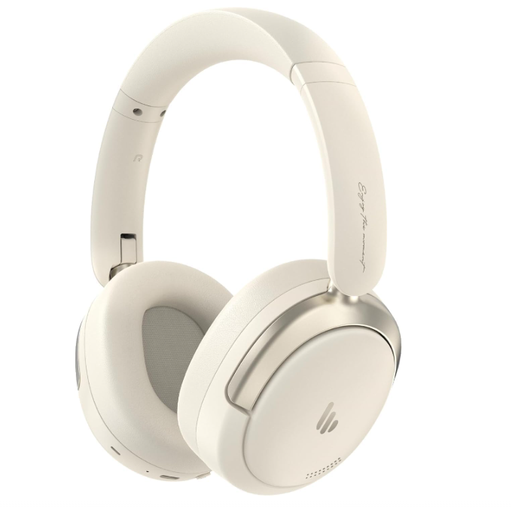
Why it suits this profile: An accessible over-ear headset for working from home, travelling and everyday listening, with on-ear-cup controls and app personalisation.
The product information lists the ANC function, battery life and USB-C Hi-Res audio separately, so you do not have to interpret these features as one broad claim.
Up to 45 hours of playback according to the product information, Bluetooth 5.4, connection to two devices and a foldable design.

Why it suits this profile: Designed for listeners looking for an over-ear model for music, long working days and travelling.
The stated battery life is linked to up to 60 hours of playback rather than just ANC mode; the manufacturer also mentions a transparency mode and an app.
42mm transducers, adaptive ANC, four microphones and support for wired use.
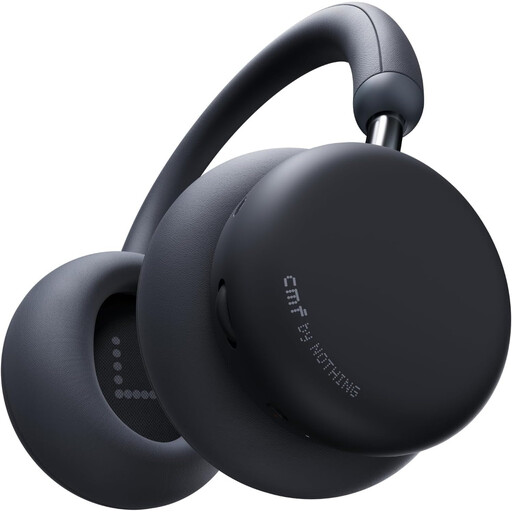
Why it suits this profile: Ideal for people who are often on the move and value long battery life, several ANC modes and quick charging.
The specifications clearly distinguish between ANC on and off. This makes it easier to compare the claimed battery life with your own usage.
Up to 48 hours with ANC, up to 100 hours without ANC and 5 minutes of fast charging for up to 8 hours of playback according to the product information.
Over-ear headphones cover your ears and generally provide more room for larger drivers and a substantial battery. This makes them suitable for travelling, working from home and long listening sessions.
Wireless earbuds are lighter and easier to carry around. When exercising, pay attention to the IP rating: IPX4 means protection against splashing water according to the stated classification, but not against immersion. According to their product information, the Sony WF-C710N and Samsung Galaxy Buds4 Pro have IPX4 and IP57 ratings respectively.
If you use Apple devices, AirPods can offer practical integration features. For Android, models with LDAC, multipoint or their own equaliser app may be more appealing. Always check that all features work with your phone.
We have put together a complete, up-to-date list of products that fully meet these strict selection criteria and the applicable European safety regulations.
That depends on the microphones and the noise reduction used for calls. Look for multiple microphones, ENC or wind-noise reduction, and check whether multipoint is supported. In a busy environment, overall call clarity will still depend on the circumstances.
This varies by model and settings. Manufacturers often give separate figures for ANC on and off. So do not compare only the highest figure; look at the battery life with noise cancellation, the charging method and the fast-charging time.
ANC uses extra energy for the microphones and signal processing. As a result, the stated usage time with ANC is often lower than without it. With fast-charging headphones, you can partly offset this practical drawback, for example during a short break or on your way to the station.
