
Vandaag of morgen in huis

Kwaliteit gegarandeerd

Welkomstaanbiedingen ontgrendelen: GRATIS bezorging | Tot 80% korting | Gratis 30 dagen JoyPlus-proefperiode
Download de app
Wireless noise-cancelling headphones can be ideal on the train, in the office or during a long flight. However, a high dB rating or long battery life does not tell you everything. The fit, connection and listening mode are just as important in determining whether Bluetooth headphones perform well in everyday use.
As a Joybuy Product Recommendation Officer, I therefore focus mainly on verifiable specifications and the situation in which you plan to use the headphones. Below, you’ll discover which common pitfalls are often overlooked, which features you should compare and which models suit different user profiles.
Active noise cancellation, often referred to as ANC, uses microphones to detect ambient sound and produce an opposing signal. It generally works best with constant low-frequency sounds, such as the hum of a train engine or aeroplane.
Voices, sudden noises and high-pitched sounds are not necessarily filtered out completely. A claim such as “up to -45 dB” or “up to -50 dB” is also a maximum figure supplied by the manufacturer. The result depends on the fit, volume, surroundings and selected mode. Don’t compare dB ratings as though they were measured under exactly the same conditions.
Manufacturers usually state playback time for several different scenarios. For example, headphones with a stated battery life of 60 hours may last less when ANC, a gaming connection or lighting is switched on.
Always check:
A short fast charge is practical if you often use your headphones while travelling. Also bear in mind that RGB lighting on gaming headsets can consume additional power.
Terms such as Hi-Res Audio, LDAC and Bluetooth 5.4 sound appealing, but full functionality depends on your phone, laptop or tablet. Both devices must support the relevant codec. A wired USB-C connection may also offer different audio capabilities from wireless listening.
For everyday Spotify use, video calls and podcasts, a stable connection, clear microphones and comfort are often more important than a long list of codecs.
Over-ear headphones completely surround the ear. This can provide better passive isolation and a quieter experience, but the headphones may also feel warmer or heavier. Check the weight, shape of the ear cushions and adjustability of the headband.
Foldable headphones are convenient for commuting. However, check whether the hinge feels sturdy and whether a protective case is included. For sports, an open-ear model or wireless earbuds may be more suitable than heavy wireless headphones. Pay attention to the IP rating: IP55, for example, provides protection against dust and water jets under the conditions specified by the standard, but does not mean the product can be submerged.
Bluetooth is suitable for music, calls and video. For gaming, a 2.4GHz dongle may offer lower latency. Check that the connection actually works with each platform. For example, a headset may connect to a smartphone via Bluetooth but not directly to a PlayStation console.
A multipoint function allows you to keep two devices connected. This is useful when switching between a laptop and phone during work. Also check whether features such as an app, equaliser or firmware update are only available on Android or iOS.
For many video calls, it is not just audio playback that matters. Look at the number and positioning of the microphones, and whether there is a retractable or detachable microphone. Physical buttons can be more reliable than touch controls when you are walking outdoors or wearing gloves.
Do not use headphones while cycling, driving or in other situations where you need to hear your surroundings. You should also avoid listening at high volume for extended periods. This is a general safety precaution, not a product promise.
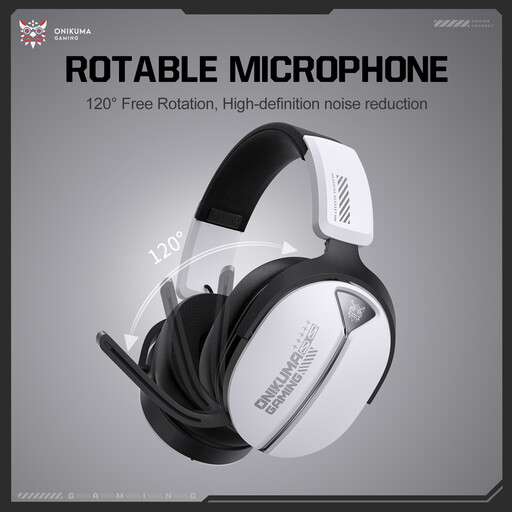
Why it suits this profile: Straightforward wireless headphones for music, podcasts and everyday use, with physical controls and a volume wheel.
The product information specifies a frequency range of 20 Hz to 20 kHz and independent physical controls. This means you do not have to rely solely on unspecified app or ANC claims.
Bluetooth controls and a volume wheel; suitable for users looking for straightforward operation.
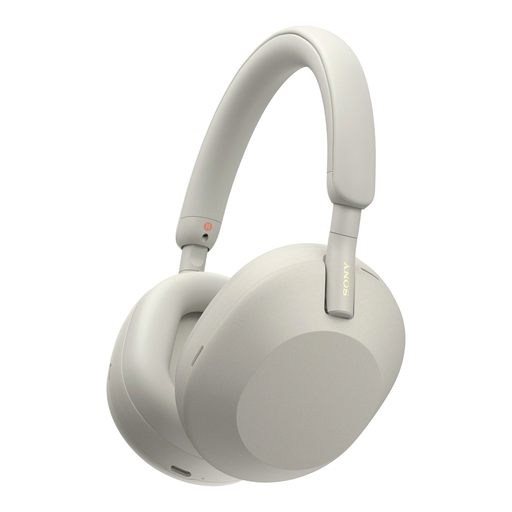
Why it suits this profile: For travel, office work and listening where ANC, multipoint and app-based controls are important.
According to the product description, this model uses four microphones and dual processors for noise cancellation. The stated battery life is 30 hours with ANC and 40 hours without ANC.
LDAC support, multipoint for two devices and fast charging according to the product information.
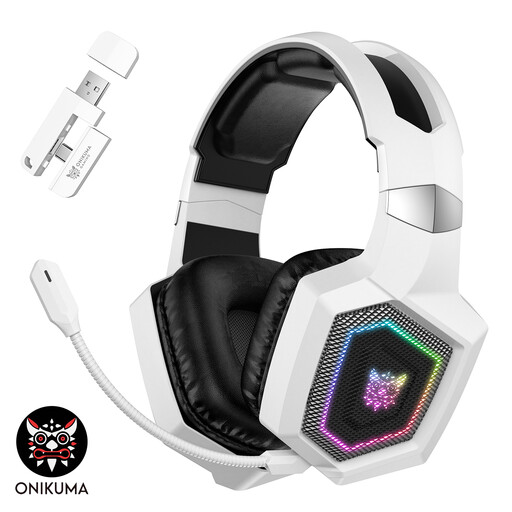
Why it suits this profile: For gamers who want to switch between 2.4GHz, Bluetooth and a wired connection on compatible devices.
The product information explicitly states that Bluetooth does not work directly with PS4 or PS5 and that a suitable USB solution is required. This makes the compatibility limitation clear in advance.
Stated latency of less than 30 ms via 2.4GHz, detachable microphone and up to 40 hours of gaming according to the product description.
We’ve put together a complete, up-to-date list of products that fully meet these strict selection criteria and the applicable European safety regulations.
With many models, ANC can be used while Bluetooth is switched off, but this varies from product to product. Check whether the manufacturer lists a separate ANC mode and whether it requires battery power. Performance may also vary when the headphones are used with a cable.
Battery capacity, charging habits, volume and daily use all affect how long they last. Longer battery life often means less need for charging during the day, but battery wear can still occur. Store the headphones in a dry place, avoid extreme heat and use a suitable USB charger. EU consumers have statutory rights for faulty products under the applicable legal guarantee.
They can be, but pay particular attention to the microphones, wind-noise reduction and multipoint. A model with good music playback is not automatically just as suitable for meetings. Also check that the headphones remain comfortable during extended wear and that you can easily switch on transparency mode when you need to hear colleagues or traffic.
