
Vandaag of morgen in huis

Kwaliteit gegarandeerd

Welkomstaanbiedingen ontgrendelen: GRATIS bezorging | Tot 80% korting | Gratis 30 dagen JoyPlus-proefperiode
Download de app
Wireless noise-cancelling headphones can make train journeys, time in the office or long-haul flights more comfortable. But a high price or impressive product claim doesn’t automatically mean a model is right for you. Focus on the differences between active noise cancellation, comfort, battery life and call quality.
Manufacturers often quote maximum playback time under specific conditions, such as with active noise cancellation switched off. A model with 50 hours of battery life may not last as long with ANC on. So always check whether the quoted time applies with ANC on, ANC off or in both situations.
Active noise cancellation is most effective against constant low-frequency sounds, such as a train engine or an aeroplane. Voices, sudden noises and wind may still be audible. A good fit is just as important: over-ear headphones should fully cover your ears without clamping too tightly.
Terms such as ‘hi-res audio’ and ‘powerful bass’, or a wide frequency range, don’t give you the full picture. Also check which codecs are supported, whether you can listen using a cable and what settings are available in the companion app. A hi-res audio headset, for example, only offers an advantage if your source device and music files actually support that quality.
With headphones with active noise cancellation, microphones pick up surrounding sounds so the headphones can produce an opposing sound. As well as checking for ANC, look for an ambient or transparency mode. This lets you hear an announcement or a colleague, for example, without taking your headphones off.
Don’t use ANC as a substitute for staying alert in traffic. Switch on transparency mode or remove your headphones when you need to hear what’s happening around you.
Bluetooth 5.2, 5.3 or 5.4 mainly tells you which connection standard is used. Your experience also depends on the device you pair with. So check:
Bluetooth headphones with multipoint are handy when working from home: you can listen to music on your laptop and take incoming calls on your phone.
Comfortable headphones shouldn’t just be lightweight. Check the pressure of the headband, the depth of the ear cushions and whether the earcups swivel or fold. For commuting, a weight of around 200 to 265 grams can feel comfortable. Heavier models may offer more features, but can feel different during long listening sessions.
Also compare battery life with ANC switched on. Fast charging is useful when you’re short on time before heading out. Check that charging is via USB-C and whether a charging adapter is included.

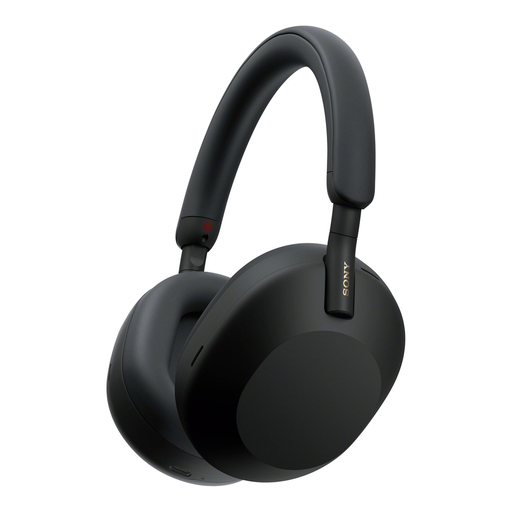
Why it suits this profile: This lightweight 192-gram over-ear model is designed for everyday use, travel and working from home. The product information states up to 35 hours of use with noise cancellation and up to 50 hours without.
Battery life is listed separately for ANC on and off. You can also adjust the noise-cancelling level in the Sony Headphones Connect app.
192 grams, multipoint connection, USB-C and a fast-charging feature, according to the product details.
Why it suits this profile: The specifications list four microphones in each earcup, dual processing, LDAC support and multipoint connectivity. That makes it a good fit for people who combine listening to music and travelling with business calls.
The product information distinguishes between 30 hours with noise cancellation and 40 hours without. You can also listen using a cable via the 3.5mm jack.
Bluetooth 5.2, LDAC, multipoint and a stated weight of 250 grams.

Why it suits this profile: According to the product information, this model is designed for long listening sessions, with adaptive noise cancellation, a transparency mode and up to 60 hours of playback.
Transparency mode helps when you need to hear what’s happening around you. The stated battery life is clearly specified as up to 60 hours.
42mm transducers, an app with an equaliser and a 3.5mm jack for wired listening.
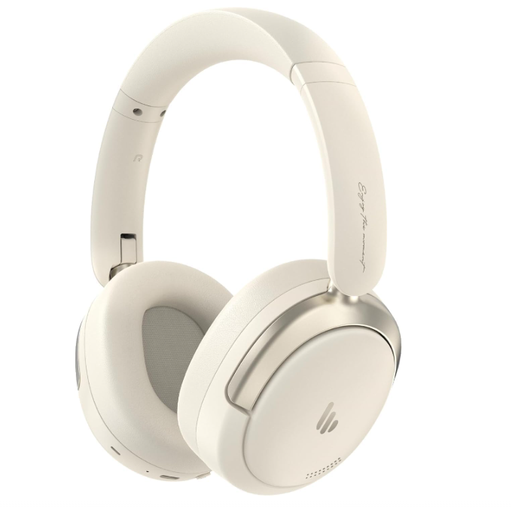
Why it suits this profile: The product details list hybrid ANC, Bluetooth 5.4, multipoint and a built-in microphone. That’s useful for switching between work calls and music.
The specifications list 45 hours of playback, fast charging and separate support for wired hi-res audio via USB-C.
40mm driver, Bluetooth 5.4, connection to two devices and a microphone with noise reduction, according to the product description.
We’ve put together a complete, up-to-date list of products that meet these strict selection criteria and comply with current European safety regulations.
First, charge your headphones, switch on Bluetooth on your smartphone or laptop, then select the model from the list of available devices. After that, use the brand’s app to adjust the equaliser, ANC level, firmware or multipoint connection. Also check that the earcups fit properly.
Battery life on a single charge varies by model and settings. In the selected examples, the stated battery life ranges from 35 hours with ANC to a maximum of 60 hours under the manufacturer’s specified conditions. The lifespan of the headphones themselves depends on daily use, storage, charging habits and whether the battery can be replaced.
The electricity used for charging is usually minimal. Ongoing costs are more likely to come from accessories, such as a replacement charging cable, ear cushions or a protective case. Also check whether a charging adapter is included; some product listings state that only a USB-C cable is supplied.
