
Vandaag of morgen in huis

Kwaliteit gegarandeerd

Welkomstaanbiedingen ontgrendelen: GRATIS bezorging | Tot 80% korting | Gratis 30 dagen JoyPlus-proefperiode
Download de app
Wireless noise-cancelling headphones can be a pleasure to use on the train, in the office or during a long flight. However, a high dB rating or long battery life does not tell the whole story. Some models become uncomfortable after an hour, lose connection with your laptop or deliver far less playback time in practice when active noise cancellation is switched on.
Joybuy Product Recommendation Officer helps you translate marketing claims into measurable specifications. Pay particular attention to these three common pitfalls.
Brands sometimes quote a figure such as “-45 dB” or a percentage for noise cancellation. This is not a universal measure of real-world performance. The result depends on the frequency of the sound, the fit and the selected ANC mode. Low rumbles from a train are often easier to reduce than voices or unexpected noises in the office.
According to the product description, the Baseus EH10 NC uses a hybrid ANC system with a quoted reduction of up to -45 dB. Treat this as a product specification under certain conditions, not a guarantee that every environmental sound will disappear.
Manufacturers usually measure battery life at a particular volume, with a specific codec and a selected noise-cancellation mode. For example, the Baseus EH10 NC is quoted as offering up to 80 hours without ANC and 55 hours with ANC. The Soundcore Space One Pro lists 60 hours without ANC and 40 hours with ANC.
Therefore, always check:
Over-ear headphones distribute pressure across your ears and head, but they can become warm or feel heavy. In-ear earbuds are light and compact, but they need to form a good seal for effective ANC. With the wrong ear-tip size, not only does comfort suffer, but sound isolation may also be reduced.
Pay attention to the weight, the shape of the ear cushions, headband adjustability and the ear-tips included. For sports, a splash-resistance rating is relevant. According to the product specifications, the Soundcore Liberty 4 NC has an IPX4 rating; this does not mean the model is suitable for submersion.
If you wear headphones for several hours every day, it is worth looking beyond audio features alone. A comfortable pair of headphones with slightly fewer features may be more useful in practice than a heavy model that stays at home.
Bluetooth provides the wireless connection to a phone, tablet, laptop or television. A newer Bluetooth version may offer benefits in terms of power consumption and connectivity, but the experience also depends on the source device.
For higher audio quality, look for Hi-Res audio, LDAC, aptX Lossless or other supported codecs. Both the headphones and the smartphone or laptop must support the same codec. Otherwise, the connection will fall back to a compatible standard.
Multipoint Bluetooth is useful when, for example, you are working on a laptop and also want to take calls on your smartphone. However, check whether multipoint is available in all operating modes and whether an app is required to configure it.
Clear call quality is influenced by the number of microphones, wind-noise filters and software. According to the product description, the Soundcore Liberty 4 NC has six microphones. This is a verifiable product specification, but it does not guarantee clear speech on every street or in every wind condition.
Fast charging is particularly useful if you often forget to charge your headphones. The Liberty 4 NC comes with a charging case and USB-C connection. For the Baseus EH10 NC, the product description states that 10 minutes of charging can provide up to 10 hours of playback. When buying, always check that the charger, cable and any wireless charging function suit the way you use the product.
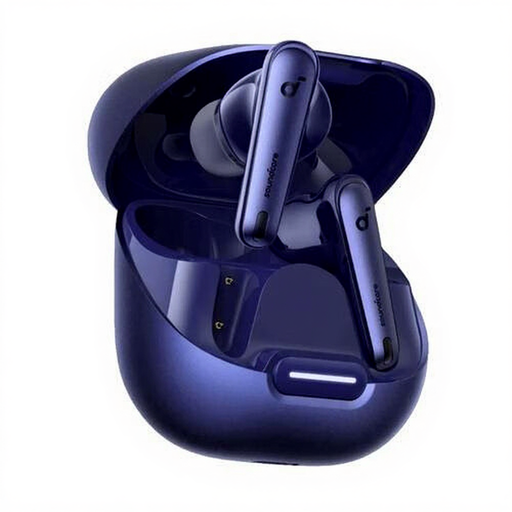
Why it suits this profile: These wireless earbuds are compact for commuting and combine Bluetooth 5.3, ANC, a charging case and USB-C.
The specifications list separate battery life of 10 hours for the earbuds and an IPX4 rating. This lets you assess runtime and protection more precisely.
In-ear design, six microphones, USB-C and an included charging case.

Why it suits this profile: An over-ear model for users who value active noise cancellation, spatial audio and both wireless and wired listening.
The product information lists a detachable cable, Bluetooth 5.4 and a transparency mode. This means you are not entirely dependent on ANC or a wireless connection.
Bluetooth 5.4, 3.5mm and USB-C connections, active noise cancellation and a quoted battery life of 24 hours.
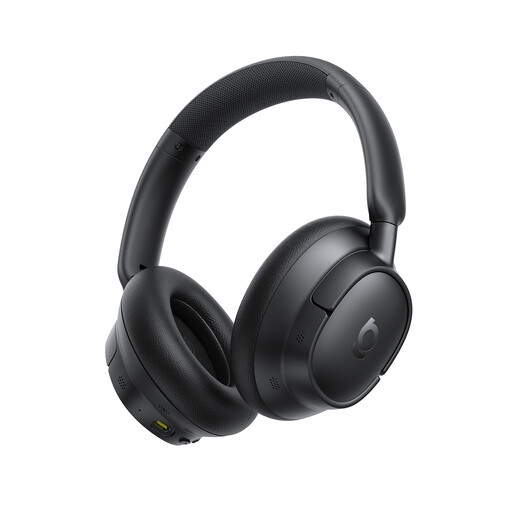
Why it suits this profile: This over-ear model is designed for long working days, travelling and users who want to combine long battery life with Hi-Res audio.
Battery life is stated separately for ANC on and off. LDAC, Hi-Res and a fast-charging function are also clearly specified in the product description.
Up to 80 hours without ANC, 55 hours with ANC, 10 minutes of fast charging for a quoted 10 hours of playback and five microphones.
We have compiled a complete, up-to-date list of products that fully meet these strict selection criteria and the applicable European safety regulations.
Yes, with many models you can switch on ANC without playing music. The microphones measure ambient noise and the headphones respond with an opposing sound. Performance varies depending on the model and sound frequency. Use transparency mode when you need to hear traffic, announcements or colleagues.
This depends on battery use, charging habits, hinges, ear cushions and exposure to moisture. A long quoted battery life does not prevent a battery from losing capacity over time. So choose USB-C, replaceable ear cushions or a wired backup if you use your headphones every day.
Usually, yes, because the microphones and signal processing remain active. Therefore, check the battery life with ANC switched on. Turn ANC off when you are in a quiet room and use fast charging when you have little time while out and about. Keep the volume at a moderate level and take regular breaks.
