
Vandaag of morgen in huis

Kwaliteit gegarandeerd

Welkomstaanbiedingen ontgrendelen: GRATIS bezorging | Tot 80% korting | Gratis 30 dagen JoyPlus-proefperiode
Download de app
Wireless earbuds with noise cancelling are handy on the train, in the office, during exercise and for phone calls. Yet a high decibel claim or long battery life doesn't tell the whole story. The difference between a satisfying purchase and a disappointing one often comes down to fit, water resistance and how the battery life is measured.
In this guide, the Joybuy Product Recommendation Officer compares several popular choices for 2026. The recommendations are based on verifiable product specifications, such as IP rating, Bluetooth version, battery life and the presence of active noise cancellation.
Active Noise Cancelling, or ANC, uses microphones and electronics to partially reduce ambient noise. The result varies depending on the situation. Low, constant sounds like train engines are often easier to dampen than voices, bicycle bells or sudden noises.
A claim such as "up to -46 dB" or "up to -50 dB" should therefore be read as a maximum factory claim under certain conditions. According to the product information from Soundcore and MINISO, these values are based on the brands' own product specifications. They are no guarantee that every sound will be reduced to the same degree in practice.
Manufacturers often state the usage time including the charging case. Always check three values:
The Sony WF-C710N, for example, is specified with up to 30 hours with noise cancelling and up to 40 hours without ANC, including the case. The individual specifications also mention 8.5 hours with ANC. For the Sony LinkBuds Fit, it's 5.5 hours with ANC and 8 hours without ANC per earbud, with a total usage time of 21 hours according to the product information.
An IP rating consists of two digits. For earbuds, the second digit is particularly relevant for water:
A charging case sometimes has a lower level of protection than the earbuds. Only charge a case once the USB-C port is dry. None of these ratings automatically make a product suitable for swimming or showering.
In-ear earbuds seal the ear canal with a silicone tip. Choose a model with multiple sizes of ear tips so they stay in place without constant pressure. For sports, ear hooks or a stabilising wing can help.
Also pay attention to the weight. The Sony LinkBuds Fit is specified by Sony at approximately 4.8 grams per earbud and uses an ear-hook-like air cushion design. This could be interesting for running or gym use, but fit remains a personal matter.
Bluetooth 5.3 or 5.4 can provide a modern connection, but on its own says nothing about sound quality. Also check the supported codecs, such as AAC, SBC or LDAC, and whether the model can connect to two devices simultaneously.
Multipoint is practical if you frequently switch between a laptop and phone. The Sony WF-C710N, Sony LinkBuds Fit and Soundcore Liberty 4 NC are all supplied with multipoint according to their product information. Before buying, check whether all desired functions work with your phone and operating system.
For earbuds for calls and music, microphones, wind reduction and the placement of the microphones are more important than just the number. The Soundcore Liberty 4 NC mentions six microphones. The Soundcore A30i mentions four built-in microphones and an algorithm for call optimisation. These are claims from the brands' product descriptions; intelligibility can vary depending on the phone, location and wind level.
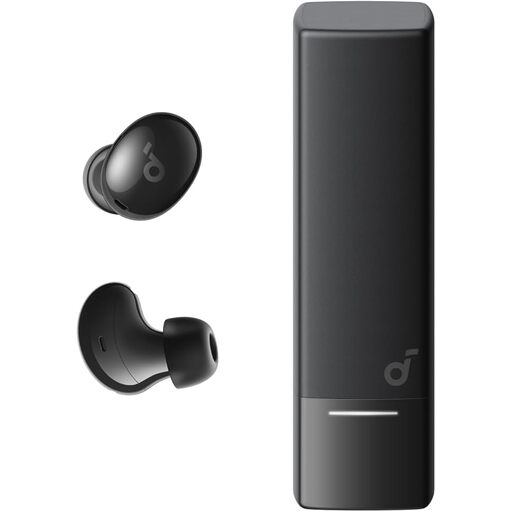
Why this fits: A compact choice for daily travel, studying and calls. The lipstick-shaped case is small and the earbuds support multipoint.
The product information separately states 7 hours of playback time and up to 24 hours with the case. This makes the battery claim easier to assess.
Bluetooth 5.4, USB-C, multipoint and IP54 according to the stated specifications.
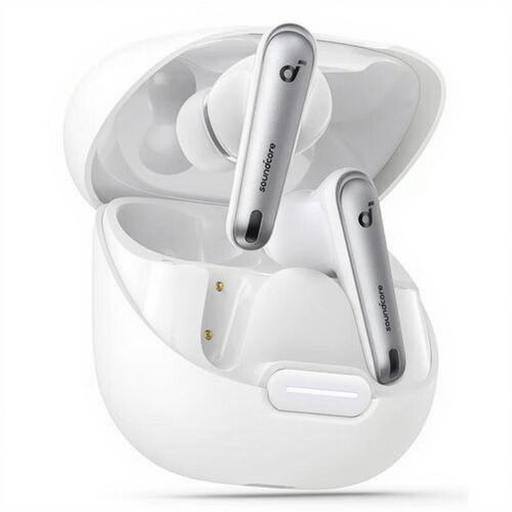
Why this fits: Aimed at commuting and phone calls thanks to ANC, Bluetooth 5.3 and six microphones according to the product specification.
The IPX4 rating makes it clear this is splash-water protection, not for swimming or immersion.
Up to 10 hours of audio according to the product information, with AAC, SBC and LDAC profiles.
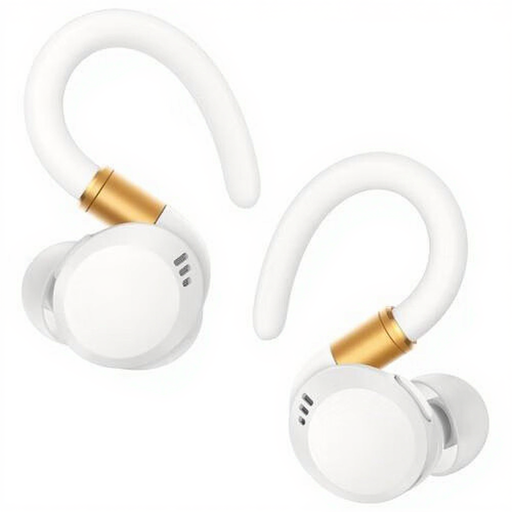
Why this fits: A model for sports, daily use and conversations when a secure in-ear fit is important.
The stated IP68 rating is more concrete than a general claim like "sport-resistant". Still, use the product according to the manual.
Up to 12 hours of playback time and a charging case with USB-C according to the product specification.

Why this fits: For users looking for an extensive feature set within the Samsung ecosystem, with ANC, spatial audio and wireless charging.
The product information states the playback time separately with ANC on and off: 6 and 7 hours respectively, plus a case.
IP57, Bluetooth 6.1, USB-C and wireless charging according to the stated specifications.
Browse the current range of wireless ear clips and compare models by use, fit, connectivity and water resistance.
With some models you can switch on ANC without playing music, but the possibilities vary by brand and app. For settings such as transparency mode, equaliser or firmware updates, a smartphone app may be required. Check this before choosing a model for flights or train journeys.
The usage time per charge for the models mentioned ranges roughly between 5.5 and 12 hours, depending on ANC, volume and codec. The battery in true wireless earbuds is integrated and generally cannot be replaced by the user. Therefore, store the earbuds in the case, avoid extreme heat and charge with a suitable USB-C cable.
Use a moderate volume and take regular breaks. ANC can reduce ambient noise, meaning extra caution is needed in traffic. Do not use earbuds while cycling, driving or in other situations where you need to be able to hear surrounding sounds clearly.
