
Vandaag of morgen in huis

Kwaliteit gegarandeerd

Welkomstaanbiedingen ontgrendelen: GRATIS bezorging | Tot 80% korting | Gratis 30 dagen JoyPlus-proefperiode
Download de app
Wireless LED outdoor lighting can quickly make a garden, patio or balcony more enjoyable, without chasing cables into walls, installing permanent wiring or calling an electrician. However, not every solar outdoor lamp is suitable for everyday use in the UK. A lamp may look sturdy in the product photo, while its battery life disappoints, the solar panel receives too little light or the housing is not suitable for rainy weather.
So don’t focus only on colour and design. Above all, check the light output, battery, IP rating and charging method. That way, you can find LED garden lighting that suits your outdoor space and the times you plan to use it.
With LED lighting, wattage mainly indicates energy consumption. The light output in lumens gives you a better idea of how much light a lamp produces. A solar outdoor lamp with 200 lumens is suitable for accent lighting or illuminating a path, but probably not for lighting a large dining table.
For a cosy atmosphere on a balcony or patio, warm white light with a lower light output may actually be more pleasant. If you want to make a garden path or façade more visible, look at the lumen value, beam angle and installation height.
An outdoor lamp should have a clear IP rating. The first digit indicates protection against solid particles, while the second relates to water.
Also check the adapter, connections and charging port. With a rechargeable table lamp, the lamp itself may be suitable for outdoor use, while the USB connection must be kept dry.
Operating time often depends on the selected brightness setting. A lamp may run for a few hours at maximum brightness and much longer on a low setting. With a solar-powered outdoor lamp, the season, cloud cover, shade and the direction of the panel also make a difference.
So don’t place the solar panel under a canopy or behind a solid balustrade. Its output may be lower in winter than in summer. If you want a consistent lighting duration every evening, a rechargeable lamp with a USB cable may be a better choice.
For everyday patio lighting, 2700 to 3000 K warm white light is a sensible choice. RGB outdoor lighting offers more variety for parties or decorative displays. Some RGBCCT lamps combine RGB with adjustable white light, ranging from warm white to daylight, for example.
Pay attention to how the lamp is controlled:
Compare the battery capacity in mAh with the stated operating time. A 4000 mAh battery may sound generous, but the actual run time varies according to the brightness level and light colour. Also check the charging time. Some lamps charge via USB-C in just a few hours, while solar lighting depends on daylight.
For a table on the balcony, a portable lamp with a handle is practical. For fixed accent lighting along a façade or border, a solar outdoor lamp is a better fit. Ideally, choose a model that clearly explains how and where the battery is charged.
ABS and PE are commonly used plastics for outdoor lamps. On their own, they do not tell you enough about the level of protection: the IP rating and instructions remain the deciding factors. Do not place a lamp where water collects, and clean the solar panel regularly.
A cable several metres long gives you more flexibility when positioning a solar panel. Measure the distance between the panel and the lamp beforehand. This prevents the cable from being just too short or running across a walkway.
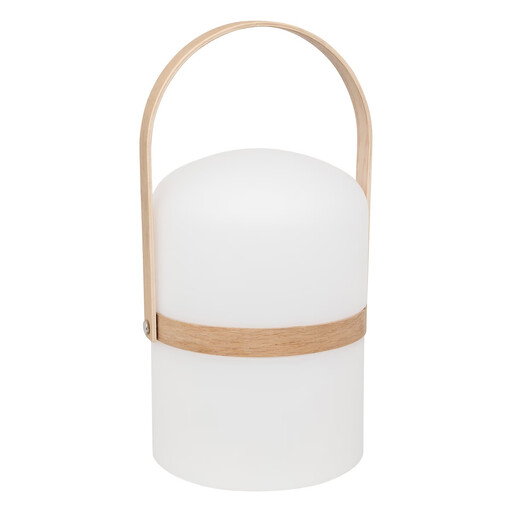
Why it suits this profile: This portable lamp is ideal if you want to add extra light to a table, balcony or patio without any installation. It runs on a rechargeable lithium-ion battery and has three brightness levels.
The product information lists both the IP44 rating and an estimated operating time for each brightness level. This makes it easier to assess how and when you can use the lamp, as well as its charging requirements.
270 lumens, warm white light, dimmer, handle and a stated operating time ranging from 4 hours at full power to 60 hours on the low setting.
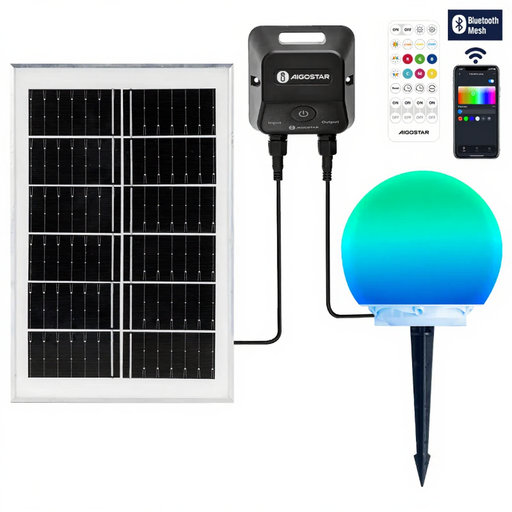
Why it suits this profile: This smart outdoor lighting is ideal for users who want to combine colourful and white light around borders, paths or façades, while controlling multiple lamps centrally.
The stated IP65 rating makes this lamp more suitable for an exposed outdoor location than a model offering splash protection only. Make sure the solar panel is positioned away from shade.
RGB plus warm white light, Bluetooth mesh for more than 200 devices according to the product information, and a 4000 mAh lithium battery.
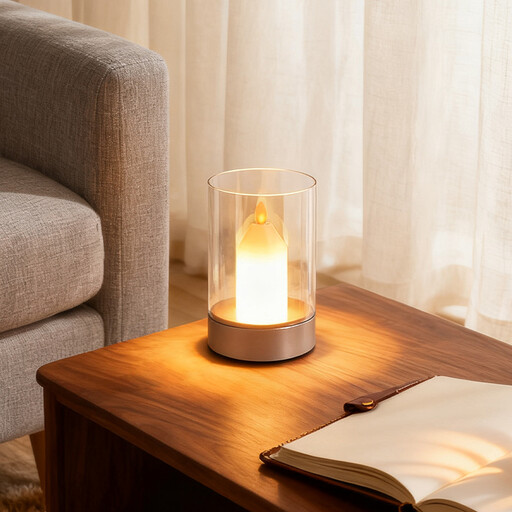
Why it suits this profile: This wireless table lamp is designed for outdoor dining, decoration and atmospheric lighting in a sheltered location. It is portable and charges via USB-C.
The brightness can be adjusted continuously from 5 to 100 per cent. However, the product information warns against exposing the lamp to water or high humidity.
3000 K warm white light, USB-C, 1800 mAh battery and a stated operating time of 8 to 10 hours.
For a balcony, compact rechargeable models are practical: they are easy to move around and do not require you to install a solar panel. On a patio, a dimmable LED lamp works well when you want both bright task lighting and soft ambient light.
For a border or garden path, a solar outdoor lamp or ground spotlight is usually the better choice. An RGB model is suitable for decorative accents, while warm white light creates a calmer look. A wall lamp with a solar panel is useful by a shed, entrance or façade where there is no existing wiring.
For every product, check the current specifications, included accessories and installation instructions. According to the information provided, the products mentioned are covered by at least two years’ statutory warranty in the EU; additional rights may apply under Dutch law.
We’ve put together a complete, up-to-date list of products that fully meet these strict selection criteria and the applicable European safety regulations.
That depends on the type of lamp, battery, brightness and charging method. According to the product specifications, a rechargeable lamp may last for 4 to 12 hours, for example, while a lower brightness setting will run for longer. With solar lighting, operating time varies according to the season and the amount of sunlight.
It can be, provided the lamp has a suitable IP rating and is positioned correctly. IP44 is mainly suitable for sheltered locations. For an exposed garden, you may want to look for a model with a higher level of water protection, such as IP65, but always follow the manufacturer’s instructions. Keep charging ports and connections dry whenever this is specified.
LED lamps generally use very little energy. A solar outdoor lamp does not draw electricity from the mains while charging. A rechargeable table lamp does need to be charged periodically. The actual cost depends on the battery capacity, charging frequency and electricity tariff.
