
Vandaag of morgen in huis

Kwaliteit gegarandeerd

Welkomstaanbiedingen ontgrendelen: GRATIS bezorging | Tot 80% korting | Gratis 30 dagen JoyPlus-proefperiode
Download de app
At first glance, choosing a wireless headset might seem straightforward. Yet marketing jargon, vague battery claims and an ill-fitting design can leave you disappointed with your purchase. If you focus solely on the Bluetooth version or a punchy bass sound, you can easily overlook more important details like comfort, microphone quality and moisture resistance.
In this guide, you’ll discover what to look for in a Bluetooth headset, wireless earbuds or an over-ear model. After that, we’ll share popular choices for different situations.
A manufacturer might quote the maximum playback time without noise cancelling, while in reality you’ll often listen with active noise reduction switched on. So always check:
An over-ear headset with a large battery can, for example, last longer than wireless earbuds, but it’s also heavier to carry around.
With a noise cancelling headset, active noise reduction mainly filters out constant sounds, such as the hum of a train, plane or fan. Voices and sudden noises may still be audible. A transparency mode can be handy when you need to hear traffic, colleagues or announcements.
Also pay attention to the fit. A well-sealing over-ear headset or in-ear headphones can also reduce ambient noise passively. An open-ear model keeps your surroundings more audible, but typically offers less sound isolation.
A product packed with features isn’t automatically comfortable. In-ear models need to stay put without causing pressure. Check whether multiple sizes of ear tips are supplied. With an over-ear headset, the shape of the ear cushions, the weight and the adjustability of the headband all matter.
For exercise, ear hooks or a secure fastening are often more practical than loose earbuds. Also look at the IP rating. IPX4 is designed for splashes and sweat; IPX5 offers more protection against water jets, according to the product specification. Neither means the product is suitable for submersion.
Bluetooth 5.2, 5.3 and 5.4 tell you about the wireless connection, but on their own they don’t reveal everything about sound quality. Also check which audio codecs are supported. Models with AAC, SBC or LDAC can offer different capabilities, depending on your smartphone and settings.
A multipoint connection is practical when you want to connect to both a laptop and a phone at the same time. This way, you can listen to music while working and take a call from your smartphone, provided the model and software support it.
A headset with a microphone isn’t automatically suitable for long online meetings. Look at the number of microphones and their placement. The Anker P30i has four microphones according to the product specification; the Soundcore C40i has two. These are verifiable features, but the final clarity also depends on wind, traffic, software and your surroundings.
Wireless earbuds usually come with a charging case. So consider both the playback time per charge and the total usage time with the case. For commuting, 8 to 10 hours per charge may be enough. If you travel often or have long working days, it’s better to look for a headset with a long battery life, such as an over-ear model with a stated playback time of 30, 50 or 60 hours.
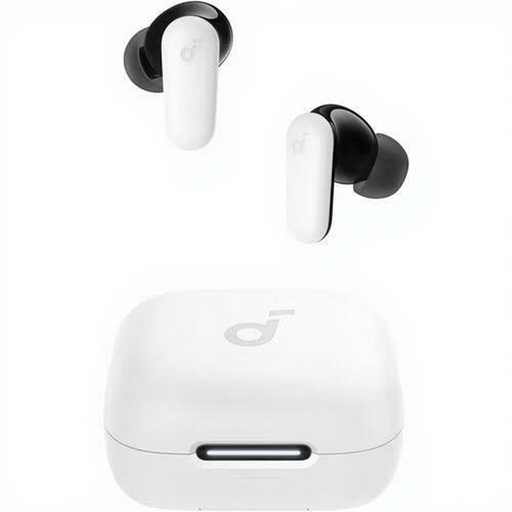
Why this fits the profile: This in-ear model is designed for everyday calls and music listening. The USB-C charging case and Bluetooth 5.4 make it compatible with modern smartphones and laptops.
The product specification states 10 hours of playback time, IP54 protection and four microphones. This means you can check the key buying criteria in advance.
In-ear design, touch controls, charging case and four built-in microphones.

Why this fits the profile: This over-ear headset is designed for long listening sessions, travel and work. The product specification mentions active noise cancelling, four microphones and up to 60 hours of playback time.
The combination of stated battery life, transparency mode and a wired connection makes it more flexible than purely wireless listening.
42mm transducers according to the product information, active noise cancelling and touch controls.
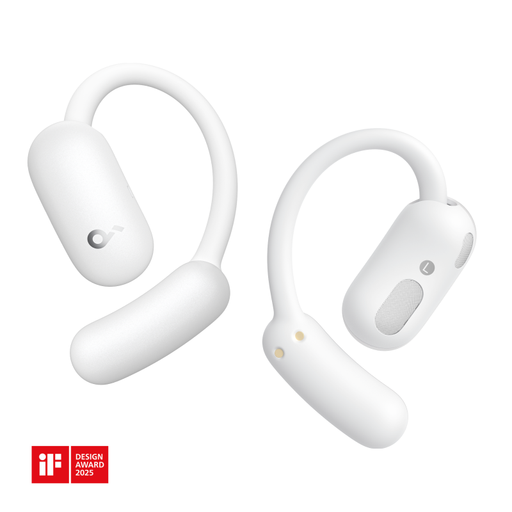
Why this fits the profile: The open-ear design is suitable for exercise and daily use when you want to stay aware of your surroundings. The ear hook construction is aimed at a stable fit.
The IP55 rating and open-ear design make the usage limits clear. This model is not intended as a replacement for a fully sealed noise cancelling headset.
Bluetooth 5.4, two microphones, ear hook design and a charging station with adapter according to the product specification.
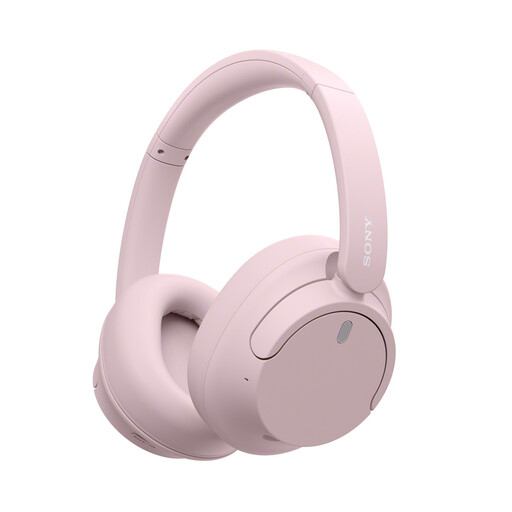
Why this fits the profile: This over-ear model combines active noise reduction with multipoint connection. That’s handy when you’re switching between a phone and a laptop.
The product specification distinguishes between a maximum of 50 hours without and 35 hours with noise cancelling. This makes the battery claim easier to assess.
Active noise cancelling, multipoint and a stated weight of 192 grams.
We’ve put together a full, up-to-date list of products that fully meet these strict selection criteria and comply with current European safety regulations.
Turn on the headset and activate pairing mode. Then open the Bluetooth settings on your Android or Apple device and select the product name. On some models, an automatic pop-up appears. If it doesn’t work, remove a previous pairing and try again.
Battery capacity decreases over time. The usage time depends on volume, noise cancelling, temperature and charging habits. Store wireless earbuds in the charging case and use a suitable USB-C charger. A model with a cable option can remain usable for longer when the battery has less capacity.
Wireless earbuds are compact and easy to carry. An over-ear headset often offers larger ear cushions, a longer battery life and more room for active noise reduction. The right choice depends on your priority: portability, comfort, calls, travel or long listening sessions.
