
Listener at a quiet reading table
You want to listen to a memo without disturbing anyone nearby, so you look for a closed-back design that fits well. RTINGS covers sound leakage as a separate consideration when choosing headphones.


Start with a well-fitting, closed-back design and check that little sound escapes to other people: noise cancelling alone won’t prevent sound leakage. Then listen to your own memo at a low volume, and consider comfort and controls too. The Consumentenbond discusses voice reproduction as a separate consideration when choosing headphones.
You want to listen to a memo without disturbing anyone nearby, so you look for a closed-back design that fits well. RTINGS covers sound leakage as a separate consideration when choosing headphones.
You want to make out the words in a recording, so you look beyond music quality alone. The Consumentenbond also includes speech samples in its headphone tests.
You switch between memos and other study tasks, so you consider fit, connectivity and battery life. The Consumentenbond highlights fit and comfort as factors to consider when choosing headphones.
For listening to a memo in a quiet library, isolation, voice reproduction, comfort and controls are separate considerations. The Consumentenbond discusses voice reproduction and wearing comfort, while RTINGS covers sound leakage separately.
| What to consider | What should you check? | Who is this important to? |
|---|---|---|
| Sound leakage | Check the design and, where available, a leakage test for the exact model; listen to your memo at a low volume. | At a quiet reading table, I want to hear my memo without the sound reaching my neighbours; around 34% of consumers give preventing sound leakage their top priority. |
| Speech clarity | If possible, test one of your own memos and look for separate assessments of voice reproduction. | If I need to make out every word, I want to assess the recording itself rather than rely on a claim about music; around 33% of consumers prioritise speech clarity. |
| Fit for longer listening | Try the wearing style and check that the ear cushions or ear tips fit well, including when you wear glasses. | During longer study sessions, I want to avoid the headphones pressing on my ears or slipping out of place; around 20% of consumers put wearing comfort first. |
| Controls and battery life | Check the controls and device compatibility; compare battery life with ANC on if you use that feature. | If I pause memos or switch between my phone and laptop, I want to do so easily; around 13% of consumers focus mainly on controls, connectivity and battery life. |
How much background noise you can hear doesn’t automatically tell you how much sound your headphones let out for others to hear.
Check the fit and sound leakage separately, and keep the playback volume low.
An open-back design can let sound reach people sitting next to you, even when you’re in a quiet room.
If discreet listening is your priority, compare closed-back designs and check the fit.
Manufacturers may quote different usage conditions for playback with noise cancelling on and off.
Only compare battery life quoted or measured under the same relevant settings.
The WH-CH720N is a closed-back wireless over-ear model with an ambient sound mode.
The Tune 770NC is a foldable over-ear model with ANC, ambient sound modes, equaliser settings and connectivity for two Bluetooth devices.
The ACCENTUM Wireless has hybrid ANC, a transparency mode and a Podcast mode, according to Sennheiser.
This Joybuy selection includes wireless over-ear models and one set of wireless in-ear earbuds. Compare the fit and controls, and, where possible, listen to one of your own memos before choosing a model.
 Image unavailable
Wireless over-ear headphones with ANC and transparency mode; the product description also mentions app-adjustable EQ.
The description lists up to 60 hours of playback; check which settings this figure applies to. Touch controls and an included 3.5 mm audio cable are also mentioned.
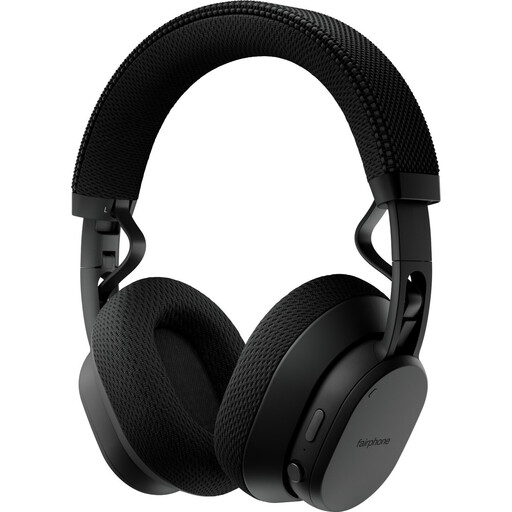 Image unavailable
Wireless over-ear headphones with a closed-back design, ANC and multipoint connectivity; the product description mentions joystick controls.
The description lists a mesh headband and ear cushions, as well as a replaceable battery and parts. The closed-back design isn’t a model-specific measurement of sound leakage.
 Image unavailable
The product description mentions a closed-back over-ear design, ANC and multipoint connectivity.
An audio cable is also listed. The description mentions leather ear cushions and a design with low clamping force; fit is still a personal matter.
 Image unavailable
Wireless over-ear headphones with closed-back ear cups and ANC; the product description mentions app-adjustable EQ and tactile controls.
The description lists memory foam ear cushions and an adjustable headband. According to the product description, Bluetooth multipoint is available after registering in the Sonos app.
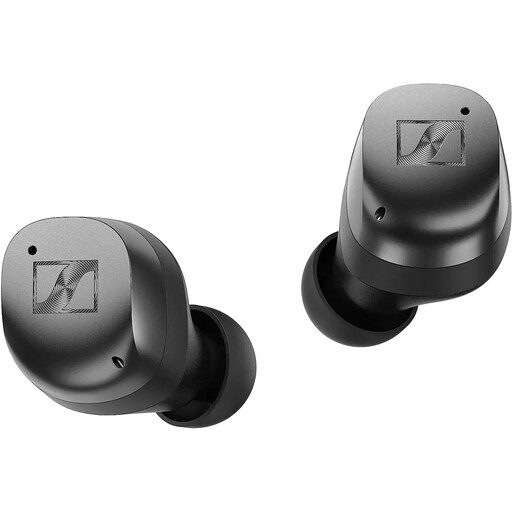 Image unavailable
Wireless in-ear earbuds with ANC and adjustable 5-band EQ; the product description mentions touch controls.
The description lists up to 30 hours of playback with the charging case, as well as several sizes of ear tips and fins. Check which size gives you a comfortable fit.
No, noise cancelling isn’t essential for listening back to a memo. Start with a good fit and a low volume; consider ANC separately if background noise distracts you. Blocking out background noise doesn’t prove that little sound will leak out to your neighbour.
Pair the headphones with the device containing the memo, test playback and pause, and start at a low volume. If the exact model has an EQ or voice-focused mode, compare it with the default setting using the same recording.
Don’t automatically turn the volume up a lot to compensate for quiet words. The World Health Organization gives an average of 80 dB for up to 40 hours a week as an example of safe listening; both sound level and listening time matter.
When you buy online from a business in the Netherlands, you generally have 14 days to change your mind, subject to legal exceptions, according to the Dutch Government. You’re also entitled to a product that works properly: there’s no fixed statutory warranty period, and if you make a valid claim under your statutory warranty rights, the retailer is your point of contact.
Radio equipment covered by the relevant EU rules must meet product requirements and carry a CE mark where harmonised EU rules require one. The European Commission and Your Europe explain the applicable rules; check the product and conformity information for the specific model. A CE mark isn’t a performance test for voice reproduction or sound leakage.