
Documentary fan with a sleeping room-mate
You want to hear speech and wildlife sounds without unnecessarily disturbing the other person. Check for sound leakage with the fit and volume you normally use.


First, check your TV’s audio outputs or whether your playback device supports Bluetooth. TV headphones with a transmitter may suit a compatible TV output, while a Bluetooth model works with a TV that supports Bluetooth audio. Then test the audio sync, sound leakage at your usual volume and the fit. Noise cancellation for the listener doesn’t prove that your room-mate won’t hear anything.
You want to hear speech and wildlife sounds without unnecessarily disturbing the other person. Check for sound leakage with the fit and volume you normally use.
You watch TV and want to check in advance whether it supports Bluetooth audio, or whether a transmitter can connect to one of the TV’s available outputs.
You want to watch a whole documentary in comfort and hear the spoken commentary clearly. Fit and any speech modes are separate features to consider.
A good fit if: you mainly watch TV and its outputs match the transmitter’s connection.
Bear in mind: the transmitter needs a suitable connection and a place to sit. Depending on the TV output, your TV settings may also affect the built-in speakers.
A good fit if: you watch on a tablet or a TV that supports Bluetooth audio.
Bear in mind: check pairing and audio sync with your playback device. Noise cancellation doesn’t tell you how much sound leaks out.
A good fit if: you want an open-back design and sound leakage is acceptable in your shared bedroom.
Bear in mind: test for leakage at your usual listening volume; being labelled as TV headphones doesn’t automatically mean a model is closed-back.
| What to consider | What to look for when buying | Who should pay extra attention? |
|---|---|---|
| Sound leakage | Check whether the design is closed-back or open-back, and test for leakage at your usual volume. ANC doesn’t prove that little sound can be heard outside the earcups. | If I’m watching a nature documentary while my room-mate sleeps, I put low sound leakage first. Around 33% of consumers also prioritise not disturbing a room-mate. |
| Connection | Check whether your TV supports Bluetooth audio or has an output that matches the transmitter’s input. Also check your TV settings. | I want to make sure the headphones will work with my TV before anything else. Around 27% of consumers prioritise a compatible connection to their TV or tablet. |
| Speech and audio sync | Test speech and picture with the headphones and the app you actually use. Check whether any speech mode suits the way you watch. | If I want to follow the spoken commentary, I look for both clear speech and well-timed audio. Around 20% of consumers put this need first. |
| Comfort | Check the fit for a longer listening session, including with glasses if you wear them. Compare battery life only when the same settings are being used. | I want to be able to watch a whole documentary in comfort, so a comfortable fit matters to me. Around 20% of consumers prioritise comfort for extended wear. |
Noise cancellation isn’t the same as keeping sound from leaking into the room. Headphones designed for TV use aren’t necessarily closed-back either.
Check the design and ask someone in the room to assess how much they can hear at your usual listening volume.
The transmitter’s input needs to match an available audio output on your TV. If you connect it to AUDIO OUT, you may need to switch off the built-in speakers, depending on your TV.
Compare the connections on the exact set you’re considering with your TV’s outputs and sound settings in its manual.
Manufacturers’ figures may depend on the noise cancellation settings. So a maximum figure doesn’t necessarily tell you how long you can watch in your chosen mode.
Compare figures for the same settings and check the conditions for the exact version.
According to ACM ConsuWijzer, your statutory warranty still applies if you don’t buy an extended warranty.
First check your statutory rights with the seller, then read the terms of any additional cover you’re considering.
The RS 175-U is a TV system with its own transmitter, designed for a compatible optical or analogue TV output.
The MDR-RF895RK is a TV model with an RF transmitter; the WH-CH720N is a closed-back Bluetooth over-ear model.
The Tune 770NC is a Bluetooth over-ear model for use with a TV or other playback source that supports Bluetooth audio.
The SHD8850/12 and TAH6206BK/00 show why it’s worth checking the design and exact version.
This selection of Joybuy products focuses on Bluetooth over-ear headphones for use with a compatible TV or other playback source. Check the audio sync and sound leakage with your equipment and at your usual volume.
 No image available
A Bluetooth over-ear model for use with a compatible TV or other playback source. Test the audio sync and sound leakage in your setup.
The product name mentions noise cancellation and 60 hours of battery life. The description lists a padded headband and deep ear cushions; fit is a personal matter.
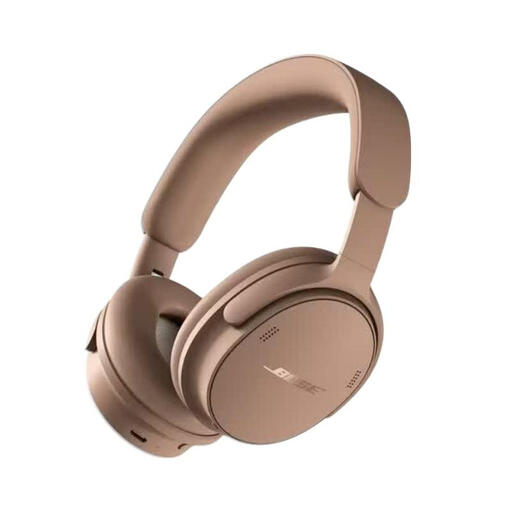 No image available
A closed-back Bluetooth over-ear model to consider if your playback device supports Bluetooth audio. Check the audio sync and sound leakage in your setup.
The product description lists noise cancellation and up to 24 hours of battery life.
 No image available
A closed-back Bluetooth over-ear model for a compatible playback source. Check the audio sync for yourself and how much sound leaks out at your chosen volume.
The product description lists noise cancellation, up to 24 hours of battery life and the option to listen using a wired connection.
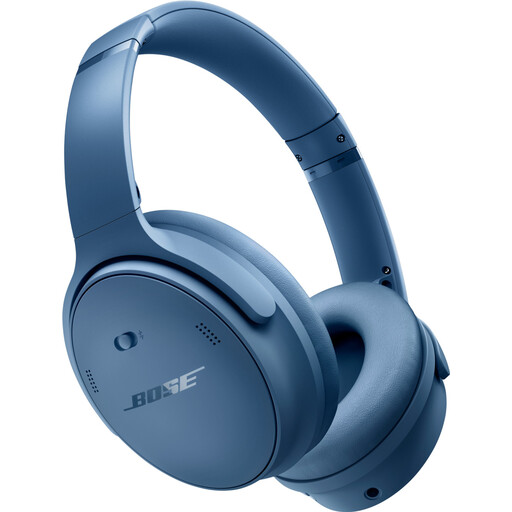 No image available
A closed-back Bluetooth over-ear model for a device that supports Bluetooth audio. Test the audio sync and sound leakage before relying on them in a shared bedroom.
The product description lists Bluetooth 5.1, noise cancellation and up to 24 hours of battery life.
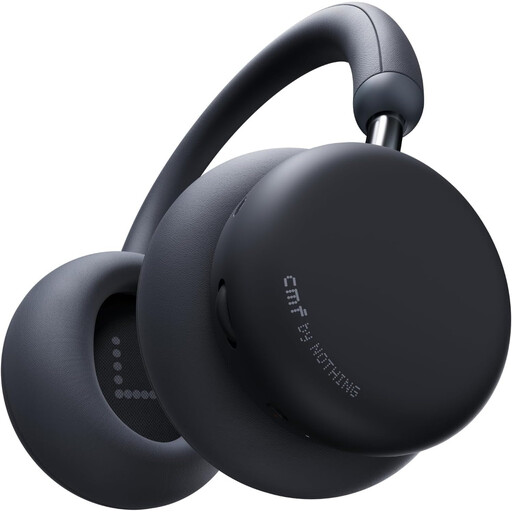 No image available
A closed-back Bluetooth over-ear model for use with a compatible TV or other playback source. Check the fit and sound leakage at your usual listening volume.
The product description lists up to 100 hours of playback with noise cancellation off and 48 hours with it on, and a weight of 283 g.
No. Check whether your TV model supports Bluetooth audio. Sony lists A2DP as a requirement for the pairing described with Android TV and Google TV models; even then, not every combination is guaranteed to work. A transmitter is an alternative if its input matches an available TV output.
Test the headphones with the documentary app you use and check whether your TV or playback device has an audio-video sync setting. Wireless audio can be delayed when watching video, so check the combination you’ll actually use.
It depends on the output you choose and your TV settings. Sony warns that you may need to switch off the internal speakers when connecting to AUDIO OUT. Check your TV manual for details of the specific connection.
Keep the volume low and take breaks. The World Health Organization gives an average of 80 dB for up to 40 hours a week as an example; the higher the sound level, the shorter the safe listening time. This isn’t a promised volume limit for the models listed.
According to ACM ConsuWijzer, online consumer purchases generally come with a cooling-off period of up to 14 days after delivery, subject to statutory exceptions. You’re also entitled to a statutory guarantee from the seller if a product doesn’t meet what you could reasonably expect during normal use. You don’t need to buy an extended warranty for this.