If your main aim is to reduce household noise, look for a well-fitting pair of Bluetooth headphones with ANC, provided your TV or other playback device supports Bluetooth audio. A wireless TV system with a transmitter may be a better fit if you want a direct connection to your TV or adjustable speech playback. Check your TV’s audio output and settings first. Neither option guarantees that voices around the house will disappear, or that every Bluetooth and TV combination will work without a delay.
Who are wireless TV headphones suitable for?
Watching in a noisy room
You want to follow the commentary and quiet sounds of nature while there’s noise elsewhere in the house. You’re comparing how well headphones seal and how effectively they reduce noise, without expecting every voice to disappear.
Using your TV as the audio source
You want to listen wirelessly without relying on a hit-and-miss Bluetooth pairing. The audio outputs and settings on your own TV will affect your choice.
Adjusting dialogue to suit you
You want to be able to bring the commentary forward or adjust the volume to suit you, while staying comfortable throughout a longer documentary.
What should you look for when buying?
Bluetooth headphones with ANC
A good fit if: your main aim is to reduce background noise and your TV or playback device supports Bluetooth audio.
Bear in mind: how well ANC works depends partly on the type of noise and the fit. Check TV compatibility and audio synchronisation too.
Wireless TV system with a transmitter
A good fit if: you want to use a compatible optical or analogue TV output, or you’re looking for a model with adjustable speech playback.
Bear in mind: the transmitter must connect to your TV’s output, and you may need to select a specific audio setting on the TV.
Start by considering the kind of household noise you want to deal with and how you’d like to listen. Then check the connection, speech clarity and fit for the way you watch TV.
| What to consider |
What to check before buying |
Who is it most important for? |
| Reducing household noise |
Compare the seal and ANC with the kind of noise in your home. Check whether there’s an ambient mode if you want to hear someone between scenes. |
If I want to follow the commentary and sounds of nature while it’s noisy at home, peace and quiet come first. Consumers who prioritise peace and quiet account for around 36% of consumers in this breakdown. |
| TV connection and synchronisation |
Check that your TV supports Bluetooth audio, or check which optical or analogue output is available for a transmitter. Test the picture and sound together. |
If you don’t want to find out after buying that your chosen connection doesn’t work, start by checking your TV’s outputs and settings. Consumers who prioritise TV compatibility account for around 29%. |
| Understanding the commentary |
Compare any speech mode with the standard listening mode using similar content. A bass or surround mode alone doesn’t prove that voices will sound clearer. |
If I want to follow a documentary’s commentary without losing track of the other sounds of nature, speech playback matters. Consumers who prioritise speech clarity account for around 21%. |
| Comfort and battery life |
Try the fit if possible, and compare battery life figures only using the same settings, such as ANC on or off. |
During a long evening of watching TV, I don’t want uncomfortable pressure or an unexpected interruption because the battery has run out. Consumers who prioritise comfort and battery life account for around 14%. |
Common buying mistakes
-
Expecting ANC to block out every conversation
How well noise cancelling works depends on the type of sound and the fit. A general ANC label doesn’t tell you how much you’ll hear in your living room.
Compare the seal and ANC separately and, if possible, try them with noise similar to what you hear at home.
-
Assuming a Bluetooth logo means the TV supports headphones
Audio support and synchronisation can vary between TVs and device combinations.
Check whether your TV supports Bluetooth audio, such as A2DP, and test the picture and sound together before relying on that connection.
-
Connecting a transmitter without checking your TV settings
For optical use with the Philips SHD8850/12, Philips specifies PCM/stereo on the TV.
Before buying, check which TV outputs are available and which audio settings go with them.
-
Comparing battery life figures with different settings
Sony lists maximum figures for the WH-CH720N of 50 hours with NC off and 35 hours with NC on. These are the manufacturer’s figures for continuous music playback.
Compare battery life only using the same listening settings, and remember that a maximum figure isn’t the same as the length of your listening session.
Brands to consider
Sennheiser
The RS 175-U and RS 195 are TV headphone systems with their own transmitter. The models offer different listening modes.
- Sennheiser lists optical and analogue connections for the RS 175-U.
- According to Sennheiser, the RS 195’s speech mode reduces background noise and improves clarity. This model information doesn’t automatically apply to the RS 175-U.
- Check that your TV’s output is compatible with the transmitter you choose.
Sony
Bluetooth over-ear models with ANC, including the WH-CH720N and WH-1000XM6, are worth considering if you also want to use other compatible audio sources.
- Sony gives the WH-CH720N a maximum continuous music playback time of 35 hours with NC on and up to 50 hours with NC off.
- These are maximum figures from the manufacturer. Check Bluetooth support and synchronisation for your TV and headphone combination.
Philips
The SHD8850/12 is a wireless TV system with a transmitter, for anyone who wants to use a separate connection to their TV.
- Philips lists a battery life of 20 hours and a stated range of 30 m for this model.
- Philips specifies PCM/stereo for an optical connection. The open-back design isn’t a reason to expect strong sound isolation.
JBL
JBL introduced the Live 770NC in 2023 as a Bluetooth over-ear model with ANC and Smart Ambient.
- Smart Ambient is useful if you want to switch between blocking out noise and hearing sounds in the room.
- Check the fit, listening settings and connection to your TV before relying on these features.
Wireless headphones at Joybuy
This Joybuy selection focuses on wireless headphones for anyone whose main aim is to reduce background noise while watching a documentary. Before using them with a TV, always check that the audio connection and synchronisation work.
 No image available
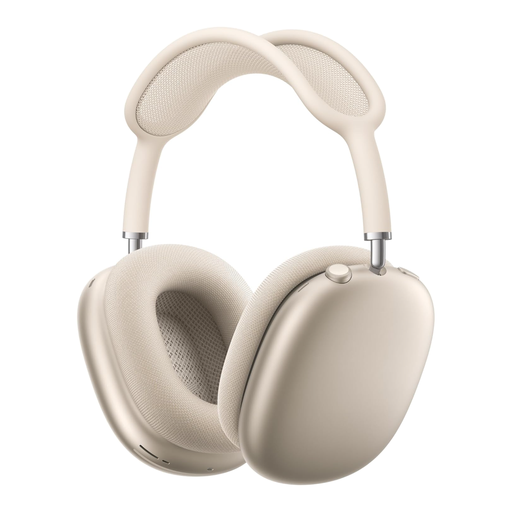
AirPods Max 2, Starlight
An option to consider if you want to reduce background noise while listening.
View on Joybuy
 No image available
Sennheiser MOMENTUM 4 Wireless, White
A good fit if you want to reduce background noise while watching TV.
Wireless over-ear headphones with noise cancelling; the product name states a battery life of 60h.
View on Joybuy
 No image available
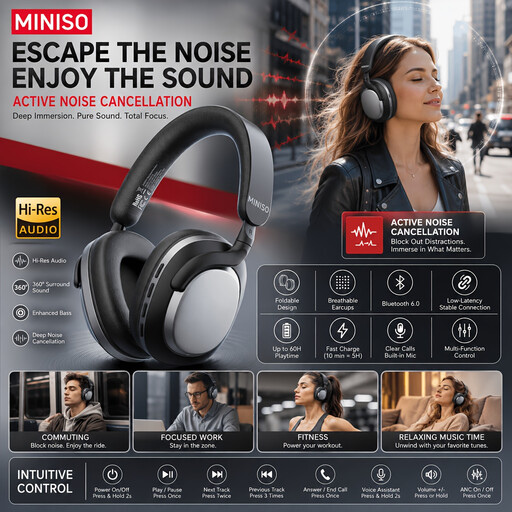
MINISO MG210, Black
An option to consider if you want to listen wirelessly and reduce background noise.
Wireless over-ear headphones with noise cancelling; the product name states a battery life of 24 hours.
View on Joybuy
 No image available
Bose QuietComfort Ultra, Black
This option is a good fit if you want to reduce background noise and listen wirelessly from a compatible source.
Bluetooth is listed in the product name; check your TV’s audio support.
View on Joybuy
 No image available
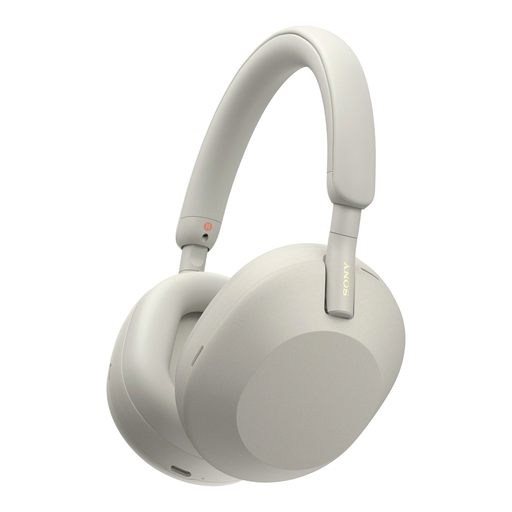
Sony WH-1000XM5, Silver
An option to consider if you want to listen wirelessly and noise cancelling matters to you.
The product name describes these as wireless headphones with noise cancelling.
View on Joybuy
Frequently asked questions
Will any Bluetooth headphones connect directly to my TV?
No, it depends on whether your TV supports Bluetooth audio. Sony lists A2DP for supported Google TV and Android TV models and warns that performance and audio delay can vary between combinations.
Why can’t I hear anything through the optical connection on a Philips SHD8850/12?
For this model, Philips recommends selecting PCM/stereo in the TV menu and OPTICAL SELECT on the base station. If that TV setting isn’t available, Philips suggests using the supplied analogue audio cable instead.
Should I turn up the volume to follow a documentary in a noisy home?
Not as a first step. The World Health Organization recommends using well-fitting headphones and noise cancelling to reduce the need for higher volumes, and limiting both listening volume and listening time.
What are my rights when buying online in the Netherlands?
According to ACM ConsuWijzer, online product purchases generally come with a statutory cancellation period of up to 14 days after delivery, subject to exceptions. The seller is also responsible for the statutory guarantee if the product doesn’t do what you could reasonably expect when used normally. Any manufacturer’s warranty is in addition to, not a replacement for, this right.


